
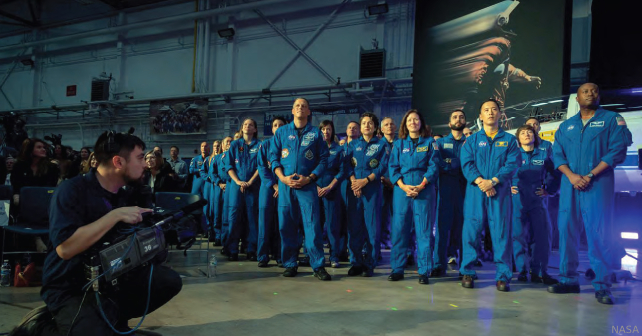

While the National Aeronautics and Space Administration (NASA) has long provided cutting-edge research and medical advancements in space, the field is now expanding into the commercial sector and the need for more expertise is high. New space-medicine fellowship programs are coming to fruition to meet these demands of the space industry, with emergency medicine (EM), a pioneer and trailblazer among medical specialties, playing a role. In 2022, both the University of California Los Angeles (UCLA) and the University of Texas Health Science Center at Houston (UTHealth Houston) inaugurated their space medicine fellowship programs with Haig Aintablian, MD and Nicolas Heft, MD, respectively, as their fellows. Both are EM physicians.
Other aerospace medicine programs, such as the residency through the University of Texas Medical Branch, focus on public health and preventive medicine and are certified through the American Board of Preventive Medicine. These new programs at UCLA and UTHealth Houston distinguish themselves by concentrating on acute medicine rather than preventive medicine. As Dr. Heft puts it, “One day in the near future, we will need physicians who are trained and equipped to provide acute care on missions that take you beyond the immediate reach of Earth. From low Earth orbit, it only takes several hours to return to Earth and receive top-tier medical assistance, but what about from the Moon? From Mars? Or even further?”

Dr. Heft
Although physicians will always be needed for ground support, EM physicians are particularly well prepared for this evolution into a mission-integrated role. “We’re the Swiss army knife of specialties,” Dr. Aintablian notes. “If you’re a great terrestrial doctor, you’d likely make a great space doctor. We have 80–85 percent of the skills already. The space medicine fellowship focuses on closing those knowledge gaps: how to perform regional blocks, advanced dental procedures and extractions, US-guided nephrostomy and cholecystostomy tube placements, appendectomies, and long-term management of medical problems and psychiatric illnesses.” This last skill, they all agree, is likely the most important of all. On a months- or years-long journey with no escape and no quick way back to Earth, psychological stress builds up. Professional therapy and medication management en route can be both preventative and therapeutic. As such, in addition to rotations with surgery, orthopedics, ophthalmology, dentistry, and anesthesia, the space fellowships include psychiatry components. All this while maintaining EM clinical competency and learning the key tenets of aerospace medicine and biomedical engineering.
Pages: 1 2 3 4 | Single Page



2 Responses to “Space Medicine: Emergency Physicians Voyage Into the Final Frontier”
July 14, 2023
Aerospace medicine academicians.10 minutes lost in eternity reading this shallow writing project by an ER resident. Not a single source from experienced space medicine physicians, nor a contrast from medical associations producing knowledge about human space exploration, not even a hint of research about basic space physiology. The delusional scenario of an astronaut with cholecystitis should have been enough warning. Expect major backlashes from accredited organizations, educational programs and think-tanks once they endure reading this dystopian review.
August 28, 2023
Terence Alost, MD MBA FAAEMOk, I read the reply above, I have been teaching science since the 80s and Emergency Medicine since the 90s (and I grew up on the Space Coast during the 70s and worked testing parts of the Shuttle in the 80s.) So, is the article extremely rigorous in its scientific value or rigor? No, but so what! It is sort of, science fiction or just an article, but SO WHAT! If the article sparks the interest of a young physician or physician-to-be to work in that field, then that’s a fantastic thing. Those of us older than 45, 50, 55, 60 etc. “know” that we are smarter than our childish 28 t0 32-year-old colleagues! I’m old< I guess. (Unless you're dumb or they are exceptionally smart, that is true.) It, however, is NOT ABOUT WHO IS SMARTER! It is about who is more experienced. It is not important to brag about experience. It is a DUTY to pass that experience on to the next generation. And it will be their exact job 20 to 30 years later.
So, to the author of the last criticism, I get it. Scientifically speaking, perhaps the article is goofy. But if that article sparks the interest of a 15-year-old somewhere, maybe they will do something incredible 30-40 years from now. I don't know your age. I am quite healthy (currently) and might still be alive at age 100+ or I could be gone. However, all of us need to work to make medicine and the world better for the times after we are gone.