Logo

Log In Sign Up |  An official publication of: American College of Emergency Physicians
Navigation
  • Home
  • Multimedia
    • Podcasts
    • Videos
  • Clinical
    • Airway Managment
    • Case Reports
    • Critical Care
    • Guidelines
    • Imaging & Ultrasound
    • Pain & Palliative Care
    • Pediatrics
    • Resuscitation
    • Trauma & Injury
  • Resource Centers
    • mTBI Resource Center
  • Career
    • Practice Management
      • Benchmarking
      • Reimbursement & Coding
      • Care Team
      • Legal
      • Operations
      • Quality & Safety
    • Awards
    • Certification
    • Compensation
    • Early Career
    • Education
    • Leadership
    • Profiles
    • Retirement
    • Work-Life Balance
  • Columns
    • ACEP4U
    • Airway
    • Benchmarking
    • Brief19
    • By the Numbers
    • Coding Wizard
    • EM Cases
    • End of the Rainbow
    • Equity Equation
    • FACEPs in the Crowd
    • Forensic Facts
    • From the College
    • Images in EM
    • Kids Korner
    • Medicolegal Mind
    • Opinion
      • Break Room
      • New Spin
      • Pro-Con
    • Pearls From EM Literature
    • Policy Rx
    • Practice Changers
    • Problem Solvers
    • Residency Spotlight
    • Resident Voice
    • Skeptics’ Guide to Emergency Medicine
    • Sound Advice
    • Special OPs
    • Toxicology Q&A
    • WorldTravelERs
  • Resources
    • ACEP.org
    • ACEP Knowledge Quiz
    • Issue Archives
    • CME Now
    • Annual Scientific Assembly
      • ACEP14
      • ACEP15
      • ACEP16
      • ACEP17
      • ACEP18
      • ACEP19
    • Annals of Emergency Medicine
    • JACEP Open
    • Emergency Medicine Foundation
  • About
    • Our Mission
    • Medical Editor in Chief
    • Editorial Advisory Board
    • Awards
    • Authors
    • Article Submission
    • Contact Us
    • Advertise
    • Subscribe
    • Privacy Policy
    • Copyright Information

How to Select the Right Level of Investing Risk Needed to Reach Retirement Goals

By James M. Dahle, MD, FACEP | on October 13, 2016 | 0 Comment
End of the Rainbow
  • Tweet
  • Click to email a link to a friend (Opens in new window) Email
Print-Friendly Version
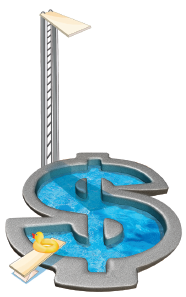
ILLUSTRATION: PAUL JUESTRICH, PHOTOS: shutterstock.com

You Might Also Like
  • How to Avoid Catastrophe in a Market Downturn
  • 5 Ways to Increase Your Investment Returns
  • Retirement Investing Advice on Roth Versus Traditional 401(k) Contributions
Explore This Issue
ACEP Now: Vol 35 – No 10 – October 2016

ILLUSTRATION: PAUL JUESTRICH, PHOTOS: shutterstock.com

Q. I don’t like watching the value of my investments going up and down—it feels like I’m in a casino sometimes. How much risk should I be taking with my portfolio?

A. The more investors learn about investing, the more they realize it’s all about risk management—and the risks you face matter far more than the past or projected returns of the investment. In the words of Will Rogers, “I am not so much concerned with the return on my capital as I am with the return of my capital.”

However, it’s also important to not take on too little investment risk, as one of the most significant risks an investor faces is shortfall, or running out of money in retirement. The lower returns available on lower-risk investments may not allow your money to grow fast enough for your needs. There’s a reasonable range of risk for an investor to appropriately take, but there are far too many investors whose portfolios fall outside of that range.

RISK VERSUS REWARD

The amount of risk you take should be directly related to your need and ability to take risk. Most investors have a significant need to take on risk, but there are some who do not. For example, an investor with a $10 million portfolio who needs only $100,000 a year from it can eliminate almost all significant risk from the portfolio and still meet goals. Most investors, however, aren’t nearly as fortunate. An investor with a $1 million portfolio who hopes to spend that same $100,000 per year needs to not only continue to add to the portfolio but also to take significant risk with it.

Likewise, it’s critical to not exceed your risk tolerance. If you don’t have the emotional and financial ability to withstand a 50 percent drop in your assets (and few do), a 100 percent stock portfolio probably isn’t for you because once every 30 to 50 years or so, the assets of stock investors take a 50 percent haircut.

Many decades ago Warren Buffett’s mentor, Benjamin Graham, recommended never holding more than 75 percent or less than 25 percent of your portfolio in stocks with the remainder in bonds. I think that wisdom still holds true today, and you should have a very good reason to go outside that recommendation.

One of the best ways to lower the amount of risk you need to take is to save more money. Saving more of your income now has a double positive effect on your portfolio: Not only does it grow faster but the amount of income it needs to provide you to maintain your pre-retirement lifestyle is also lowered. Consider an investor who makes $200,000 per year and is saving 20 percent of gross income in hopes of retiring on an income of $160,000 per year, including $30,000 per year of Social Security benefits. Using a 4 percent inflation-adjusted spending rate in retirement, that investor needs to work and save for 33 years prior to retirement. By instead saving 40 percent of gross income and planning to live on $120,000 per year, including a $20,000 Social Security benefit, the investor now only needs to work and save for 19 years, which equals more than a decade of extra time in retirement.

Pages: 1 2 3 | Single Page

Topics: 401KcareerGoalsInvestingPersonal FinancePortfolioRetirementRiskWork-Life Balance

Related

  • Reader Responds: Don’t Borrow, Serve

    November 4, 2025 - 0 Comment
  • The Business of Emergency Medicine: Insurance Essentials

    October 9, 2025 - 0 Comment
  • Doctors, Do You Need a New Student-Loan Strategy?

    September 2, 2025 - 0 Comment

Current Issue

ACEP Now: November 2025

Download PDF

Read More

About the Author

James M. Dahle, MD, FACEP

James M. Dahle, MD, FACEP, is the author of The White Coat Investor: A Doctor’s Guide to Personal Finance and Investing and blogs at http://whitecoatinvestor.com. He is not a licensed financial adviser, accountant, or attorney and recommends you consult with your own advisers prior to acting on any information you read here.

View this author's posts »

No Responses to “How to Select the Right Level of Investing Risk Needed to Reach Retirement Goals”

Leave a Reply Cancel Reply

Your email address will not be published. Required fields are marked *


*
*


Careers Center
  • Lee Health - Golisano Children’s Hospital of SWFL Seeks a Pediatric Emergency Medicine Physician!

    Position Information: Lee Health / Golisano Children’s Hospital – Pediatric Emergency Medicine is seeking a full-time physician BC/BE in Pediatric ...

    Fort Myers, Florida

    Competitive compensation package- sign on bonus and relocation!

    Lee Health physician group

    Read More
  • Director, Undergraduate Medical Education

    Penn State Health Milton S. Hershey Medical Center seeks a BC/BE Emergency Medicine Physician to serve as Director, Undergraduate Medical Education.

    Hershey, Pennsylvania

    Competitive salary & benefits at prestigious Pennsylvania health system

    Penn State Health

    Read More
  • Pediatric Emergency Medicine

    Akron Children's Hospital is seeking a Physician to join the Emergency Department out of the Boardman, Ohio location.

    Boardman, Ohio

    N/A

    Akron Children's Hospital

    Read More
More Jobs
Wiley
  • Home
  • About Us
  • Contact Us
  • Privacy
  • Terms of Use
  • Advertise
  • Cookie Preferences
Copyright © 2025 by John Wiley & Sons, Inc. All rights reserved, including rights for text and data mining and training of artificial technologies or similar technologies. ISSN 2333-2603

