
Beyond history and workup, communication is crucial. According to a large, nationally representative survey released in April 2020, trust in hospitals and physicians during COVID-19 is high, particularly relative to other institutions and groups.4 We are important sources of information and education regarding public health guidelines such as hand hygiene, face masks, and social/physical distancing. We can help patients understand what to expect if they undergo testing and link to appropriate resources so they can safely isolate.
Explore This Issue
ACEP Now: Vol 39 – No 10 – October 2020As various state and local elections officials adapt their voting strategies this year, we can inform our patients about their local voting options. Not only are these discussions clinically relevant, they have legal and logistical precedent. The 1993 National Voter Registration Act allows any institution providing “public assistance,” including hospitals, to participate in nonpartisan voter registration and information sharing.5 National organizations such as VotER and Community Health Vote empower thousands of health care workers to engage patients in conversations about voter registration and safe voting plans.6–8
How to Have Safe In-Person Voting
Healthy and safe elections are a priority for all Americans and our democracy. Clear, nonpartisan, and evidence-based recommendations are needed for public health and elections officials to follow as they develop policies and procedures in advance of election day.9
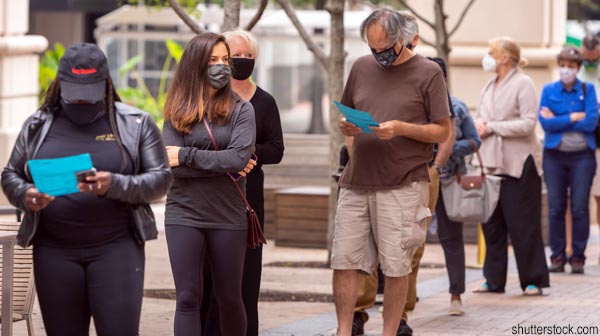
Early and mail-in voting can help reduce crowd volumes, reduce in-person contact, and ultimately reduce transmission risk. Some individuals will need to vote in person, and for these people, a uniform, evidence-based public health message about what to expect at polling sites is important. This messaging should include using hand hygiene, maintaining physical distance of at least six feet between individuals, and wearing face masks that cover the nose and mouth to prevent the transmission of COVID-19. For safe in-person elections to occur, elections officials should increase the number of polling locations to avoid overcrowding and relocate polling locations to large, well-ventilated areas to allow for appropriate physical distancing. Localities should aim to have polling locations in large, well-ventilated sites such as sports arenas, concert venues, convention centers, school gymnasiums, or community recreation centers. For optimal infection control, voting locations should conduct check-in activities outdoors (weather permitting), establish separate points of entry and exit for voters, and have unidirectional flow of foot traffic. Additionally, ventilation should be optimized by avoiding recirculation of potentially contaminated air.
Polling locations should have adequate supplies to support healthy hygiene for voters, poll workers, and elections officials. This includes hand sanitizer with at least 60 percent alcohol, soap, paper towels, no-touch trash cans, disinfectant wipes, and face masks. Polling sites should be thoroughly cleaned with an Environmental Protection Agency–approved disinfectant prior to opening on election day, with special attention given to high-touch surfaces, such as poll worker stations and voting booths. These areas and any reusable items should be routinely disinfected throughout the day. Hand sanitizer should be available at entrances, exits, and each step of the voting process for voters and poll workers. Polling locations should have plexiglass barriers between workers and voters at registration tables.
Pages: 1 2 3 4 | Single Page



No Responses to “Safe Elections During COVID-19: The Role of Emergency Medicine”