
The best questions often stem from the inquisitive learner. As educators, we love and are always humbled by those moments when we get to say, “I don’t know.” For some of these questions, you may already know the answers. For others, you may never have thought to ask the question. For all, questions, comments, concerns, and critiques are encouraged. Welcome to the Kids’ Korner.
Explore This Issue
ACEP Now: Vol 35 – No 08 – August 2016 ACEP Now features one article each issue related to an ACEP eCME CME activity.
Log on to the ACEP eCME CME site to complete the activity for this article and earn free AMA PRA Category 1 Credit.
[/fullbar]
Question #1: “In children, is there an ovarian size (volume) that rules out torsion?”
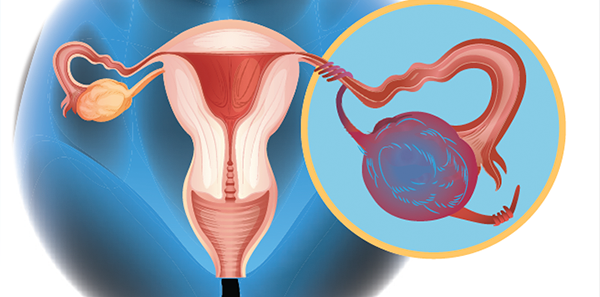
About 15 percent of cases of ovarian torsion occur in childhood. Two peak times of occurrence exist: 1) within the first year of life, and 2) at menarche. This has lead some to speculate that ovarian volumes in the normal range may “rule out” ovarian torsion and some articles do find abnormally enlarged volumes in their ovarian torsion cases.1 Torsed ovaries are more commonly enlarged secondary to impeded venous return and edema that occurs after the initial torsion—prohibiting spontaneous detorsion.2 While it decreases the probability of ovarian torsion, it does not appear to definitively exclude ovarian torsion.
A retrospective study by Servaes et al evaluated sonographic findings of surgically proved cases of ovarian torsion in 41 patients over a 12-year period. The median age of patients with ovarian torsion was 11 years, with a range of 1 month to 21 years of age. The authors mention that torsion occurred in “otherwise normal ovaries without a potential lead point in 34 percent (14/41)” of patients. The authors found that the mean volume ratio was 12 times larger in the torsed ovaries compared to the contralateral ovaries. While the article makes the statement that “all torsed adnexa were larger than the normal contralateral ovary,” the data report that there was only one of 41 patients who had an enlarged ovary and adnexa.3 While these data appear slightly confusing, they do emphasize one important point: Comparing the patient’s contralateral (good) ovary may be helpful.
There were 10 contaminated samples and two true-positive blood cultures, neither of which changed antibiotics or medical management. The authors concluded that a “blood culture is not useful in the management of immunocompetent well-appearing children admitted for uncomplicated skin and soft tissue infections, and its routine practice should be avoided.
A second retrospective study by Tsafrir et al evaluated 22 ovarian torsion cases over an 11-year period in premenarchal patients only. On surgical exploration, they found that the torsed ovary was not enlarged in 59.1 percent (13/22) of cases. Of the 22 cases, they performed transabdominal ultrasound with a full bladder on 20 of them, noting that there were “normal-sized ovaries with or without signs of edema in eight and four cases, respectively.”4 This means that 12 of 20 cases (60 percent) had a normal reported ovarian size. Specific measurements weren’t provided in this article, however.
Summary
While the data are very limited, there doesn’t appear to be a lower-limit volume that rules out ovarian torsion in children. Most cases of ovarian torsion demonstrate an enlarged torsed ovary, but a potentially large percentage of confirmed ovarian torsion cases have normal ovarian volumes. A comparison to the contralateral (normal) ovary size may be helpful.
Pages: 1 2 3 | Single Page



No Responses to “Research on Ovarian Size in Children Provides Guidance on Dealing with Torsion, Uncomplicated Cellulitis”