
Consequently, burnout in emergency medicine is at an all-time high. According to a 2024 Medscape report, 63% of emergency physicians experience burnout, the highest among all specialties. Emotional exhaustion, detachment, and moral injury have left too many feeling disconnected from the work they once loved.
Explore This Issue
ACEP Now: April Digital 02-DWhile an exodus from medicine, especially emergency medicine, became a far too frequent reality, the salve came from returning to that moral imperative at the center of our pursuit. For me, that answer came through global health.
The Healing Power of Global Health
Mrs. A and patients like her remind me of how valuable and life-changing the care provided on medical missions can be.
These missions expand access to care and improve health for thousands of patients worldwide, and it’s mostly done through volunteers. I became involved in these projects through Envision’s Global Health Initiative shortly after its inception in 2019. This program has empowered growing numbers of both clinical and nonclinical teammates, residents, and students to volunteer to travel to areas around the world where the largest health care disparities exist. Our volunteer teams have traversed five continents to provide care for refugees seeking asylum and underserved residents alike.
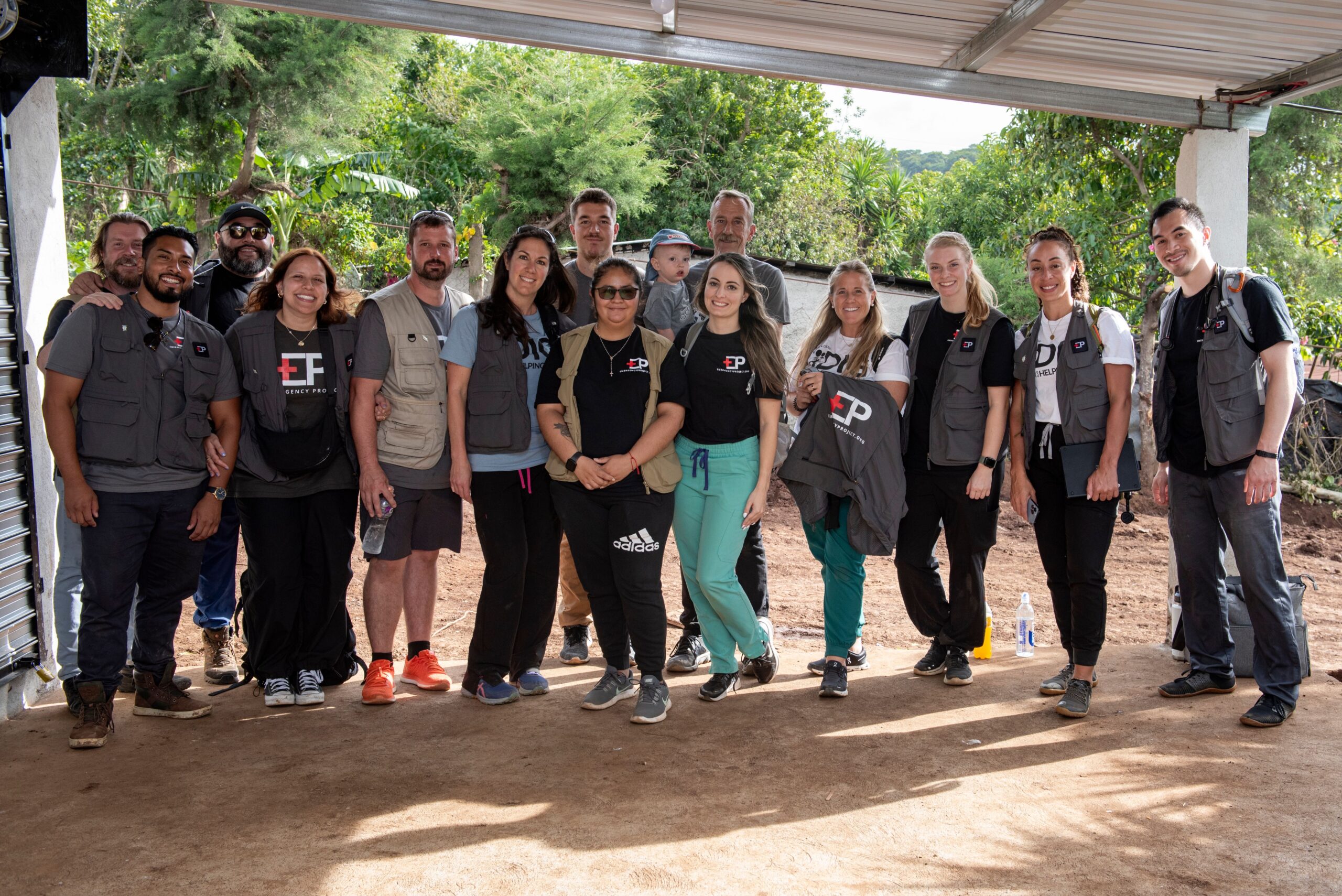
A group shot of the first Guatemala mission. (Click to enlarge.)
Our teams donate their time and expertise, empowered with funding by Envision’s Charitable Foundation, to travel to these regions in conjunction with our partner organizations: One World Surgery (OWS), the Emergency Project (EP), IMANA, and, newly, Floating Doctors. With the on-the-ground support and leadership of these organizations, we provide primary care for those who would never see a doctor and ensure consistent, longitudinal care and management of their previously undiagnosed chronic conditions.
Through my experiences with the Emergency Project, I’ve witnessed the versatile power of our expertise to combat global health inequities, one deeply underserved community at a time. Instead of having to mediate patient care with the overarching challenges of insurance and bureaucracy, when we are on the ground, nearly 100% of our focus is on treating patients and growing health infrastructure and capacity.
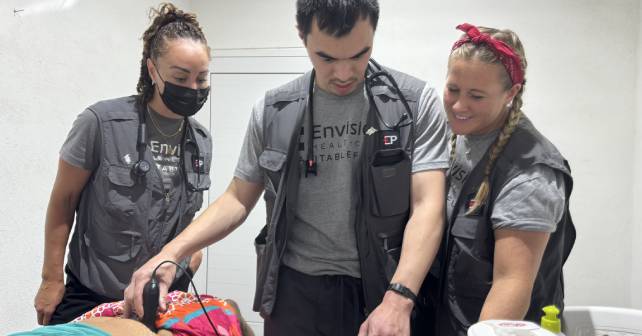
During a recent mission, two of our U.S. emergency medicine residents, Dr. Alyssa Damstrom and Dr. Bryan Luu, together with a local nurse, were performing ultrasounds in a rural Mayan village, live-streaming scans back to their residency program for immediate feedback. With cutting-edge but practical tools like point-of-care ultrasound (POCUS), simplified AI-assisted EKGs, and emergency protocols, we’re equipping local health care workers with the skills to continue lifesaving work long after we leave.
Pages: 1 2 3 4 5 | Single Page



One Response to “Rekindling the Fire in Emergency Medicine”
April 27, 2025
Thomas Giberson, DO, FACEPIt is impportant to realize what a great honor it is to care for those who need us. If we live our lives accepting that honor,then we don’t need the outer gratification any more. what is missing in Emergency Medicine is the time to connect to our patients. I would suggest picking up a few shifts in Urgnt Care clinics. Yes, it’s seeing runny noses, etc, but it is also diagnosing Avute liupus nepritis and pulmonaru edema. Our skills developed over a lifetime of emergency care can help to pick up subtle findings FP’s would miss. I expect evey room I walk into has someone in it just waiting to die. It’s the acute meningitis that looks like every other URI, or the PE when everyone has a URI. We KNOW those people and know how to find them. When demanding the opportunity to connect with people we can exercise the cution we were trained to use. That is the voice of 43 years of Emergency Medicine in high volume-high acuity care. Burnout, which I have also experienced, is coming out of every room thinling we hate people. It is no more than transfering the inner suffering we feel by being pushed too far too fast to make money for someone else. Each of our patients become an invisible curse who are named illnesses rather than an MIT graduate engineer or crust 45 year old woman who is a train conductor and serves as the engineeer for return trips, the 17 year old woman who is a diesel mechanic, or the illiterate 75 year old who worked his butt off who has been married for 55 years and put all of his children through college becaue it was a goal too farr for him to ever reach. Go to another country and see the desparate lives people live because they have zero opportunity or care for the peole here who are given the opportunities and spit on that opportunity. Either way, you can still find the gratification kn owing it is an hoor to care for people who have zero opportunity. The cause of our suffering is not outside each of us, it lives within ourselves. We are honorable men and women of courage, integrity, deep compassion, and commintment who see, know, and feel too much while being pushed to do more with less time (half of which is documentation) for sicker, more vulnerable, patients who have become society’s throw-aways. You go to work to care for the homeless, addicts, alcoholics, irreponsible people – thos who need us. You see and feel the children beaten to death, or young mothers who are dead because of a drunk driver, and the elderly who are dumped in a nursing home to become wards of the state. And when it is donme, at the end of the day, we ask ourseles “what the hell was that about?” Our souls are depleted by those who try to drag it from us. But we go bak to work the next day. And going back each day is an act of great compassion because you see the need and have the drive to meet those needs. Take great pride in that, becaause it is a great honor to be given the chance to exercise that compassion. You have the gift of being able to do what we do and it has been an incredible honor to have worked along side sme of you.