
Explore This Issue
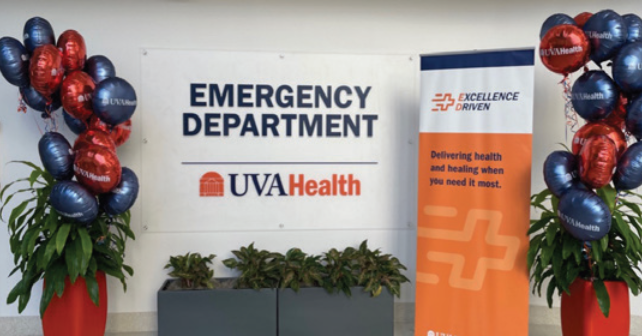
ACEP Now: Vol 42 – No 11 – November 2023UVA Health’s Excellence Driven ED program demonstrates the power of a multidisciplinary effort combined with creative problem solving and data-driven decision making.
The important finishing touch for UVA Health’s Excellence Driven ED project was the development of real-time patient-flow leaders. The patient flow coordinator monitored flow into the department while the new charge nurse role monitored flow out of the department. These nurse leaders are tasked with overseeing everything related to patient flow. In particular, these nurse-leader roles include identifying early signs (triggers) that a zone is falling behind. This is particularly a risk in the front end of an ED. They identified strategic responses to each scenario. For instance, the physician-in-triage area can be overwhelmed by surges in arrivals. When the physician needs additional resources, another physician moves forward to help with physician-in-triage intake to get caught up. It is a short-term proposition, and such tactics around the country are often referred to as “high-flow” tactics. The overarching theme in high-flow strategies is to have standardized and articulated trigger-and-response strategies mapped out in advance, to be turned on in real time. The tactics typically involve the temporary deployment of personnel to an area to help when it is falling behind. High-flow strategies will depend on physical layout, staffing, and culture, and will be idiosyncratic to a particular ED. These real-time strategies being employed at UVA Health are cutting-edge operations and not yet embedded into many emergency department operations.
The before-and-after results of this sophisticated ED flow model are remarkable. Door-to-doctor time was reduced, but more importantly patients no longer flowed back into the waiting room, which had a profound impact on walkaways. Despite increases in year-over-year volume, all indicators show improvement in patient flow.
The operations team continues to optimize the new flow model, and multiple task forces focus on refining processes and staffing. Excellence Driven demonstrates the power of a multidisciplinary effort combined with creative problem solving and data-driven decision making.
 Dr. Welch is a practicing emergency physician with Utah Emergency Physicians and a research fellow at the Intermountain Institute for Health Care Delivery Research, in Murray, Utah. She has written articles and books on ED quality, safety, and efficiency. She is a consultant with Quality Matters Consulting, and her expertise is in ED operations.
Pages: 1 2 | Single Page



No Responses to “Re-Engineering Flow in an Academic Emergency Department”