Logo

Log In Sign Up |  An official publication of: American College of Emergency Physicians
Navigation
  • Home
  • Multimedia
    • Podcasts
    • Videos
  • Clinical
    • Airway Managment
    • Case Reports
    • Critical Care
    • Guidelines
    • Imaging & Ultrasound
    • Pain & Palliative Care
    • Pediatrics
    • Resuscitation
    • Trauma & Injury
  • Resource Centers
    • mTBI Resource Center
  • Career
    • Practice Management
      • Benchmarking
      • Reimbursement & Coding
      • Care Team
      • Legal
      • Operations
      • Quality & Safety
    • Awards
    • Certification
    • Compensation
    • Early Career
    • Education
    • Leadership
    • Profiles
    • Retirement
    • Work-Life Balance
  • Columns
    • ACEP4U
    • Airway
    • Benchmarking
    • Brief19
    • By the Numbers
    • Coding Wizard
    • EM Cases
    • End of the Rainbow
    • Equity Equation
    • FACEPs in the Crowd
    • Forensic Facts
    • From the College
    • Images in EM
    • Kids Korner
    • Medicolegal Mind
    • Opinion
      • Break Room
      • New Spin
      • Pro-Con
    • Pearls From EM Literature
    • Policy Rx
    • Practice Changers
    • Problem Solvers
    • Residency Spotlight
    • Resident Voice
    • Skeptics’ Guide to Emergency Medicine
    • Sound Advice
    • Special OPs
    • Toxicology Q&A
    • WorldTravelERs
  • Resources
    • ACEP.org
    • ACEP Knowledge Quiz
    • Issue Archives
    • CME Now
    • Annual Scientific Assembly
      • ACEP14
      • ACEP15
      • ACEP16
      • ACEP17
      • ACEP18
      • ACEP19
    • Annals of Emergency Medicine
    • JACEP Open
    • Emergency Medicine Foundation
  • About
    • Our Mission
    • Medical Editor in Chief
    • Editorial Advisory Board
    • Awards
    • Authors
    • Article Submission
    • Contact Us
    • Advertise
    • Subscribe
    • Privacy Policy
    • Copyright Information

Re-Engineering Flow in an Academic Emergency Department

By Shari Welch, MD, FACEP | on November 14, 2023 | 0 Comment
Special OPs
  • Tweet
  • Click to email a link to a friend (Opens in new window) Email
Print-Friendly Version

The University of Virginia (UVA) School of Medicine was founded in 1819 by Thomas Jefferson and is one of the oldest medical schools in the United States. In 1901, UVA opened its first hospital with 25 beds and three operating rooms. The medical center and undergraduate campus in Charlottesville still maintain the appearance of the original quaint colonial campus. But inside these charming historic walls is a research-driven, quaternary-care, academic, medical center.

You Might Also Like
  • Segmentation Improves Emergency Department Patient Flow at Raritan Bay Medical Center
  • Pennsylvania ED Re-Engineers Patient Flow to Reduce Boarding Burden
  • Emergency Department Flow, Patient Walkaway Key Performance Measures
Explore This Issue
ACEP Now: Vol 42 – No 11 – November 2023

The emergency department (ED) at UVA was rebuilt in 2019 and the department had not fully optimized its operations when COVID-19 hit. Following the pandemic, the ED saw a surge in its volume as it raced through 60,000 to 80,000 visits per year. (The ED went from daily volumes of 180 patients per day [PPD] to over 210 PPD.) In addition, daily variation increased. In one recent week the variation in daily census ranged from 160 PPD to 230 PPD. This volume and variation presented challenges when attempting to staff the ED appropriately.

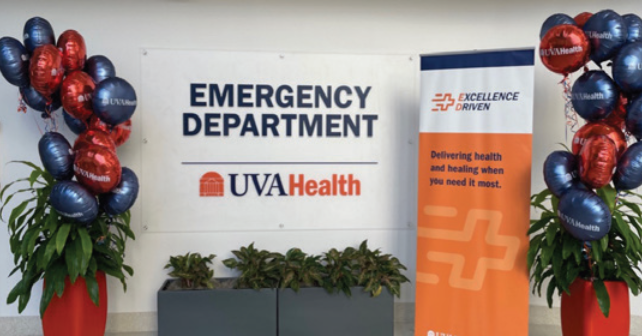
The ED team was increasingly concerned about long waits, delays in care, and increasing numbers of walkaways, those who LWBS, or leave without being seen, and leave before treatment is complete, or LBTC. Though they were managing the boarding of admitted ED patients better than many academic medical centers, the increasing boarding burden on top of the surge in daily volume created an urgent need to restructure the ED flow. The hospital leadership, medical-school leadership, and ED faculty and staff partnered to engage in a radical re-engineering project they aptly named Excellence Driven.

They adopted a completely new flow model that allowed for acuity-based patient segmentation. While most academic EDs have lost pediatric volume, the UVA ED continues to see almost 20 percent pediatric patients. In addition, approximately 70 percent of the volume seen consists of middle- or lower-acuity patients. The ED team designed an elegant flow model that separates out the high-acuity patients and sends them to Major Care, while the middle and lower acuity patients go to the Minor Care area called the Rapid Medical Evaluation (RME), which is a combined fast track and mid track. Patients are treated in a vertical model in the RME.

Pediatric patients go to their own zone. Lastly, when patients are admitted, there is a functioning Admission Holding Unit that pulls those patients out of the acute-care areas to make room for newer acute patients. The ED leadership team also used this project to standardize how patients moved through the department to eliminate variation. They developed inclusion and exclusion criteria, time and volume targets for each zone, and swim lanes articulating the work of each role in every area. They also developed standard work documents for each role. This made it easier for everyone to know what was expected of them at work.

Pages: 1 2 | Single Page

Topics: Patient Flow

Related

  • Pediatric Patients in Acute Mental Health Crisis Face Long Waits

    August 29, 2025 - 0 Comment
  • Hospital at Home Is Here: An Opportunity EM Can’t Ignore

    August 25, 2025 - 0 Comment
  • Management of ED Crowding versus Mass Casualty Incidents: Is There an Ethical Difference?

    August 4, 2025 - 0 Comment

Current Issue

ACEP Now: November 2025

Download PDF

Read More

No Responses to “Re-Engineering Flow in an Academic Emergency Department”

Leave a Reply Cancel Reply

Your email address will not be published. Required fields are marked *


*
*


Wiley
  • Home
  • About Us
  • Contact Us
  • Privacy
  • Terms of Use
  • Advertise
  • Cookie Preferences
Copyright © 2025 by John Wiley & Sons, Inc. All rights reserved, including rights for text and data mining and training of artificial technologies or similar technologies. ISSN 2333-2603
