Logo

Log In Sign Up |  An official publication of: American College of Emergency Physicians
Navigation
  • Home
  • Multimedia
    • Podcasts
    • Videos
  • Clinical
    • Airway Managment
    • Case Reports
    • Critical Care
    • Guidelines
    • Imaging & Ultrasound
    • Pain & Palliative Care
    • Pediatrics
    • Resuscitation
    • Trauma & Injury
  • Resource Centers
    • mTBI Resource Center
  • Career
    • Practice Management
      • Benchmarking
      • Reimbursement & Coding
      • Care Team
      • Legal
      • Operations
      • Quality & Safety
    • Awards
    • Certification
    • Compensation
    • Early Career
    • Education
    • Leadership
    • Profiles
    • Retirement
    • Work-Life Balance
  • Columns
    • ACEP4U
    • Airway
    • Benchmarking
    • Brief19
    • By the Numbers
    • Coding Wizard
    • EM Cases
    • End of the Rainbow
    • Equity Equation
    • FACEPs in the Crowd
    • Forensic Facts
    • From the College
    • Images in EM
    • Kids Korner
    • Medicolegal Mind
    • Opinion
      • Break Room
      • New Spin
      • Pro-Con
    • Pearls From EM Literature
    • Policy Rx
    • Practice Changers
    • Problem Solvers
    • Residency Spotlight
    • Resident Voice
    • Skeptics’ Guide to Emergency Medicine
    • Sound Advice
    • Special OPs
    • Toxicology Q&A
    • WorldTravelERs
  • Resources
    • ACEP.org
    • ACEP Knowledge Quiz
    • Issue Archives
    • CME Now
    • Annual Scientific Assembly
      • ACEP14
      • ACEP15
      • ACEP16
      • ACEP17
      • ACEP18
      • ACEP19
    • Annals of Emergency Medicine
    • JACEP Open
    • Emergency Medicine Foundation
  • About
    • Our Mission
    • Medical Editor in Chief
    • Editorial Advisory Board
    • Awards
    • Authors
    • Article Submission
    • Contact Us
    • Advertise
    • Subscribe
    • Privacy Policy
    • Copyright Information

Prehospital Buprenorphine Is a Powerful Tool in the Opioid-Crisis Fight

By Karen Hou Chung, MD | on June 4, 2025 | 0 Comment
Resident Voice
  • Tweet
  • Click to email a link to a friend (Opens in new window) Email
Print-Friendly Version

Drug overdoses are a leading cause of accidental death in the United States, representing a persistent and escalating health crisis. According to recent data from the Centers for Disease Control and Prevention (CDC), overdose deaths have exceeded 100,000 annually since 2021, with approximately 75 percent involving opioids—a proportion that continues to rise.1

You Might Also Like
  • Opinion: Prehospital Naloxone Administration Is Safe
  • Naloxone Is Just One Piece of the Opioid Puzzle
  • Five Steps to Help You Manage Opioid Use Disorder Patients
Explore This Issue
ACEP Now: June 2025 (Digital)

Even in nonfatal opioid overdose cases, there is a significant increase in both short- and long-term mortality. One study found a 5.5 percent mortality rate within one year among patients discharged from the emergency department (ED) following a nonfatal opioid overdose. Alarmingly, more than 20 percent of those deaths occurred within one month, and 4.6 percent occurred within just two days of discharge.2 Another study revealed that patients who improved with naloxone after a nonfatal opioid overdose had a 13-fold increase in mortality within one year.3 These numbers underscore the impact of timely and effective intervention—both in the acute moments after an overdose, and in the days to months following ED discharge.

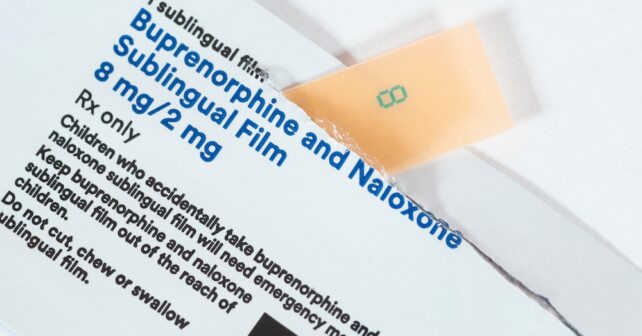
Buprenorphine, a partial opioid agonist approved for the treatment of opioid use disorder (OUD) by the U.S. Food and Drug Administration in 2002, is a cornerstone of evidence-based care for managing OUD. It effectively reduces cravings and withdrawal symptoms with minimal adverse effects. It is also proven to improve engagement in addiction treatment when compared to referral alone.4 These benefits translate into reductions in all-cause and opioid-related mortality.5,6

Prehospital Bupe

Emergency medical services (EMS) often serve as the first point of contact with the health care system for many individuals experiencing overdose or withdrawal. The CDC reported that between January 2018 and March 2022, the rate of EMS responses for nonfatal opioid overdoses nearly doubled, from 98.1 to 179.1 per 10,000 EMS calls.7 Moreover, research has shown that nearly half of all individuals who suffer a fatal overdose had at least one EMS encounter in the preceding year.8,9 It is clear these encounters are critical moments for potential intervention.

Across the country, a growing number of EMS systems recognize and embrace this opportunity to bring lifesaving and symptom-improving treatment to patients before they  reach the hospital.10,11 Paramedics—and, in some places, even EMTs—are being trained to assess patients for buprenorphine eligibility and administer the medication in the prehospital setting. This is particularly important because studies have found that up to 47 percent of patients decline EMS transport to the hospital after being revived from an overdose.12,13,14 For these individuals, the brief EMS encounter could be their sole interaction with the health care system. It may be their only chance to initiate OUD treatment, receive counseling, and get connected to follow-up care.

Pages: 1 2 3 | Single Page

Topics: addiction treatmentBuprenorphineEmergency Medical ServicesEMSNaloxoneopioid use disorderOUDOverdoseprehospital care

Related

  • Case Report: Massive Amitriptyline and Bupropion Ingestion

    October 29, 2025 - 0 Comment
  • Event Medicine: Where Fun and Safety Sing in Perfect Harmony

    October 9, 2025 - 1 Comment
  • Trauma First Aid at the 2025 Boston Marathon

    September 22, 2025 - 0 Comment

Current Issue

ACEP Now: November 2025

Download PDF

Read More

No Responses to “Prehospital Buprenorphine Is a Powerful Tool in the Opioid-Crisis Fight”

Leave a Reply Cancel Reply

Your email address will not be published. Required fields are marked *


*
*


Wiley
  • Home
  • About Us
  • Contact Us
  • Privacy
  • Terms of Use
  • Advertise
  • Cookie Preferences
Copyright © 2025 by John Wiley & Sons, Inc. All rights reserved, including rights for text and data mining and training of artificial technologies or similar technologies. ISSN 2333-2603
