Logo

Log In Sign Up |  An official publication of: American College of Emergency Physicians
Navigation
  • Home
  • Multimedia
    • Podcasts
    • Videos
  • Clinical
    • Airway Managment
    • Case Reports
    • Critical Care
    • Guidelines
    • Imaging & Ultrasound
    • Pain & Palliative Care
    • Pediatrics
    • Resuscitation
    • Trauma & Injury
  • Resource Centers
    • mTBI Resource Center
  • Career
    • Practice Management
      • Benchmarking
      • Reimbursement & Coding
      • Care Team
      • Legal
      • Operations
      • Quality & Safety
    • Awards
    • Certification
    • Compensation
    • Early Career
    • Education
    • Leadership
    • Profiles
    • Retirement
    • Work-Life Balance
  • Columns
    • ACEP4U
    • Airway
    • Benchmarking
    • Brief19
    • By the Numbers
    • Coding Wizard
    • EM Cases
    • End of the Rainbow
    • Equity Equation
    • FACEPs in the Crowd
    • Forensic Facts
    • From the College
    • Images in EM
    • Kids Korner
    • Medicolegal Mind
    • Opinion
      • Break Room
      • New Spin
      • Pro-Con
    • Pearls From EM Literature
    • Policy Rx
    • Practice Changers
    • Problem Solvers
    • Residency Spotlight
    • Resident Voice
    • Skeptics’ Guide to Emergency Medicine
    • Sound Advice
    • Special OPs
    • Toxicology Q&A
    • WorldTravelERs
  • Resources
    • ACEP.org
    • ACEP Knowledge Quiz
    • Issue Archives
    • CME Now
    • Annual Scientific Assembly
      • ACEP14
      • ACEP15
      • ACEP16
      • ACEP17
      • ACEP18
      • ACEP19
    • Annals of Emergency Medicine
    • JACEP Open
    • Emergency Medicine Foundation
  • About
    • Our Mission
    • Medical Editor in Chief
    • Editorial Advisory Board
    • Awards
    • Authors
    • Article Submission
    • Contact Us
    • Advertise
    • Subscribe
    • Privacy Policy
    • Copyright Information

Practical Considerations When Sharing Clinical Images for Treatment Purposes

By Catherine A. Marco, MD, FACEP | on October 11, 2022 | 0 Comment
Problem Solvers
  • Tweet
  • Click to email a link to a friend (Opens in new window) Email
Print-Friendly Version

Yes. The Privacy Rule allows covered health care providers to share protected health information for treatment purposes without patient authorization, as long as they use reasonable safeguards when doing so. These treatment communications may occur orally or in writing, by phone, fax, e-mail, or otherwise.

You Might Also Like
  • Contribute Case Images to the Monkeypox EM Project
  • Self-Managed Abortion: Legal Considerations for Emergency Physicians
  • ACEP’s Clinical Emergency Data Registry to Measure, Report Health Care Quality, Outcomes
Explore This Issue
ACEP Now: Vol 41 – No 10 – October 2022

ACEP has a policy compendium of over 200 policies, available at acep.org/policystatements. Choose the category of policy you are looking for, in this case “Ethics.” There is a policy entitled “Audiovisual Recording in the Emergency Department.”3 Relevant positions of this policy include:

  • Recording or producing still images, audio files, or audiovisual materials. These can be made using both organizationally and personally owned equipment and electronic devices.
  • Health care institutions ought to provide HIPAA-compliant methods to store and securely transmit health care sensitive recordings.
  • Health care organizations and institutions ought to recognize that HIPAA-compliant audiovisual materials may benefit patients. Creation, promotion, and use of audiovisual educational materials may help patients understand and recall vital parts of their ED experience and discharge instructions.

Practical Considerations

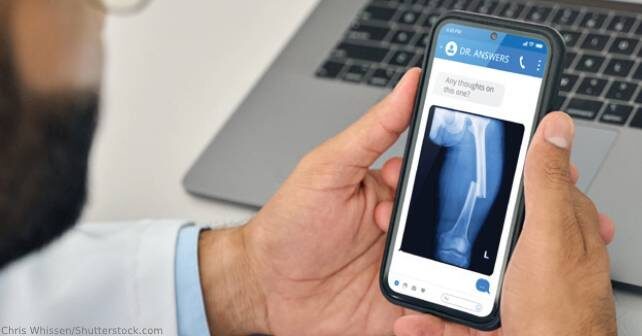
Administrative issues can be addressed using national and local policies. Short Message Service (SMS) messaging is not considered secure or HIPAA-compliant. Institutions should provide encryption enabled messaging systems to provide a HIPAA compliant method of communication by mobile phone. HIPAA compliant images without identifiers should be used. If a securely encrypted texting service is not available, images should not be texted.


Dr. Marco is professor of emergency medicine at Penn State Health-Milton S. Hershey Medical Center and associate editor of ACEP Now.

References

  1. Policy finder. AMA. Available at: https://policysearch.ama-assn.org/policyfinder/detail/. Accessed September 9, 2022.
  2. US Department of Health and Human Services: HIPAA for professionals. Available at: https://www.hhs.gov/hipaa/for-professionals/faq/482/does-hipaa-permit-a-doctor-to-share-patient-information-for-treatment-over-the-phone/index.html. Accessed June 10, 2022.
  3. American College of Emergency Physicians: Available at: https://www.acep.org/patient-care/policy-statements/audiovisual-recording-in-the-emergency-department/. Accessed June 7, 2022.

Pages: 1 2 | Single Page

Topics: HIPAALegal

Related

  • Drug-Facilitated Sexual Assault Presentation Varies

    August 25, 2025 - 0 Comment
  • The AI Legal Trap in Medicine

    August 14, 2025 - 0 Comment
  • May 2025 News from the College

    May 6, 2025 - 0 Comment

Current Issue

ACEP Now: November 2025

Download PDF

Read More

No Responses to “Practical Considerations When Sharing Clinical Images for Treatment Purposes”

Leave a Reply Cancel Reply

Your email address will not be published. Required fields are marked *


*
*


Wiley
  • Home
  • About Us
  • Contact Us
  • Privacy
  • Terms of Use
  • Advertise
  • Cookie Preferences
Copyright © 2025 by John Wiley & Sons, Inc. All rights reserved, including rights for text and data mining and training of artificial technologies or similar technologies. ISSN 2333-2603
