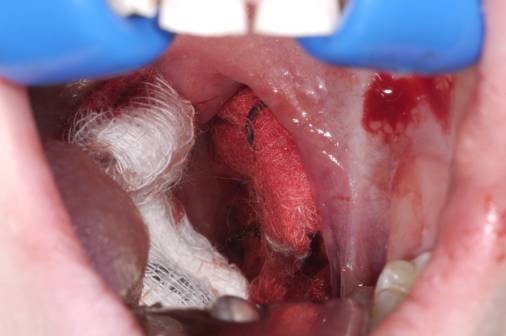
As an ENT who has practiced for 35 years, I usually managed these patients in the ER awake. Spray topical lidocaine on the side bleeding. Then inject about 2-3 cc 1% lidocaine with epi at the site of bleeding. You need a strong headlight from the OR and a suction bovie machine also from the OR. Have your ENT teach you how to use these various instruments, they are your friend. Calmly talk the patient through what you’re doing and then cauterize the bleeding vessel. It’s usually at the plica triangularis (the bottom of the tonsillar fossa. Use two tongue blades to push the tongue down to find the bleeder. Give it a few good buzzes with the suction bovie and you’re done.
Everything else is just delaying the treatment. One last thing, if it’s a young patient, this won’t work. Teenagers at a minimum. Otherwise, you’d better hope your ENT is close by.
Having practiced ENT for 35+ yrs, I’ve seen my share of post-tonsil bleeds, usually 5-10 days postop, but have seen them as late as several weeks. I don’t hesitate to take these patients to the OR, not only for excellent visualization, but there’s nothing worse than stopping the bleeding in the ER, only to be called back 2-3 hrs later because the patient rebled, usually secondary to N/V at home despite anti nausea meds.
Usually cautery or coblation solves the problem, and I then inject 1-2cc of 1/4% marcaine with 1/200K epinephrine for pain control, along with hemostatic effect.
Postop tonsil bleeds can be severe and cause you to age faster, and loose sleep!
This sentence here “Calmly talk the patient through what you’re doing and then cauterize the bleeding vessel.” Was so nice to read. My son went through this and it was so scary for him and myself because no one explained anything and the blood was so scary for us to see. Possibly the people in ED didn’t know what was going on until the ENT arrived. Not sure but it was traumatizing for my 7 year old.




4 Responses to “Post-Tonsillectomy Hemorrhage: A Three-Pronged Approach”
January 15, 2025
Creed MamikunianAs an ENT who has practiced for 35 years, I usually managed these patients in the ER awake. Spray topical lidocaine on the side bleeding. Then inject about 2-3 cc 1% lidocaine with epi at the site of bleeding. You need a strong headlight from the OR and a suction bovie machine also from the OR. Have your ENT teach you how to use these various instruments, they are your friend. Calmly talk the patient through what you’re doing and then cauterize the bleeding vessel. It’s usually at the plica triangularis (the bottom of the tonsillar fossa. Use two tongue blades to push the tongue down to find the bleeder. Give it a few good buzzes with the suction bovie and you’re done.
Everything else is just delaying the treatment. One last thing, if it’s a young patient, this won’t work. Teenagers at a minimum. Otherwise, you’d better hope your ENT is close by.
January 19, 2025
Paul MMany of us live in a world where there is no ENT…either on call or close by. Top 5 bad cases at 0300….tonsillar bleed in pediatric patient.
February 20, 2025
Dr James C MartinHaving practiced ENT for 35+ yrs, I’ve seen my share of post-tonsil bleeds, usually 5-10 days postop, but have seen them as late as several weeks. I don’t hesitate to take these patients to the OR, not only for excellent visualization, but there’s nothing worse than stopping the bleeding in the ER, only to be called back 2-3 hrs later because the patient rebled, usually secondary to N/V at home despite anti nausea meds.
Usually cautery or coblation solves the problem, and I then inject 1-2cc of 1/4% marcaine with 1/200K epinephrine for pain control, along with hemostatic effect.
Postop tonsil bleeds can be severe and cause you to age faster, and loose sleep!
July 26, 2025
Dee EmersThis sentence here “Calmly talk the patient through what you’re doing and then cauterize the bleeding vessel.” Was so nice to read. My son went through this and it was so scary for him and myself because no one explained anything and the blood was so scary for us to see. Possibly the people in ED didn’t know what was going on until the ENT arrived. Not sure but it was traumatizing for my 7 year old.