
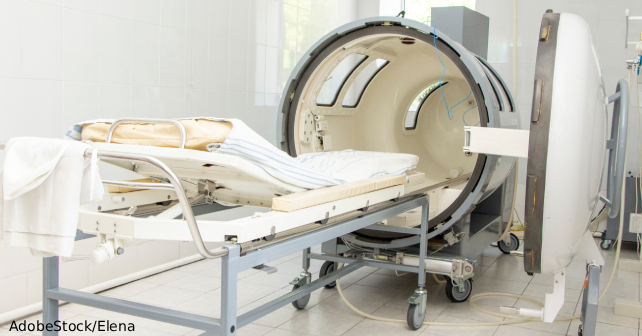
As a practicing physician in hyperbaric medicine, I am alarmed at the insidious expansion of poorly regulated hyperbaric chambers in the United States. These facilities use unsafe chambers and do not conform to industry standard safety practices, tragically leading to two fatal accidents in 2025 and likely countless unreported injuries. It is imperative to know how these facilities differ from reputable hyperbaric programs, the injuries they may cause, and what you can do to help. One of these facilities likely is in your community, you should be aware and ready to respond.
Explore This Issue
ACEP Now: February 2026 (Digital)Consider the Case
A 40-year-old male presents to the emergency department complaining of shortness of breath after the “soft” hyperbaric chamber he had used at a wellness center as a treatment to prevent aging failed. Treatment pressure was around 1.3 ATA (about 4 psi above surface). During his treatment, the chamber zipper failed and rapidly decompressed. Along with shortness of breath, he complains about confusion and an inability to move his left side. How would you evaluate and treat this patient?
Defining the Issue
Since 1967, the Undersea and Hyperbaric Medical Society (UHMS) has outlined evidence-based indications for the therapeutic use of hyperbaric oxygen (HBO) and promoted industry safety standards through advocacy and their facility accreditation program. Hyperbaric treatments are not without risk. However, when treatments are conducted in regulated chambers, under physician supervision, with well trained staff, hyperbaric medicine is safe. Over 130 chambers in the U.S. have obtained UHMS accreditation — a voluntary, third-party inspection that verifies a program meets the highest industry standards for safety and patient care.
In recent years we have seen an expansion of poorly managed chambers in wellness centers, chiropractic offices, and even homes. Many use soft or inflatable chambers that are FDA approved only for acute mountain sickness, either in their clinic or at home. They may tout themselves as “mild hyperbarics” by targeting chamber pressures of 1.3 ATA, well below therapeutic standards. Even these “mild” pressures can lead to catastrophic injuries during chamber failure. More difficult to identify are facilities that use standard “hard-sided” chambers capable of reaching 2.0 ATA, a standard pressure used at reputable facilities. Both types of facilities share troubling attributes of minimal physician oversight, questionable prescriptive authority and lax safety standards. They operate afoul of existing U.S. Food and Drug Administration (FDA) and National Fire Protection Association (NFPA) regulations that are poorly enforced and usually left to local fire marshals who may have minimal experience with local chamber practices or required regulations.
They claim benefit in a myriad of unproven medical conditions including dementia, stroke, anti-aging, fibromyalgia and alarmingly to parents of children with ADHD, autism and cerebral palsy. The hyperbaric community actively investigates emerging indications and supports the responsible use of off-label HBO in a research setting or in certain clinical conditions. However, the sheer breadth of their proposed diagnoses are without evidence, leave little chance of benefit and combined with their poor safety record poses significant harm to patients.
Thankfully, the FDA updated their guidance on the safe use of hyperbaric oxygen chambers that emphasizes following the manufacturer’s instructions and using FDA approved chambers. https://www.fda.gov/consumers/consumer-updates/hyperbaric-oxygen-therapy-get-factsNational organizations including the UHMS and AMA have made resolutions highlighting their concern with “mild hyperbarics.” Continued non-compliance with industry safety standards and federal regulations can predictably lead to patient injury and even death.
What to Expect When Things Go Wrong
In 2025 there were two fatal HBO accidents in the United States. Both occurred in hard-sided chambers operated in unaccredited facilities focused on treating unapproved indications. One led to the death of a 5-year-old boy in Troy, Michigan, with ongoing criminal prosecution of four staff members charged with murder, manslaughter, and falsifying medical records. Soft-sided chambers bring their own risk, with multiple structural and zipper failure accidents last year that have been attributed to causing blunt chest trauma, pneumothorax, and air embolism.
As an emergency physician, you may be expected to respond to these injuries. Two injury patterns that physicians should know are:
- Pressure injuries. Sudden chamber depressurization or failure can occur in a poorly operated or maintained chamber. Chamber explosion can cause blunt trauma to patients and bystanders. Patients may sustain pressure injuries to gas-filled spaces in the body. This can include tympanic membrane rupture, sinus injury, or lung injury with pneumothorax, pneumomediastinum, or subcutaneous emphysema. Patients may also present with symptoms of arterial gas embolism (AGE). Investigate for focal weakness, severely altered mental status, or other focal neurologic deficits. AGE is a clinical diagnosis that does not require air to be seen in the brain or ventricle on advanced imaging. Ironically, the only effective treatment for AGE is hyperbaric treatment, ideally at a reputable facility, to “squeeze” the bubbles back as well as reducing inflammatory damage to affected vasculature. If not available, supportive management and investigation for alternative causes can be pursued. Disposition on pressure injuries will depend on severity.
- Burn injuries. Chamber fires can occur in air or oxygen filled chambers and often are due to faulty equipment, a lack of patient grounding, or flammable material being allowed in the chamber. You can expect both burn injuries and pressure injuries to result from a chamber fire. Once a fire ignites, it initially causes rapid over pressurization. Chamber seals may fail and lead to subsequent rapid chamber depressurization. If the patient survives, you should expect to see severe burn injuries likely involving the skin and airways. Bystanders may sustain burns from the ignition of gas exiting the chamber. Patient care for these injuries is typical of burn management focusing on airway, breathing, circulation, and resuscitation. Unique features include carbon monoxide and cyanide inhalation and the potential for pressure injuries from rapid pressure cycling.
Our case describes rapid decompression leading to either pneumothorax or air gas embolism.
What You Can Do
The hyperbaric community is trying to rein in these facilities, enforce existing federal regulations, and mandate industry standard safety practices across the board. You can help protect patients.
-
- Educate yourself on safe hyperbaric chambers in your area. Look for those with UHMS accreditation or those that meet the standards outlined in the UHMS’ “Ten Guidelines for Patients and Referring Physicians.”” Red flags include:
- Soft-sided inflatable chambers;
- Minimal physician oversight; and
- Aggressive advertising of non-UHMS approved indications.
- Be ready to evaluate and treat hyperbaric chamber emergencies.
- If you are aware of unsafe chambers or a chamber accident, consider taking action:
- File a report with the UHMS Global Hyperbaric Incident Reporting System system or FDA Medical Device Report;
- Reach out to your local fire marshal; and
- Reach out to the UHMS or ACEP Undersea and Hyperbaric Medicine Section with questions.
- Educate yourself on safe hyperbaric chambers in your area. Look for those with UHMS accreditation or those that meet the standards outlined in the UHMS’ “Ten Guidelines for Patients and Referring Physicians.”” Red flags include:
 Dr. Allen is an emergency and hyperbaric medicine physician practicing in Walnut Creek, California. He is board certified in Undersea and Hyperbaric Medicine and is the Chair of the UHM Section.
References
- FDA Hyperbaric Oxygen Therapy: Get the Facts: https://www.fda.gov/medical-devices/letters-health-care-providers/follow-instructions-safe-use-hyperbaric-oxygen-therapy-devices-letter-health-care-providers
- UHMS HBO Indications: https://www.uhms.org/resources/featured-resources/hbo-indications.html
- UHMS Ten Guidelines for Referring Physicians: https://www.uhms.org/images/Safety-Articles/Hyperbaric%20Safety%20bullet%20%20v4.17.25%20Clean-u.pdf



No Responses to “Poorly Regulated Hyperbaric Chambers Sound Safety Alarms”