
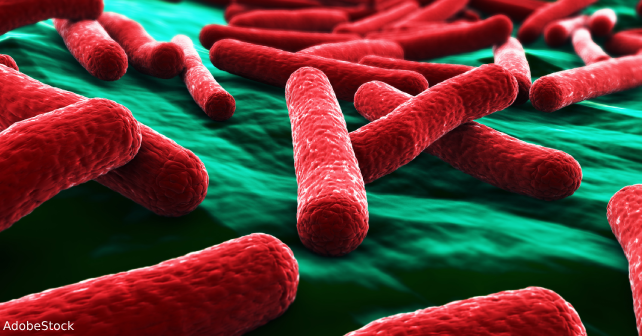
Although many cases of children presenting to the emergency department (ED) with bloody diarrhea are benign and self-limited, one potentially morbid diagnosis should always be considered: Shiga toxin-producing Escherichia coli (STEC). Although relatively rare, STEC infections carry the serious risk of hemolytic uremic syndrome (HUS), a leading cause of acute kidney injury in children. Shiga toxin 2 (Stx2) is specifically associated with a 15-20 percent risk for HUS in children younger than 5.1 In multiple case series studies, more than 50 percent of patients with STEC-related HUS required dialysis within one week.2 Emergency physicians must identify which children are at risk, initiate the right investigations, and arrange appropriate monitoring or admission to prevent severe morbidity or even mortality. By the end of this column, it’s my hope that you will gain an evidence-based approach to pediatric bloody diarrhea and be primed to recognize and manage STEC to improve outcomes.
Explore This Issue
ACEP Now: August 2025 (Digital)When to Suspect STEC Infection
The evaluation of a child with bloody diarrhea begins, as always, with a thorough assessment of hemodynamic status and hydration. Fortunately, most children presenting with bloody diarrhea are hemodynamically stable and well-perfused, but subtle signs of dehydration or early shock should not be overlooked. In the unstable child, fluid resuscitation and empiric antibiotics are priorities. However, in most well-appearing, stable children, attention turns to determining the cause of the bleeding and assessing the risk for STEC infection.
Children with STEC infection frequently present with a short duration of illness, typically one to five days, marked by severe crampy abdominal pain and frequent small-volume bloody, mucous-like stools.3 Parents may report more than 15-20 bowel movements per day, and although fever may be present, it is often low-grade. The diarrhea tends to be of small volume, distinguishing it from the profuse watery diarrhea of cholera-like illnesses or large-volume bleeding from other causes. This pattern of frequent painful, bloody stools should raise suspicion for infectious colitis, with STEC as an important consideration. When should STEC infection be suspected? In children from endemic areas (which includes the northern states of the United States) who present with severe crampy abdominal pain, small frequent, mucous-like, bloody stools, low grade fever, and/or signs of microangiopathy such as petechiae and jaundice.4
Obtain a Stool Specimen or Rectal Swab
Although not all children who present to the ED with diarrhea require stool testing, those with bloody diarrhea should be considered for it. Clinicians should prioritize collecting a stool sample in the ED rather than sending the family home with a container for outpatient collection. Delaying specimen collection can prolong the time to diagnosis by a day or more, increasing the risk for missing the window for effective early intervention. Most laboratories in North America now use multiplex polymerase chain reaction (PCR) assays as the frontline diagnostic tool rather than culture. These panels typically test for STEC, Salmonella, Shigella, and Campylobacter, providing broad coverage of common bacterial pathogens.
Pages: 1 2 3 4 | Single Page



No Responses to “Pediatric Bloody Diarrhea: Recognition, Management of STEC Infection”