
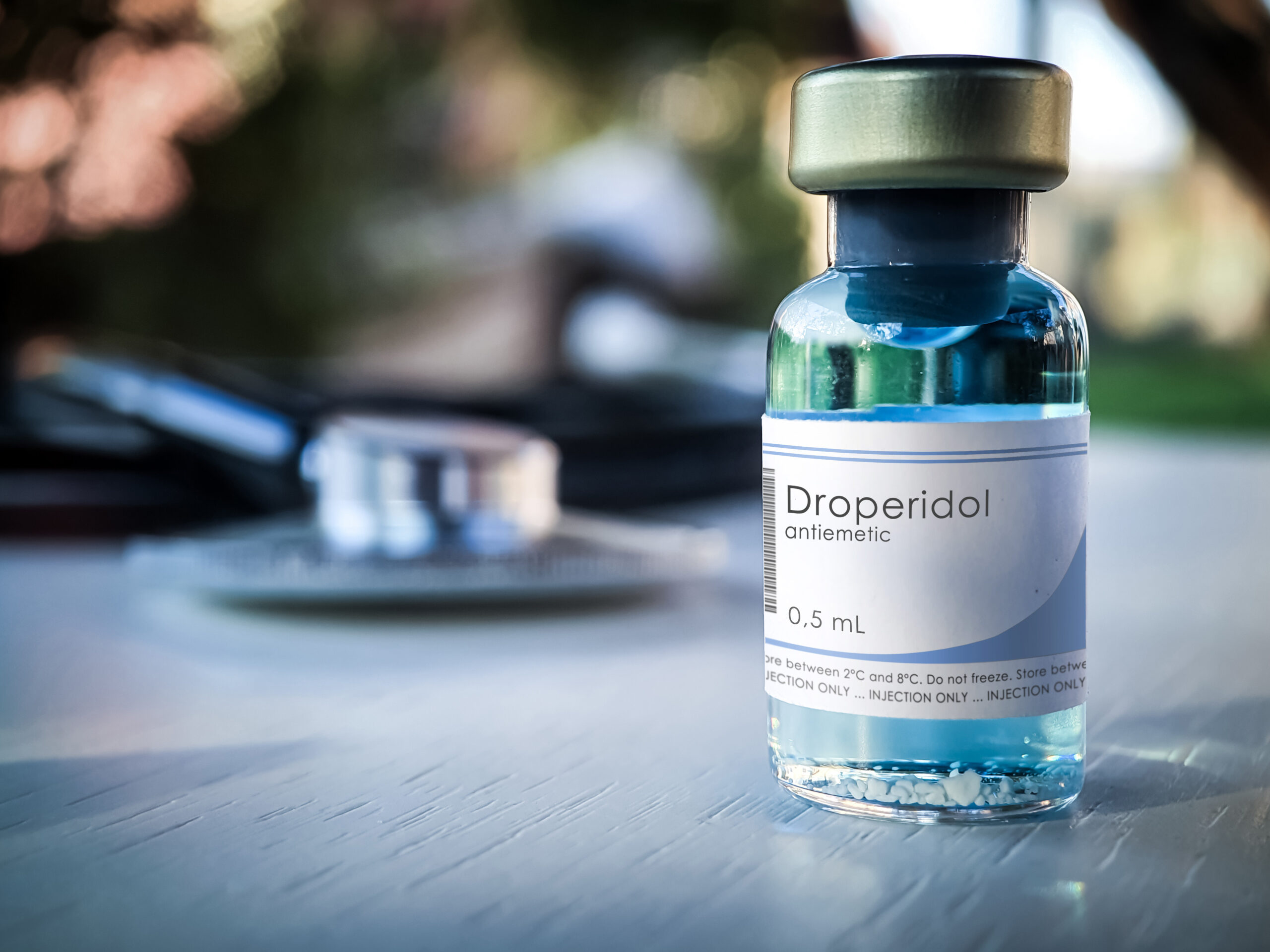
When Jeremiah (Jay) Joson, PharmD, APh, BCPS, BCMTMS, was an inpatient pharmacy manager in 2013, his hospital was visited by the California Department of Public Health (CDPH), concerned about droperidol and ECG monitoring, or rather, lack thereof. It resulted in the removal of droperidol from the hospital formulary, despite the medical staff’s review and approval of its use. Fast forward 12 years, and droperidol is still a favorite punching bag for CDPH.
Explore This Issue
ACEP Now: April Digital 02-DDespite all the buzzwords (“Evidence-based medicine!” “Guideline directed!”), CDPH still insists that following the Food and Drug Administration’s (FDA) package insert is the gold standard when it comes to medical practice. On December 4, 2001, the FDA issued a boxed warning for droperidol, noting an association with QT prolongation and torsade des pointes (TdP). The warning states, “For patients in whom the potential benefit of droperidol treatment is felt to outweigh the risks of potentially serious arrhythmias, ECG monitoring should be performed prior to treatment and continued for 2-3 hours after completing treatment to monitor for arrhythmias.”1 Despite decades of evidence detailing the safety and efficacy of droperidol, its package insert includes just seven references, spanning a date range of 1989 to 1998, with one reference written entirely in German and another studying droperidol use in “chronically instrumented dogs.”1 A study by van Zwieten in 2004 found that 49 percent of deaths attributed to droperidol required dosages greater than or equal to 50 mg, magnitudes greater than typical dosages used in the emergency department (ED).2 However, as much of the current literature states, the association between droperidol and a prolonged QTc leading to TdP are severely overblown, except in the mind of a CDPH surveyor.
Ironically, many other medications and medication classes have a close association with QT prolongation but lack a boxed warning. A meta-analysis by Singh and colleagues involving 687 patients found that ondansetron was associated with a statistically significant prevalence of QTc prolongation in all age groups.3 On the contrary, a retrospective review by Cole and associates spanning four years found a droperidol induced TdP rate of 1 in 16,546, or 0.006 percent, less than that of ondansetron. Yet, ondansetron lacks a boxed warning for QT prolongation.4 A study by Nuttall spanning three years analyzed 35,536 administered doses of droperidol and found no patients developed TdP or death.5 Another study by Martel compared droperidol 5 mg, ziprasidone 10 mg, ziprasidone 20 mg, and lorazepam 2 mg for the treatment of agitation in the ED. Droperidol was found to be more effective at attaining sedation (64 percent) versus ziprasidone 10 mg (25 percent), ziprasidone 20 mg (35 percent), and lorazepam 2 mg (29 percent).6 Furthermore, droperidol had the lowest rate of respiratory depression (12 percent) versus all other agents studied (36 to 48 percent). No patients had ventricular arrhythmias, and QTc durations were similar in all groups. This year, the CDPH surveyor asked to see the evidence in our use of droperidol (typically dosages ≤ 5 mg without ECG monitoring in only the most combative patients). We presented the surveyor with the data, but our citation mentioned only the ECG requirements of the package insert while ignoring every article provided.
The CDPH surveyor made it a point to say that the use of droperidol should not be done out of “convenience.” On the contrary, droperidol is safe, not just for the patient but also our providers. A national poll in 2018 by the American College of Emergency Physicians (ACEP) reported that nearly half of respondents had been physically assaulted.7 In 2024, the number of physicians reporting that they, or a colleague, had been assaulted jumped to an astounding 91 percent.8 Workplace violence has become so prevalent that the U.S. Congress introduced both HR 2663/S. 11769 and the SAVE act (HR 2584/S. 2768)10 to strengthen workplace violence prevention programs. Our ED colleagues, Drs. Pho, Seng, and Al-Saiegh can all attest to the increased level of violence seen over the past decade and the need for a medication that is both safe, effective, and responsive. Clinical guidelines by the ACEP for the treatment of agitation list droperidol as the preferred agent (Level B recommendation) for patients with severe agitation.11 Similarly, Project BETA12, an interdisciplinary group led by the American Association of Emergency Psychiatry (AAEP) to determine preferred pharmacotherapeutic agents for agitation, also lists droperidol. Lastly, a policy statement by the ACEP on the use of droperidol for agitation in the ED continues to recommend droperidol at initial doses of 5-10 mg IM/IV, regardless of initial monitoring capability or ECG availability.13
Pages: 1 2 3 | Single Page

3 Responses to “Opinion: When Health Care Regulatory Agencies Practice Medicine”
April 14, 2025
Brian GilbertThank you Dr. Joson, Dr. Al-Saiegh, and Dr. Seng. This is a wonderful piece highlighting an important topic especially in the era of drug shortages where we shouldn’t be limiting use of medications based on outdated information.
May 9, 2025
Jimmy PruittGreat work on important topic
February 12, 2026
Jay JosonJust got word from a hospital in SoCal that the same surveyor is at it again, totally ignoring all evidence and everything we’ve explained in our publication. Something needs to be done. ACEP? Partner with AMA/CMA? This guy needs to get his ego checked.