Logo

Log In Sign Up |  An official publication of: American College of Emergency Physicians
Navigation
  • Home
  • Multimedia
    • Podcasts
    • Videos
  • Clinical
    • Airway Managment
    • Case Reports
    • Critical Care
    • Guidelines
    • Imaging & Ultrasound
    • Pain & Palliative Care
    • Pediatrics
    • Resuscitation
    • Trauma & Injury
  • Resource Centers
    • mTBI Resource Center
  • Career
    • Practice Management
      • Benchmarking
      • Reimbursement & Coding
      • Care Team
      • Legal
      • Operations
      • Quality & Safety
    • Awards
    • Certification
    • Compensation
    • Early Career
    • Education
    • Leadership
    • Profiles
    • Retirement
    • Work-Life Balance
  • Columns
    • ACEP4U
    • Airway
    • Benchmarking
    • Brief19
    • By the Numbers
    • Coding Wizard
    • EM Cases
    • End of the Rainbow
    • Equity Equation
    • FACEPs in the Crowd
    • Forensic Facts
    • From the College
    • Images in EM
    • Kids Korner
    • Medicolegal Mind
    • Opinion
      • Break Room
      • New Spin
      • Pro-Con
    • Pearls From EM Literature
    • Policy Rx
    • Practice Changers
    • Problem Solvers
    • Residency Spotlight
    • Resident Voice
    • Skeptics’ Guide to Emergency Medicine
    • Sound Advice
    • Special OPs
    • Toxicology Q&A
    • WorldTravelERs
  • Resources
    • ACEP.org
    • ACEP Knowledge Quiz
    • Issue Archives
    • CME Now
    • Annual Scientific Assembly
      • ACEP14
      • ACEP15
      • ACEP16
      • ACEP17
      • ACEP18
      • ACEP19
    • Annals of Emergency Medicine
    • JACEP Open
    • Emergency Medicine Foundation
  • About
    • Our Mission
    • Medical Editor in Chief
    • Editorial Advisory Board
    • Awards
    • Authors
    • Article Submission
    • Contact Us
    • Advertise
    • Subscribe
    • Privacy Policy
    • Copyright Information

National Hospital Ambulatory Medical Care Survey Data Show Increase in Emergency Department Visits

By James J. Augustine, MD, FACEP | on January 20, 2015 | 1 Comment
Benchmarking
  • Tweet
  • Click to email a link to a friend (Opens in new window) Email
Print-Friendly Version
National Hospital Ambulatory Medical Care Survey Data Show Increase in Emergency Department Visits

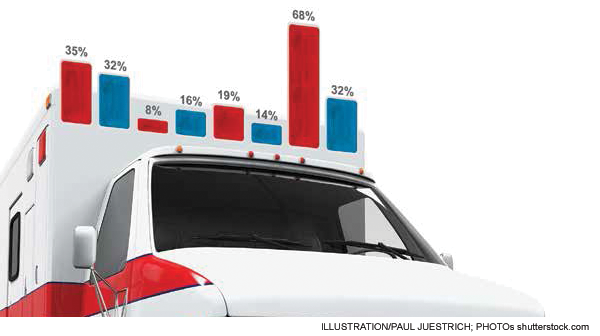
There is continuing growth in the percentage of overall hospital admissions presenting through the ED. The 2011 data survey finds that about 22 million admissions occurred through the ED. There were about 35 million hospital discharges, which included newborn infants from hospital delivery units. That means about 63 percent of inpatients were processed through the ED. The Emergency Department Benchmarking Alliance data survey finds an even higher number, with 68 percent of hospital inpatients arriving through the ED. The ED is clearly the “front door of the hospital.”

You Might Also Like
  • Long-Term Trends in Emergency Department Visits, Patient Care Highlighted in National Reports
  • Emergency Department Volume Increase Trend Continues Into 2014
  • Emergency Department Benchmarking Alliance Reports on Data Survey for Next-Generation ED Design
Explore This Issue
ACEP Now: Vol 34 – No 01– January 2015

There is a long-term trend that American EDs are seeing between 2 and 3 percent more visits every year. More patients arrive with medical illnesses rather than injuries. More patients are elderly and arrive by emergency medical services.

The growing number of patients with primary mental health and substance abuse issues represents a serious challenge for emergency physicians.

It is clear that Americans have come to trust the quality of our service and the value for the time and money spent for their ED visits. Emergency physicians should continue to deliver services that provide a reliable and cost-effective system of unscheduled care.


James J. Augustine, MD, FACEPJames J. Augustine, MD, FACEP, is director of clinical operations at EMP in Canton, Ohio; clinical associate professor of Emergency Medicine at Wright State University in Dayton, Ohio; vice president of the Emergency Department Benchmarking Alliance; and on the ACEP Board of Directors.

Pages: 1 2 | Single Page

Topics: Emergency DepartmentEmergency MedicineEmergency PhysicianOperationsPractice ManagementPractice Trends

Related

  • Florida Emergency Department Adds Medication-Dispensing Kiosk

    November 7, 2025 - 1 Comment
  • Q&A with ACEP President L. Anthony Cirillo

    November 5, 2025 - 0 Comment
  • How Does Emergency Medicine Navigate Consolidation Trends in Health Care?

    October 29, 2025 - 0 Comment

Current Issue

ACEP Now: November 2025

Download PDF

Read More

About the Author

James J. Augustine, MD, FACEP

James J. Augustine, MD, FACEP, is national director of prehospital strategy for US Acute Care Solutions in Canton, Ohio; clinical professor of emergency medicine at Wright State University in Dayton, Ohio; and vice president of the Emergency Department Benchmarking Alliance.

View this author's posts »

One Response to “National Hospital Ambulatory Medical Care Survey Data Show Increase in Emergency Department Visits”

  1. September 11, 2015

    Using Electronic Medical Records to Predict Readmission Risk After Percutaneous Coronary Intervention - ACEP Now Reply

    […] characteristics derived from electronic medical records (EMR) can predict the risk of readmission after percutaneous coronary intervention (PCI), a study […]

Leave a Reply Cancel Reply

Your email address will not be published. Required fields are marked *


*
*


Wiley
  • Home
  • About Us
  • Contact Us
  • Privacy
  • Terms of Use
  • Advertise
  • Cookie Preferences
Copyright © 2025 by John Wiley & Sons, Inc. All rights reserved, including rights for text and data mining and training of artificial technologies or similar technologies. ISSN 2333-2603
