Logo

Log In Sign Up |  An official publication of: American College of Emergency Physicians
Navigation
  • Home
  • Multimedia
    • Podcasts
    • Videos
  • Clinical
    • Airway Managment
    • Case Reports
    • Critical Care
    • Guidelines
    • Imaging & Ultrasound
    • Pain & Palliative Care
    • Pediatrics
    • Resuscitation
    • Trauma & Injury
  • Resource Centers
    • mTBI Resource Center
  • Career
    • Practice Management
      • Benchmarking
      • Reimbursement & Coding
      • Care Team
      • Legal
      • Operations
      • Quality & Safety
    • Awards
    • Certification
    • Compensation
    • Early Career
    • Education
    • Leadership
    • Profiles
    • Retirement
    • Work-Life Balance
  • Columns
    • ACEP4U
    • Airway
    • Benchmarking
    • Brief19
    • By the Numbers
    • Coding Wizard
    • EM Cases
    • End of the Rainbow
    • Equity Equation
    • FACEPs in the Crowd
    • Forensic Facts
    • From the College
    • Images in EM
    • Kids Korner
    • Medicolegal Mind
    • Opinion
      • Break Room
      • New Spin
      • Pro-Con
    • Pearls From EM Literature
    • Policy Rx
    • Practice Changers
    • Problem Solvers
    • Residency Spotlight
    • Resident Voice
    • Skeptics’ Guide to Emergency Medicine
    • Sound Advice
    • Special OPs
    • Toxicology Q&A
    • WorldTravelERs
  • Resources
    • ACEP.org
    • ACEP Knowledge Quiz
    • Issue Archives
    • CME Now
    • Annual Scientific Assembly
      • ACEP14
      • ACEP15
      • ACEP16
      • ACEP17
      • ACEP18
      • ACEP19
    • Annals of Emergency Medicine
    • JACEP Open
    • Emergency Medicine Foundation
  • About
    • Our Mission
    • Medical Editor in Chief
    • Editorial Advisory Board
    • Awards
    • Authors
    • Article Submission
    • Contact Us
    • Advertise
    • Subscribe
    • Privacy Policy
    • Copyright Information

Modified Valsalva Maneuver Better Way to Manage Supraventricular Tachycardia

By Ken Milne, MD | on May 17, 2016 | 2 Comments
Skeptics' Guide to EM
  • Tweet
  • Click to email a link to a friend (Opens in new window) Email
Print-Friendly Version
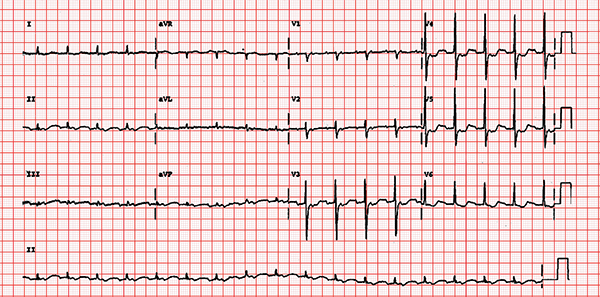
Modified Valsalva Maneuver Better Way to Manage Supraventricular Tachycardia

Key Results: There were 428 adult patients included in the study. The mean age was in the mid-50s, approximately 60 percent were female, and about half had a history of SVT.

You Might Also Like
  • Introduction: Heimlich Maneuver
  • How to Manage Emergency Department Patients with Left Ventricular Assist Devices
  • Emergency Medicine Literature’s Top Practice-Changing Articles

The modified Valsalva maneuver resulted in an increased frequency of conversion out of SVT to sinus rhythm compared to the standard Valsalva maneuver. The adjusted odds ratio = 3.7 (95 percent CI, 3.3–5.8; P<0.0001). Number needed to treat (NNT) = 4 (95 percent CI, 3–7).

Primary Outcome: Return to sinus rhythm at one minute:


Modified 43 percent versus standard 17 percent, NNT = 4

There was less use of adenosine and anti-dysrhythmic drugs. There was no difference in length of stay in the ED, discharge home, or adverse events.

The modified Valsalva maneuver resulted in an increased frequency of conversion out of SVT to sinus rhythm compared to the standard Valsalva maneuver.

EBM Commentary:

      • This pragmatic study was very well done and addressed a common condition presenting to the ED. The postural modification of the standard Valsalva maneuver represents an inexpensive, well-tolerated treatment option with a NNT of 4.
      • Blinding was a potential limitation in this study. The authors tried hard to minimize this type of bias. It was not possible to blind the providers to the treatment group. However, the patients were not aware of which treatment was the modified technique. The independent cardiologist who retrospectively assessed the ECGs was blinded to group allocation. If there were disagreements about ECG interpretation between the unblinded treating physician and the blinded cardiologist, an independent electrophysiologist, also blinded, arbitrated.

Bottom Line: To REVERT your next stable patient with SVT to a sinus rhythm, consider a postural modification of the standard Valsalva maneuver.

Case Resolution: You use the modified Valsalva maneuver and successfully convert him to a sinus rhythm.

Thank you to Dr. Robert Edmonds, a third-year emergency medicine resident at the University of Missouri at Kansas City, for his help on this review.

Remember to be skeptical of anything you learn, even if you heard it on the Skeptics’ Guide to Emergency Medicine.

Resources for Further Reading

  • The REVERT trial: Dip or doom for the SVT in the emergency department? St.Emlyns Web site. Accessed April 19, 2016.
  • The REVERT trial: a modified Valsalva maneuver to convert SVT. Rebel EM Web site. Accessed April 19, 2016.
  • Postural modification to the standard Valsalva manoeuvre for emergency treatment of supraventricular tachycardias (REVERT): a randomised controlled trial. The Bottom Line Web site. Accessed April 19, 2016.
  • This is a SVT and I’m gonna REVERT it – using a modified Valsalva manoeuvre. The Skeptics’ Guide to EM Web site. Accessed April 19, 2016.

References

  1. Smith GD, Dyson K, Taylor D, et al. Effectiveness of the Valsalva manoeuvre for reversion of supraventricular tachycardia. Cochrane Database Syst Rev. 2013 Mar 28;3:CD009502.

Pages: 1 2 3 | Single Page

Topics: CardiovascularClinicalEmergency DepartmentEmergency MedicineEmergency PhysiciansOutcomePatient CareProcedures and SkillsSinus RhythmSupraventricular TachycardiaValsalva Maneuver

Related

  • Let Core Values Help Guide Patient Care

    November 5, 2025 - 0 Comment
  • Event Medicine: Where Fun and Safety Sing in Perfect Harmony

    October 9, 2025 - 1 Comment
  • Non-Invasive Positive Pressure Ventilation in the Emergency Department

    October 1, 2025 - 0 Comment

Current Issue

ACEP Now: November 2025

Download PDF

Read More

About the Author

Ken Milne, MD

Ken Milne, MD, is chief of emergency medicine and chief of staff at South Huron Hospital, Ontario, Canada. He is on the Best Evidence in Emergency Medicine faculty and is creator of the knowledge translation project the Skeptics Guide to Emergency Medicine.

View this author's posts »

2 Responses to “Modified Valsalva Maneuver Better Way to Manage Supraventricular Tachycardia”

  1. June 19, 2016

    Chuck Pilcher Reply

    I’ve found occasional success with an even more aggressive “modification” of the Valsalva maneuver.

    The goal of the maneuver is to raise pressure on the carotid baroreceptors, right? So if the “regular” Valsalva maneuver hasn’t worked, I’ve had (usually young, athletic) patients) lie prone on the gurney, hang their head over the end of that gurney so they are at a 90 degree angle head-down, take a deep breath and hold it for 15 seconds or so. It seems to work better.

  2. May 30, 2019

    joe Reply

    Nice article. I want to add more.
    I believe A normal heart beats 60 to 100 beats per minute (bpm) but when you have SVT, your heart rate may be sustained way above 100 bpm, sometimes up to 180 or 200bpm, for several minutes or hours. You may feel that you have a racing heartbeat, which can be described as palpitations.

Leave a Reply Cancel Reply

Your email address will not be published. Required fields are marked *


*
*


Wiley
  • Home
  • About Us
  • Contact Us
  • Privacy
  • Terms of Use
  • Advertise
  • Cookie Preferences
Copyright © 2025 by John Wiley & Sons, Inc. All rights reserved, including rights for text and data mining and training of artificial technologies or similar technologies. ISSN 2333-2603