
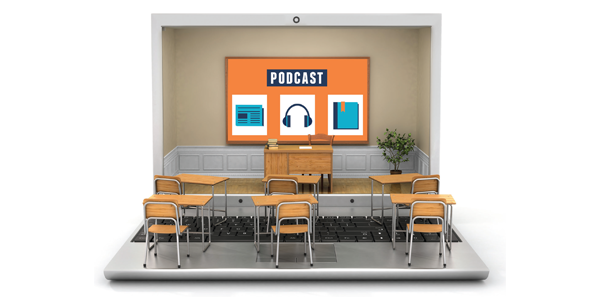
Four years ago, before the term “FOAM” had even been coined, I wrote in ACEP News for the very first time as a not-yet-graduated medical student. In that first article, I described how the advent of free open-access medical education provided a powerful new avenue for knowledge sharing in an unusual direction: from student to teacher.
Explore This Issue
ACEP Now: Vol 35 – No 09 – September 2016 In “Change from Below,” I argued that because medical students and residents were more likely to consume podcasts and blogs that advocated for cutting-edge approaches to emergency medicine, the junior member of a team might ever so occasionally be in possession of the most up-to-date knowledge on a particular topic. How, I asked, could that lowest member of the totem pole teach the advanced practice providers and senior clinicians they were training under about the latest in evidence-based medicine (EBM) without being “that guy”?
The answer was for attendings themselves to solicit the latest in EBM from their students and junior residents during shifts by actively inviting the sharing of newly acquired medical knowledge. This approach would allow motivated learners an opportunity to show off their knowledge and would carry the fringe benefit for the attending and other providers of getting free digests on emerging concepts in our field.
The example I used to illustrate the point was the HINTS exam (Head Impulse, Nystagmus, and Test of Skew) for distinguishing between central and peripheral causes of vertigo, a triad of physical exam maneuvers I first learned about on Scott Weingart’s EMCrit podcast (@emcrit).
Long story short, even by then, I had already discovered that finding EBM was more than just reading some papers and listening to a podcast. It was about combining the knowledge of those helpful resources with clinical acumen and the patient’s values.
A year later, I wrote and published an update titled “Change from Below: Update from the Midlevel.” By then, I was an illustrious and experienced … umm … almost non-intern. Long story short, even by then, I had already discovered that finding EBM was more than just reading some papers and listening to a podcast. It was about combining the knowledge of those helpful resources with clinical acumen and the patient’s values. When attempting to answer a clinical question using EBM, it’s as EBM guru and host of the podcast Skeptics’ Guide to Emergency Medicine Ken Milne (@theSGEM) likes to say: “It depends.”
But more important, in that follow-up article, I wrote that adopting evidence-based approaches sometimes led to decreased testing and, occasionally, some commensurate anxiety (in this case, forgoing that MRI to rule out an acute cerebellar stroke when the HINTS exam was reassuring). That meant that sometimes I had to follow up with a patient on the phone—that is, if I wanted to get some anxiety-free sleep later in the week. If I was going to “walk the walk” of EBM, I wrote, I had to “talk the talk.” That meant discussing risks and benefits with patients and, occasionally, calling them at home repeatedly after discharging them to check up on them.
Pages: 1 2 3 | Single Page


No Responses to “Medical Students, Residents Can Teach Each Other Things in Evidence-Based Medicine”