


Explore This Issue
ACEP Now: Vol 38 – No 06 – June 2019Dr. Greg Jacobs teaching the FAST exam.
Credit: Bryan Balentine
We met the emergency department director, Dr. Dilshad Al-Sheikh, who gave us a hospital tour, including the emergency department seeing 700 patients a day. We were pleasantly greeted by several staff physicians and learned of their EM residency training program. I was amazed at how they functioned with limited resources. CT scanner? Broken. A new GE machine had been donated but was still in several boxes upstairs. (I recently learned that a GE representative was scheduled to visit soon to install the scanner.)
Day 3: We returned to the same facility and conducted a hands-on ultrasound workshop. They had two donated high-quality portable machines that were almost right out of the box. Greg taught them the focused assessment with sonography in trauma (FAST) exam, and I focused on vascular access. It was so rewarding watching the faces of the residents and attendings light up as they quickly learned their new skills.
Later that evening, we were invited into the home of a lady John affectionately called “Mom” who fed us an amazing meal that had taken 10 hours to prepare. During our conversation, we discussed the recent war and learned of the many atrocities committed by ISIS in her country. As one resident recounted: “ISIS came in quickly to Sinjar region where a high concentration of Yazidis are located. They killed the men and took the women and children for use as sex slaves. Over 3,000 women are still missing. Some of the women who have escaped or have been “bought” back tell stories of multiple rapes and of being sold to many different men. They took them to Syria and other places as trophies. Those that could fled to Sinjar mountain, where many died of heat, thirst, and lack of food. Many women who could not escape committed suicide.” Our host relayed that Christians and Muslims had lived as neighbors for hundreds of years in Kurdistan. This obviously opened my eyes.
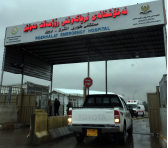
The trauma hospital in which Dr. Balentine worked with the ED attendings and residents.
Credit: Bryan Balentine
Day 4: John connected with a local community leader coordinating an effort to rebuild several villages damaged by the recent war. The hour-and-a-half drive took us past other destroyed villages and minefields behind the previous battle lines. The emotional weight was undeniable. I wasn’t reading about this anymore—I was there, where the recent fighting had occurred.
After we arrived and treated another 100 patients, providing primary care services mostly for hypertension and diabetes, the local village invited us to share another amazing meal in traditional style, seated on the floor.
Day 5: Another community leader invited us to speak at their local community center about first aid. Where do you start with such a broad topic to the general public in Kurdistan? We decided to go with a Q&A session.
The first question: “What do I do when I come upon an auto accident, the driver is unconscious, and the car is on fire?” Greg and I responded with what anyone here would state. “Call 911,” only to learn their EMS response time is one hour.
Next question: “My friend and I are walking, and he accidentally steps on a mine which blows off part of his leg. What do I do?”
After several similar questions, we quickly realized that these were not hypothetical situations, but real scenarios they occasionally faced. Greg and I offered basic maneuvers and temporizing measures until the patient is transported to a medical facility.
Several rounds of appreciation followed our Q and A. Two local governmental leaders arrived and formally handed us each an award, which read, “Thank you for visiting Kurdistan—your second country.”
Members of the community center then performed and sang traditional songs for us, which included a traditional circle dance. I had a great time recording Greg as he was pulled to the front to join in. The video ended when they pulled me into the circle. Thankfully, they were gracious and only provided us with an abbreviated example of a dance that traditionally could go on for hours. I left the event drenched and ready for bed.
Day 6: John arranged for us to see the huge, sprawling indoor market and arguably the oldest continually inhabited city in the world. Another local family invited us to lunch after another hours-on-end meal prep. We felt like royalty.
Pages: 1 2 3 | Single Page



One Response to “Medical Mission Trip to Kurdistan Opens Emergency Physician’s Eyes”
July 3, 2019
Thomas JacobsLeaders in God’s army. This kind of selfless and courageous service changes our lost world. God bless you Bryan, John, and Greg.