
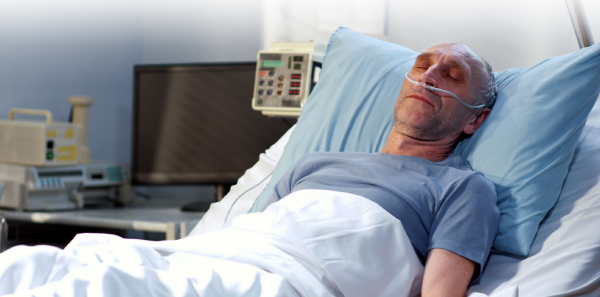
Emergency physicians are proficient in recognizing and caring for the dying medical or trauma patient but often have limited training in managing patients who are actively dying from a terminal illness, organ failure, or frailty.1 These patients frequently present to emergency departments and have a predictable set of symptoms that can be managed. Emergency physicians should understand the treatments available and how to use them for patients arriving from hospice or transitioning to comfort care in the emergency department. This article will review the recommended medical treatments for patients requiring end-of-life comfort care in the emergency department.
Explore This Issue
ACEP Now: Vol 40 – No 07 – July 2021When choosing medications to address symptomatic care in the acutely dying patient, emergency physicians should take into account half-life, dosing, route, and onset of action. It is important to consider whether the patient has already been receiving these medications prior to arrival; if not, multiple doses may be necessary to achieve symptom relief. The intravenous route is preferred, as it is easily titratable with a fast onset. However, buccal, nasal, subcutaneous, oral, and intramuscular routes are also frequently acceptable.2–4 See Table 1 for a summary of palliative medical management options for various symptoms.
The Case
A 56-year-old male with end-stage pancreatic cancer is brought to your emergency department after his partner was unable to control his symptoms with his prescribed pain regimen. He arrives complaining of diffuse abdominal pain and shortness of breath.
Vitals:
- Temperature: 98º F
- Heart rate: 105
- Blood pressure: 110/55
- Respiratory rate: 29
- Oxygen saturation: 95 percent
Physical exam is significant for a distended abdomen with diffuse moderate abdominal tenderness with nausea. He is short of breath. He and his partner understand that his cancer is terminal and are ready for home hospice. Hospice staff will arrive in the morning, but the pain and discomfort are unbearable now.
How will you provide aggressive palliative resuscitation in the emergency department until the hospice team arrives in the morning?
Dyspnea
Dyspnea is prevalent in terminally ill patients and is a frequently distressing symptom that drives patients to the emergency department at the end of life. Opioids are the first-line treatment for palliation of dyspnea.5 They decrease the chemoreceptor response to hypercapnia, thereby depressing the central respiratory drive and mitigating anxiety.5 In the opioid-naive patient, low doses of oral or IV morphine can provide relief. In patients who are already taking opioids regularly, administer 5 percent of their total daily morphine dose to manage dyspnea.2–4 Oxycodone or hydromorphone can also be used, particularly in patients with a morphine allergy.
Other nonpharmacological alternatives include positioning a fan to blow cool air toward the face, repositioning the patient for better oxygenation, and administering supplemental oxygen.2–4 Admission to the hospital or hospice inpatient unit should be considered when a patient is experiencing refractory dyspnea despite initial palliative resuscitation with appropriate medications, alternative medical interventions, and the ruling out of any reversible causes of dyspnea. Management of a terminally ill patient with refractory symptoms should be escalated to a palliative physician for reassessment of end-of-life care in an acute setting.
Pages: 1 2 3 4 | Single Page



No Responses to “Managing Pain Relief in Palliative Care”