Logo

Log In Sign Up |  An official publication of: American College of Emergency Physicians
Navigation
  • Home
  • Multimedia
    • Podcasts
    • Videos
  • Clinical
    • Airway Managment
    • Case Reports
    • Critical Care
    • Guidelines
    • Imaging & Ultrasound
    • Pain & Palliative Care
    • Pediatrics
    • Resuscitation
    • Trauma & Injury
  • Resource Centers
    • mTBI Resource Center
  • Career
    • Practice Management
      • Benchmarking
      • Reimbursement & Coding
      • Care Team
      • Legal
      • Operations
      • Quality & Safety
    • Awards
    • Certification
    • Compensation
    • Early Career
    • Education
    • Leadership
    • Profiles
    • Retirement
    • Work-Life Balance
  • Columns
    • ACEP4U
    • Airway
    • Benchmarking
    • Brief19
    • By the Numbers
    • Coding Wizard
    • EM Cases
    • End of the Rainbow
    • Equity Equation
    • FACEPs in the Crowd
    • Forensic Facts
    • From the College
    • Images in EM
    • Kids Korner
    • Medicolegal Mind
    • Opinion
      • Break Room
      • New Spin
      • Pro-Con
    • Pearls From EM Literature
    • Policy Rx
    • Practice Changers
    • Problem Solvers
    • Residency Spotlight
    • Resident Voice
    • Skeptics’ Guide to Emergency Medicine
    • Sound Advice
    • Special OPs
    • Toxicology Q&A
    • WorldTravelERs
  • Resources
    • ACEP.org
    • ACEP Knowledge Quiz
    • Issue Archives
    • CME Now
    • Annual Scientific Assembly
      • ACEP14
      • ACEP15
      • ACEP16
      • ACEP17
      • ACEP18
      • ACEP19
    • Annals of Emergency Medicine
    • JACEP Open
    • Emergency Medicine Foundation
  • About
    • Our Mission
    • Medical Editor in Chief
    • Editorial Advisory Board
    • Awards
    • Authors
    • Article Submission
    • Contact Us
    • Advertise
    • Subscribe
    • Privacy Policy
    • Copyright Information

How to Manage Fluids in Emergency Airway Procedures

By Richard M. Levitan, MD, FACEP; Yen Chow, MD; & Jim DuCanto, MD | on May 14, 2017 | 1 Comment
Airway
  • Tweet
  • Click to email a link to a friend (Opens in new window) Email
Print-Friendly Version
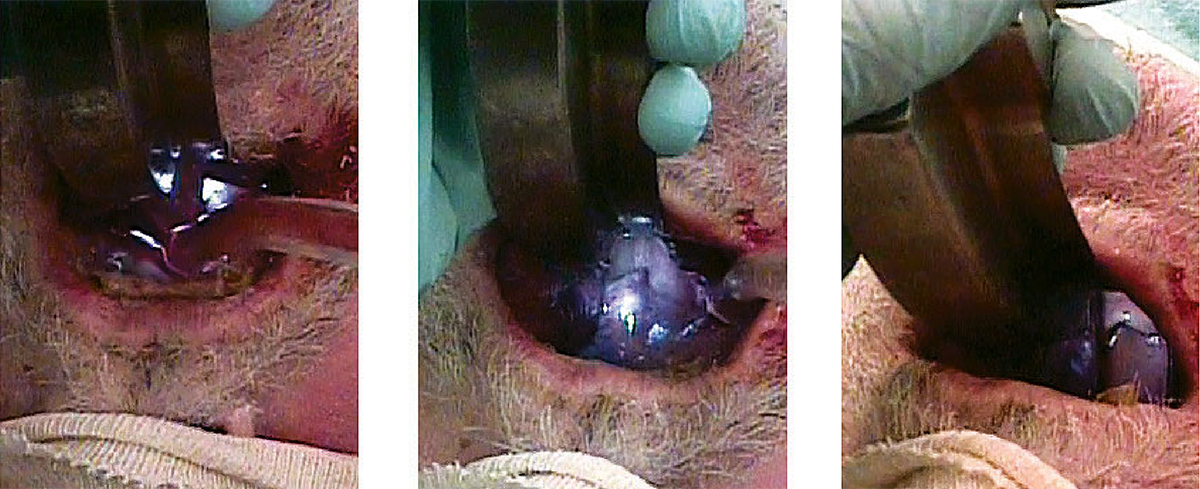
Figure 4: Image sequence for landmark visualization in the setting of massive fluids.

You Might Also Like
  • Oxygen Insufflated Into Lungs Can Prevent Desaturation, Aid in Emergency Airway Management
  • 10 Tips for Safety in Airway Management
  • Should Emergency Physicians Abandon Face-Mask Ventilation?
Explore This Issue
ACEP Now: Vol 36 – No 05 – May 2017

(click for larger image)
Figure 4: Image sequence for landmark visualization in the setting of massive fluids.
PHOTOS: Richard Levitan

Two final points: Have surgical airway tools ready. If intubation from above is impossible, the only way to oxygenate your patient may be a cricothyrotomy. It should be at the bedside and should be discussed with everyone on the team. This lowers the cognitive threshold for making the decision. Most surgical airways fail not because of technical difficulty but because they are initiated on dead patients. If intubation from above is unsuccessful, cut before the patient codes.

Lastly, gown up and use eye protection. In the words of Mike Tyson, “Everyone has a plan, until they get hit in the face!”


Dr. Levitan is an adjunct professor of emergency medicine at Dartmouth College’s Geisel School of Medicine in Hanover, New Hampshire.

Dr. Chow is assistant professor in emergency medicine/family practice at the Northern Ontario School of Medicine in Thunder Bay.

Dr. DuCanto is a staff anesthesiologist and director of simulation center at Aurora St. Luke’s Medical Center in Milwaukee.

Reference

  1. Weingart S. A novel set-up to allow suctioning during direct endotracheal and fiberoptic intubation. EMCrit website. Accessed on April 25, 2017.

Pages: 1 2 3 | Single Page

Topics: AirwayCricothyrotomyED Critical CareEmergency DepartmentEmergency MedicineEmergency PhysiciansEndoscopefluidGastrointestinalIntubationLaryngoscopyPractice ManagementRegurgitation

Related

  • Why the Nonrebreather Should be Abandoned

    December 3, 2025 - 0 Comment
  • Florida Emergency Department Adds Medication-Dispensing Kiosk

    November 7, 2025 - 1 Comment
  • Q&A with ACEP President L. Anthony Cirillo

    November 5, 2025 - 0 Comment

Current Issue

ACEP Now: November 2025

Download PDF

Read More

One Response to “How to Manage Fluids in Emergency Airway Procedures”

  1. May 18, 2017

    Kyle Strickland Reply

    Are the authors advocating Preoxygenation of a spontaneously breathing patient with a BVM? I have read that this is superior to NRB but hear many arguments against the use of BVM in spontaneously breathing patients. thanks

Leave a Reply Cancel Reply

Your email address will not be published. Required fields are marked *


*
*


Wiley
  • Home
  • About Us
  • Contact Us
  • Privacy
  • Terms of Use
  • Advertise
  • Cookie Preferences
Copyright © 2025 by John Wiley & Sons, Inc. All rights reserved, including rights for text and data mining and training of artificial technologies or similar technologies. ISSN 2333-2603
