Logo

Log In Sign Up |  An official publication of: American College of Emergency Physicians
Navigation
  • Home
  • Multimedia
    • Podcasts
    • Videos
  • Clinical
    • Airway Managment
    • Case Reports
    • Critical Care
    • Guidelines
    • Imaging & Ultrasound
    • Pain & Palliative Care
    • Pediatrics
    • Resuscitation
    • Trauma & Injury
  • Resource Centers
    • mTBI Resource Center
  • Career
    • Practice Management
      • Benchmarking
      • Reimbursement & Coding
      • Care Team
      • Legal
      • Operations
      • Quality & Safety
    • Awards
    • Certification
    • Compensation
    • Early Career
    • Education
    • Leadership
    • Profiles
    • Retirement
    • Work-Life Balance
  • Columns
    • ACEP4U
    • Airway
    • Benchmarking
    • Brief19
    • By the Numbers
    • Coding Wizard
    • EM Cases
    • End of the Rainbow
    • Equity Equation
    • FACEPs in the Crowd
    • Forensic Facts
    • From the College
    • Images in EM
    • Kids Korner
    • Medicolegal Mind
    • Opinion
      • Break Room
      • New Spin
      • Pro-Con
    • Pearls From EM Literature
    • Policy Rx
    • Practice Changers
    • Problem Solvers
    • Residency Spotlight
    • Resident Voice
    • Skeptics’ Guide to Emergency Medicine
    • Sound Advice
    • Special OPs
    • Toxicology Q&A
    • WorldTravelERs
  • Resources
    • ACEP.org
    • ACEP Knowledge Quiz
    • Issue Archives
    • CME Now
    • Annual Scientific Assembly
      • ACEP14
      • ACEP15
      • ACEP16
      • ACEP17
      • ACEP18
      • ACEP19
    • Annals of Emergency Medicine
    • JACEP Open
    • Emergency Medicine Foundation
  • About
    • Our Mission
    • Medical Editor in Chief
    • Editorial Advisory Board
    • Awards
    • Authors
    • Article Submission
    • Contact Us
    • Advertise
    • Subscribe
    • Privacy Policy
    • Copyright Information

How to Manage Emergency Department Patients with Left Ventricular Assist Devices

By Yenisleidy Paez Perez, DO; and Terrance McGovern, DO | on August 16, 2017 | 5 Comments
Features
  • Tweet
  • Click to email a link to a friend (Opens in new window) Email
Print-Friendly Version
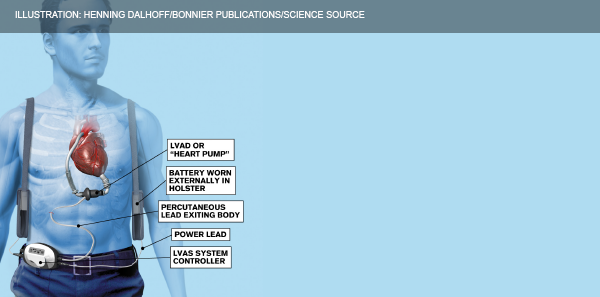
ILLUSTRATION: Henning Dalhoff/Bonnier Publications/Science Source
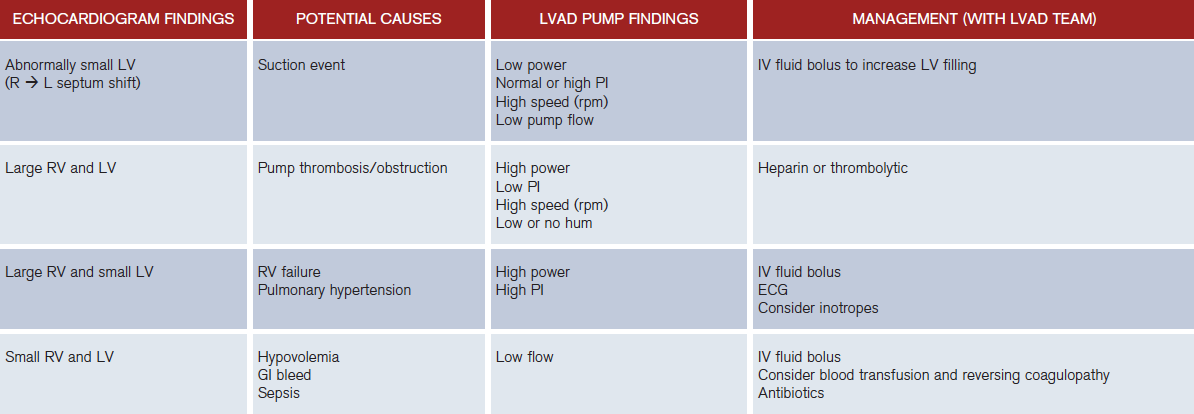
Table 2: LVAD Abnormalities

You Might Also Like
  • Emergency Physician Solves Malfunctioning LVAD with Electrician Skills
  • Mechanical CPR Devices Tied to Worse Outcomes
  • How to Manage Fluids in Emergency Airway Procedures
Explore This Issue
ACEP Now: Vol 36 – No 08 – August 2017

(click for larger image) Table 2: LVAD Abnormalities

The successful use of LVADs makes recognizing and understanding their most frequent complications increasingly important for emergency physicians. See Table 2 for a summary of LVAD abnormalities.


Dr. Paez Perez
Dr. McGovern
Dr. Paez Perez and Dr. McGovern are emergency medicine residents at St. Josephs Regional Medical Center in Paterson, New Jersey.

References

  1. Kirklin JK, Naftel DC, Pagani FD, et al. Sixth INTERMACS annual report: a 10,000-patient database. J Heart Lung Transplant. 2014;33(6):555-564.
  2. Robertson J, Long B, Koyfman A. The emergency management of ventricular assist devices. Am J Emerg Med. 2016;34(7):1294-1301.
  3. Partyka C, Taylor B. Review article: ventricular assist devices in the emergency department. Emerg Med Australas. 2014;26(2):104-112.
  4. Flores AS, Essandoh M, Yerington GC, et al. Echocardiographic assessment for ventricular assist device placement. J Thorac Dis. 2015;7(12):2139-2150.
  5. Klodell CT, Staples ED, Aranda JM Jr, et al. (2006), Managing the post-left ventricular assist device patient. Congest Heart Fail. 2006;12(1):41-45.
  6. Nienaber JJ, Kusne S, Riaz T, et al. Clinical manifestations and management of left ventricular assist device-associated infections. Clin Infect Dis. 2013;57(10):1438-1448.
  7. Butterfield M, Derr C, Keffeler J, et al. Organized cardiac activity in an awake LVAD patient during ventricular fibrillation. Am J Emerg Med. 2017;35(7):1041.e1-1041.e3.
  8. Shinar Z, Bellezzo J, Stahovich M, et al. Chest compressions may be safe in arresting patients with left ventricular assist devices (LVADs). Resuscitation. 2014;85(5):702-704.

Pages: 1 2 3 | Single Page

Topics: BatteryCardiacCardiac ArrestCardiovascularDysrhythmiasEmergency DepartmentEmergency MedicineEmergency PhysiciansHeartLeft Ventricular Assist DeviceLVADMechanicalPatient CarePump ThrombosisTransplant

Related

  • Let Core Values Help Guide Patient Care

    November 5, 2025 - 0 Comment
  • Event Medicine: Where Fun and Safety Sing in Perfect Harmony

    October 9, 2025 - 1 Comment
  • Navigating the Health Care System in Vietnam with CKD/ESRD

    September 23, 2025 - 0 Comment

Current Issue

ACEP Now: November 2025

Download PDF

Read More

5 Responses to “How to Manage Emergency Department Patients with Left Ventricular Assist Devices”

  1. August 23, 2017

    Z Bas Reply

    This is a great review. Thank you so much. I feel like I now have an approach to LVAD patients, should they ever come into my ED.

  2. August 27, 2017

    Rob Reply

    Errata: Under Bleeding, should read “arteriovenous malformations” in the GI tract.
    Great article!

    • August 28, 2017

      Dawn Antoline-Wang Reply

      Thank you, we’ve made the correction.

  3. August 31, 2017

    CR Reply

    Thanks for a great concise review!

  4. October 14, 2017

    Kevin Webb Reply

    Thank you for the great review. I will forward this to our Paramedics.

Leave a Reply Cancel Reply

Your email address will not be published. Required fields are marked *


*
*


Wiley
  • Home
  • About Us
  • Contact Us
  • Privacy
  • Terms of Use
  • Advertise
  • Cookie Preferences
Copyright © 2025 by John Wiley & Sons, Inc. All rights reserved, including rights for text and data mining and training of artificial technologies or similar technologies. ISSN 2333-2603
