
The best questions often stem from the inquisitive learner. As educators, we love and are always humbled by those moments when we get to say “I don’t know.” For some of these questions, you may already know the answers. For others, you may never have thought to ask the question. For all, questions, comments, concerns, and critiques are encouraged. Welcome to the Kids Korner.
Explore This Issue
ACEP Now: Vol 41 – No 09 – September 2022Question: In well-appearing children presenting with erythema multiforme minor, should we routinely check labs to evaluate for significant renal involvement?
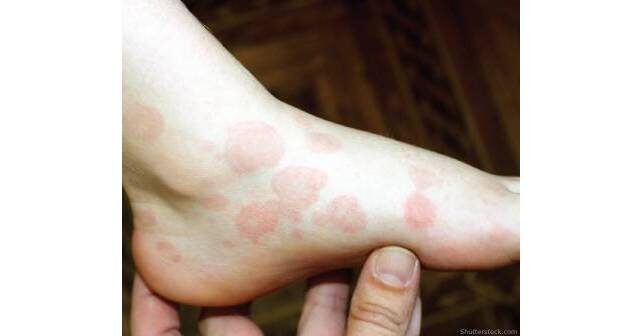
Pediatric erythema multiforme (EM) minor is an immune-mediated reaction typically presenting as targetoid lesions predominantly found on the extremities and face. The trunk is typically less involved and EM minor does not involve mucosal surfaces.1 The rash with the addition of mucous membrane lesions is termed EM major and the evaluation and assessment is more extensive. Our goal here is to focus on EM minor, which is a self-limiting cutaneous reaction. Microbial infections precede about 90 percent of EM minor presentations, but drugs have also been identified as precipitating agents. In adults, EM minor appears to be most commonly precipitated by HSV infections. In children, though, viral infections, Mycoplasma pneumonia, and idiopathic causes have been noted to be most common.2 EM minor lesions typically present over 3-5 days and resolve over the next 2-4 weeks, making patient and family education important to alleviate fear and provide realistic expectations.

Targetoid lesions present on the foot of a child. (Click to enlarge)
A 2017 retrospective study included 30 cases of pediatric erythema multiforme.1 This included both EM minor (n=15) and major (n=15) and ages ranged from four to 18 years. Labs were performed in 22 of these patients and were noted to demonstrate a leukocytosis in 36.3 percent of patients. Elevated CRP ( > 0.5mg/L) and ESR ( > 20 mm/h) were noted in 75 percent and 50 percent of patients, respectively, but were only drawn in about half of the patients. The authors note “electrolytes, kidney and liver function tests were normal in nearly all cases (one child had mild hyponatremia).” These data would suggest that labs are typically reassuring—even when including results from patients with EM major who might be a sicker population. Labs in EM minor may not be necessary.
While not specific to cases of EM minor, an older prospective study randomly evaluated 16 children with EM major only and assessed outcomes in those who did (n=10) and did not (n=6) receive methylprednisolone (4mg/kg/day).3 Patients were all admitted and laboratory evaluations were performed at admission and “repeated as necessary.” In this study, “fluid or electrolyte imbalance during hospitalization or other sequelae did not occur.” While this study is not specific to EM minor, it is somewhat reassuring, again, that significant serum abnormalities do not appear to be common in patients with EM major who are likely sicker in nature. Realistically, though, it is common to still get bloodwork in children with EM major who are going to be admitted.
Pages: 1 2 | Single Page



No Responses to “Labs for Renal Involvement for Erythema Multiforme Minor”