Logo

Log In Sign Up |  An official publication of: American College of Emergency Physicians
Navigation
  • Home
  • Multimedia
    • Podcasts
    • Videos
  • Clinical
    • Airway Managment
    • Case Reports
    • Critical Care
    • Guidelines
    • Imaging & Ultrasound
    • Pain & Palliative Care
    • Pediatrics
    • Resuscitation
    • Trauma & Injury
  • Resource Centers
    • mTBI Resource Center
  • Career
    • Practice Management
      • Benchmarking
      • Reimbursement & Coding
      • Care Team
      • Legal
      • Operations
      • Quality & Safety
    • Awards
    • Certification
    • Compensation
    • Early Career
    • Education
    • Leadership
    • Profiles
    • Retirement
    • Work-Life Balance
  • Columns
    • ACEP4U
    • Airway
    • Benchmarking
    • Brief19
    • By the Numbers
    • Coding Wizard
    • EM Cases
    • End of the Rainbow
    • Equity Equation
    • FACEPs in the Crowd
    • Forensic Facts
    • From the College
    • Images in EM
    • Kids Korner
    • Medicolegal Mind
    • Opinion
      • Break Room
      • New Spin
      • Pro-Con
    • Pearls From EM Literature
    • Policy Rx
    • Practice Changers
    • Problem Solvers
    • Residency Spotlight
    • Resident Voice
    • Skeptics’ Guide to Emergency Medicine
    • Sound Advice
    • Special OPs
    • Toxicology Q&A
    • WorldTravelERs
  • Resources
    • ACEP.org
    • ACEP Knowledge Quiz
    • Issue Archives
    • CME Now
    • Annual Scientific Assembly
      • ACEP14
      • ACEP15
      • ACEP16
      • ACEP17
      • ACEP18
      • ACEP19
    • Annals of Emergency Medicine
    • JACEP Open
    • Emergency Medicine Foundation
  • About
    • Our Mission
    • Medical Editor in Chief
    • Editorial Advisory Board
    • Awards
    • Authors
    • Article Submission
    • Contact Us
    • Advertise
    • Subscribe
    • Privacy Policy
    • Copyright Information

Know When the Paranasal Sinuses Typically Develop in Kids

By Landon Jones, MD and Richard M. Cantor, MD, FAAP, FACEP | on February 19, 2021 | 0 Comment
Kids korner
  • Tweet
  • Click to email a link to a friend (Opens in new window) Email
Print-Friendly Version
shutterstock.com
shutterstock.com

In children, what is the typical paranasal sinus development progression?

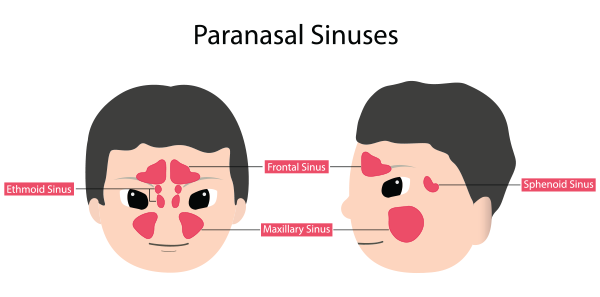
According to a 2013 American Academy of Pediatrics clinical practice guideline for the diagnosis and management of acute bacterial sinusitis, diagnosis of acute bacterial sinusitis should occur after a child has one of the following: 1) upper respiratory infection symptoms for 10 days without improvement, 2) a worsening course (usually with nasal discharge) after a period of prior improvement, or 3) the severe onset of fever—defined as ≥39º C for three days—with purulent nasal discharge.1 The diagnosis of sinusitis, though, requires the actual anatomical presence of a relevant sinus, too. What is the typical developmental progression of pediatric paranasal sinuses?

You Might Also Like
  • At What Age Should We Start Swabbing Kids for Strep Throat?
  • Do Any Studies Indicate Doxycycline Will Stain Kids’ Teeth?
  • Is There a Link Between Idiopathic Intracranial Hypertension and Obesity in Kids?
Explore This Issue
ACEP Now: Vol 40 – No 02 – February 2021

A 2003 retrospective study by Shah et al evaluated 91 pediatric CT scans from 66 children ages 0–12 years.2 The authors used predefined measurement endpoints and radiological clinical experience to give these age groups developmental scores. The predetermined age groups were 0–3 months (n=9), 3–12 months (n=12), 1–3 years (n=12), 3–5 years (n=18), 5–8 years (n=26), and 8–12 years (n=14). 

Consistent with other studies, all the paranasal sinuses were present at birth, but most were undeveloped. At birth, the sinuses—from largest to smallest—are ethmoid, maxillary, sphenoid, and frontal. Pneumatization (ie, development) of the maxillary sinuses begins to significantly occur in the 3–5-year range, which is also when the frontal sinus significantly begins to develop. In general, the order of significant development of the paranasal sinuses progresses from ethmoid to sphenoid and maxillary and then frontal. The sinuses we typically associate with acute sinusitis—the maxillary and frontal sinuses—are typically the last to begin significantly developing. 

A separate retrospective magnetic resonance imaging–based study by Adibelli et al found similar results regarding the order of paranasal sinus development.3 They evaluated 1,452 children ages 0–18 years and assessed age-specific dimensions of each of the sinuses. Unlike the CT study by Shah et al above, these authors did not appreciate any frontal sinus pneumatization prior to age 5 years. All children developed pneumatization of the frontal sinuses by age 10 years—so this study found frontal sinuses that developed even later. Maxillary sinuses seemed to develop relatively similarly to the study by Shah et al. 

Conclusion

The pediatric paranasal sinuses appear to develop in the following order: ethmoid, sphenoid/maxillary, then frontal. While they are all simultaneously enlarging, the maxillary sinuses significantly begin to develop around 3–5 years of age and the frontal sinuses are the last to significantly develop—closer to about 5 years of age. Diagnosing of acute bacterial sinusitis should take these anatomical age correlates into account.  

Pages: 1 2 | Single Page

Topics: paranasal sinusesPediatricsSinusitis

Related

  • FACEPs in the Crowd: Dr. John Ludlow

    November 5, 2025 - 0 Comment
  • Nail Bed Injuries: What to Do—or Not to Do

    August 18, 2025 - 0 Comment
  • Differential Diagnosis of an Infant with Easy Bleeding, Bruising

    August 14, 2025 - 0 Comment

Current Issue

ACEP Now: November 2025

Download PDF

Read More

About the Authors

Landon Jones, MD

Dr. Jones is associate professor and pediatric emergency medicine fellowship director at the University of Kentucky Department of Emergency Medicine & Pediatrics in Lexington, Kentucky.

View this author's posts »

Richard M. Cantor, MD, FAAP, FACEP

Dr. Cantor is professor of emergency medicine and pediatrics, director of the pediatric emergency department, and medical director of the Central New York Regional Poison Control Center at Upstate Medical University in Syracuse, New York.

View this author's posts »

No Responses to “Know When the Paranasal Sinuses Typically Develop in Kids”

Leave a Reply Cancel Reply

Your email address will not be published. Required fields are marked *


*
*


Wiley
  • Home
  • About Us
  • Contact Us
  • Privacy
  • Terms of Use
  • Advertise
  • Cookie Preferences
Copyright © 2025 by John Wiley & Sons, Inc. All rights reserved, including rights for text and data mining and training of artificial technologies or similar technologies. ISSN 2333-2603