
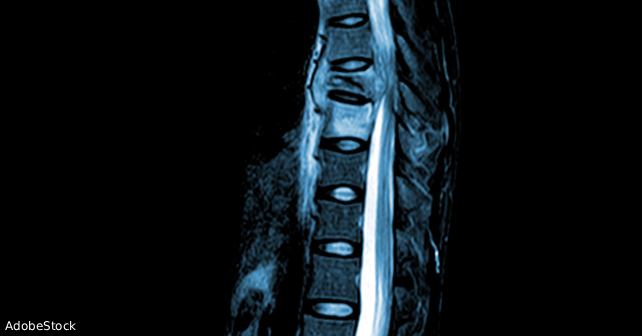
The path forward likely requires a larger movement to establish a standard of care in which a prudent evaluation is acceptable, with an allowable miss rate based on an agreed upon approach. A handful of risk-stratification instruments have been proposed, one of which requires a CRP. A combination of clinical risk stratification and inflammatory biomarker measurement may yet emerge as an effective tool in the diagnosis of AISP, but further work in this area is required.
Explore This Issue
ACEP Now: November 2025As with all retrospective derivation of measurement thresholds, further validation is desirable. That said, these data have rough face validity and the combination of a normal ESR and CRP should exclude AISP. To prevent an excess of false positives and MRI, these tests should only be considered in, for example, a patient who would otherwise be referred to an MRI if these tests were not available. This is likely the only valid path incorporating biomarkers to exclude AISP without further increasing imaging utilization.
 Dr. Radecki (@emlitofnote) is an emergency physician and informatician with Christchurch Hospital in Christchurch, New Zealand. He is the Annals of Emergency Medicine podcast co-host and Journal Club editor.
References
- DePasse JM, Ruttiman R, Eltorai AEM, et al. Assessment of malpractice claims due to spinal epidural abscess. J Neurosurg Spine. 2017;27(4):476-480.
- Long B, Carlson J, Montrief T, Koyfman A. High risk and low prevalence diseases: Spinal epidural abscess. Am J Emerg Med. 2022;53:168-172.
- Gutovitz S, Blaskowsky J, Lindstrom D, et al. An assessment of c-reactive protein and erythrocyte sedimentation rate in ruling out acute infectious spinal pathology in emergency department patients: a retrospective cohort study. J Am Coll Emerg Physicians Open. 2025; July 11;6(4):100213.
- Shroyer SR, Davis WT, April MD, et al. A clinical prediction tool for MRI in emergency department patients with spinal infection. West J Emerg Med. 2021;22(5):1156-1166.
- Artenstein A, Friderici J, Visintainer P. A predictive model facilitates early
- recognition of spinal epidural abscess in adults. West J Emerg Med. 2018;Mar;19(2):276-281.
Pages: 1 2 3 | Single Page



One Response to “Is There Any Way Out for Spinal Epidural Abscess?”
November 17, 2025
Gabe WilsonReally informative data.
Anecdotally, I always wonder if the issue with diagnosing AISP is simply the availability of MRI and barriers to testing.
In the best of circumstances, early on a Monday morning with staff just starting the week, it takes 2-3 hours to get an MRI done and read.
Night and weekends – forget it. So automatically a patient presenting with AISP during these 108 hours of the week are at a huge disadvantage.
Imagine hypothetically a world in which MRI were as quick and easy to get as an x-ray 24-hours-a-day. Would be be ordering many more MRI’s? With 100% certainty – yes, we would.
The question is, what would be our rate of picking up AISP?
As an administrative and logistical side note, hospitals pay quite a bit to have an MRI. Why not run them 24-hours-a-day? Then we could more easily scan Peds for appendicitis or provide much better radiation-free care to patients.
But alas….