
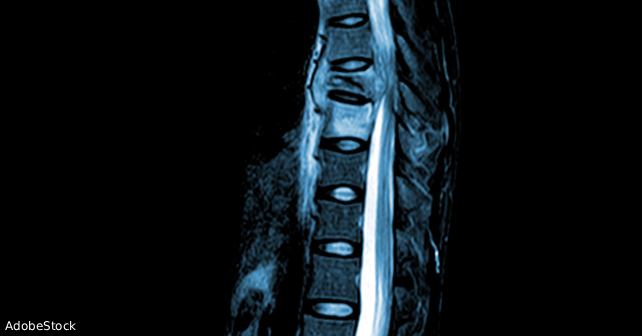
All told, a final study population was comprised of 2,004 patients with AISP and 4,198 in whom it was excluded. Approximately two-thirds of the identified cases were coded as discitis or vertebral osteomyelitis and 44 percent showed SEA. The authors performed a matched nearest-neighbor propensity score analysis to approximately even out their study populations, followed by a reporting of the diagnostic characteristics for each biomarker.
Explore This Issue
ACEP Now: November 2025As should be overtly obvious even before examining this new publication, if these biomarkers were a universally reliable strategy, it already would be part of a validated clinical pathway in the emergency department. AISP has been long recognized as a sinister and insidious condition. These biomarkers, ESR and CRP, have been in existence for eons. There has been ample opportunity for these tools to work their way into practice.
First, the authors present the sensitivity and specificity of various cut-offs for each biomarker in isolation. For example, 90 percent sensitivity was achieved by an ESR of 20mm/h and a CRP of 1.2mg/dL. To achieve 95 percent sensitivity, the ESR cut point was 12mm/h and CRP was 0.7mg/dL. It is worth noting this CRP cut point is actually lower than the typically accepted abnormal threshold of 1.0mg/dL for this measurement.
However, by combining the two biomarkers, it was observed that a combination of both an ESR less than 20mm/h and a CRP less than 1.0mg/dL achieved 98.9 percent sensitivity at a specificity of 69.2 percent. Using the general prevalence of infectious spinal pathology as a reference, the authors present a negative predictive value of 99.9 percent off a negative likelihood ratio (LR) of 0.016.
This is an excellent negative LR and virtually excludes any patient from having infectious spinal pathology. The difficulty lies with two problematic aspects of these data. First, the authors have selected, effectively, a pristine population for their analysis. The patients included in their analysis — unlikely the wider emergency department population with undifferentiated back pain — could not have any other competing condition potentially raising their ESR or CRP. Then, these data inform us about the performance characteristics of these tests only in patients for whom AISP was pursued seriously enough to receive MRIs. This is such a narrow slice of the diverse assortment of presenting complaints for which AISP is a possibility.
The more important issue regarding incorporation into practice stems from the classic sacrifice of specificity for sensitivity. The specificity of these biomarkers is likely in the same range as a D-dimer, but with an even rarer underlying condition, and even more confounding competing conditions potentially affecting their measurement. The vast majority of patients with elevated ESR or CRP will not have AISP. Rather than decreasing the number of patients selected for MRI, unstructured use of these non-specific markers of inflammation assuredly will cause an increase in advanced imaging.
Pages: 1 2 3 | Single Page



One Response to “Is There Any Way Out for Spinal Epidural Abscess?”
November 17, 2025
Gabe WilsonReally informative data.
Anecdotally, I always wonder if the issue with diagnosing AISP is simply the availability of MRI and barriers to testing.
In the best of circumstances, early on a Monday morning with staff just starting the week, it takes 2-3 hours to get an MRI done and read.
Night and weekends – forget it. So automatically a patient presenting with AISP during these 108 hours of the week are at a huge disadvantage.
Imagine hypothetically a world in which MRI were as quick and easy to get as an x-ray 24-hours-a-day. Would be be ordering many more MRI’s? With 100% certainty – yes, we would.
The question is, what would be our rate of picking up AISP?
As an administrative and logistical side note, hospitals pay quite a bit to have an MRI. Why not run them 24-hours-a-day? Then we could more easily scan Peds for appendicitis or provide much better radiation-free care to patients.
But alas….