Logo

Log In Sign Up |  An official publication of: American College of Emergency Physicians
Navigation
  • Home
  • Multimedia
    • Podcasts
    • Videos
  • Clinical
    • Airway Managment
    • Case Reports
    • Critical Care
    • Guidelines
    • Imaging & Ultrasound
    • Pain & Palliative Care
    • Pediatrics
    • Resuscitation
    • Trauma & Injury
  • Resource Centers
    • mTBI Resource Center
  • Career
    • Practice Management
      • Benchmarking
      • Reimbursement & Coding
      • Care Team
      • Legal
      • Operations
      • Quality & Safety
    • Awards
    • Certification
    • Compensation
    • Early Career
    • Education
    • Leadership
    • Profiles
    • Retirement
    • Work-Life Balance
  • Columns
    • ACEP4U
    • Airway
    • Benchmarking
    • Brief19
    • By the Numbers
    • Coding Wizard
    • EM Cases
    • End of the Rainbow
    • Equity Equation
    • FACEPs in the Crowd
    • Forensic Facts
    • From the College
    • Images in EM
    • Kids Korner
    • Medicolegal Mind
    • Opinion
      • Break Room
      • New Spin
      • Pro-Con
    • Pearls From EM Literature
    • Policy Rx
    • Practice Changers
    • Problem Solvers
    • Residency Spotlight
    • Resident Voice
    • Skeptics’ Guide to Emergency Medicine
    • Sound Advice
    • Special OPs
    • Toxicology Q&A
    • WorldTravelERs
  • Resources
    • ACEP.org
    • ACEP Knowledge Quiz
    • Issue Archives
    • CME Now
    • Annual Scientific Assembly
      • ACEP14
      • ACEP15
      • ACEP16
      • ACEP17
      • ACEP18
      • ACEP19
    • Annals of Emergency Medicine
    • JACEP Open
    • Emergency Medicine Foundation
  • About
    • Our Mission
    • Medical Editor in Chief
    • Editorial Advisory Board
    • Awards
    • Authors
    • Article Submission
    • Contact Us
    • Advertise
    • Subscribe
    • Privacy Policy
    • Copyright Information

Important Information about the Seasonal Acute Flaccid Myelitis Outbreak

By David E. Hogan, DO, MPH, FACEP | on December 17, 2018 | 0 Comment
CME CME Now Features
  • Tweet
  • Click to email a link to a friend (Opens in new window) Email
Print-Friendly Version
Important Infrmation about the Seasonal Acute Flaccid Myelitis Outbreak

Laboratory studies are nonspecific. Analysis of cerebral spinal fluid often demonstrates a lymphocytic pleocytosis, normal glucose, normal or slightly elevated protein, and absence of identifiable viral, bacterial, or fungal pathogens.4,9,13

You Might Also Like
  • Acute Flaccid Myelitis Sparks New Sense of Urgency
  • Treatment for Acute Gastroenteritis, Acute Epididymitis in Pediatric Patients
  • CDC Resources on Ebola Outbreak
Explore This Issue
ACEP Now: Vol 37 – No 12 – December 2018

An MRI of the spinal cord is critical for diagnosis. The MRI may be normal on an initial presentation, but eventually an area of central gray matter lesions with edema of both the anterior and posterior segments of the spinal cord will develop. Lesions frequently occur over a span of several spinal cord levels and are most commonly located in the cervical spinal cord. Cortical lesions may also be noted.1,5,9 The classic appearance of the MRI has been described as similar to poliovirus infection.1,5

AFM can be difficult to diagnose, especially initially, because it shares many of the same signs and symptoms as other neurologic diseases, such as transverse myelitis and Guillain-Barré syndrome. The official elements for an AFM case definition, as defined by the Council of State and Territorial Epidemiologists, are provided in Table 1.14 However, clinicians are being asked to report all cases of weakness or paralysis meeting the clinical case presentation, regardless of MRI or laboratory results.5
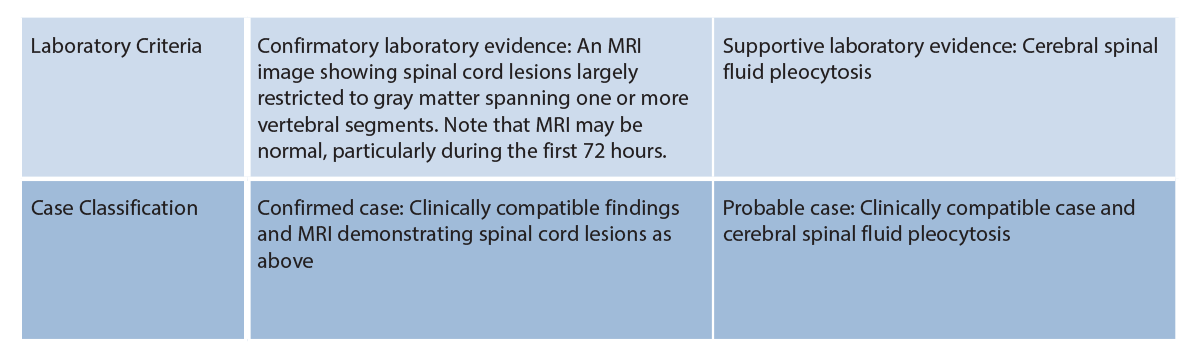
Table 1: Acute Flaccid Myelitis Case Definition

(click for larger image) Table 1: Acute Flaccid Myelitis Case Definition
Source: Counsel of State and Territorial Epidemiologists

AFM Management

The onset of weakness may be abrupt and rapidly progress to respiratory failure. When these patients are evaluated in the emergency department or sent for MRI, the clinician should anticipate and be prepared for rapid deterioration. Hospital admission and appropriate consultation are indicated based on the condition of the patient and local institutional protocols. Patients with any indication of rapid progression or respiratory compromise should be admitted to the intensive care unit. The CDC expert panel on AFM discourages the use of steroids or other immunosuppressant agents as these may actually increase mortality.5 Further specific recommendations on AFM management may be found at the CDC’s AFM website, www.cdc.gov/acute-flaccid-myelitis.

AFM should be reported to the clinician’s state department of health and the CDC. These organizations can provide guidance on obtaining epidemiologic data and specimen collection to help identify the cause of AFM.5

What We Do Know About AFM

  • Most victims are children.
  • AFM patterns are most consistent with viral illnesses such as:
    • Non-polio enteroviruses
    • Poliovirus
    • Adenovirus
    • West Nile virus
  • All AFM cases have tested negative for poliovirus and West Nile virus.
  • Most cases have tested negative for non-polio enteroviruses.
  • No pathogen is consistently found in the serum or cerebral spinal fluid.
  • The disease can progress from initial symptoms to complete flaccid paralysis within hours.
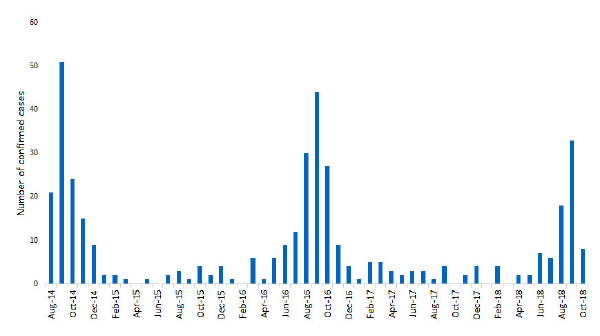
  • Cases have seasonal peaks (see Figure 1).
  • AFM is very rare—one in a million people.

Pages: 1 2 3 4 | Single Page

Topics: Acute Flaccid MyelitisCMECME NowPediatric

Related

  • What Can a Patient’s Eyes Tell Us About Concussions?

    October 23, 2025 - 0 Comment
  • Pediatric Patients in Acute Mental Health Crisis Face Long Waits

    August 29, 2025 - 0 Comment
  • Pediatric Bloody Diarrhea: Recognition, Management of STEC Infection

    August 11, 2025 - 0 Comment

Current Issue

ACEP Now: November 2025

Download PDF

Read More

No Responses to “Important Information about the Seasonal Acute Flaccid Myelitis Outbreak”

Leave a Reply Cancel Reply

Your email address will not be published. Required fields are marked *


*
*


Wiley
  • Home
  • About Us
  • Contact Us
  • Privacy
  • Terms of Use
  • Advertise
  • Cookie Preferences
Copyright © 2025 by John Wiley & Sons, Inc. All rights reserved, including rights for text and data mining and training of artificial technologies or similar technologies. ISSN 2333-2603
