Logo

Log In Sign Up |  An official publication of: American College of Emergency Physicians
Navigation
  • Home
  • Multimedia
    • Podcasts
    • Videos
  • Clinical
    • Airway Managment
    • Case Reports
    • Critical Care
    • Guidelines
    • Imaging & Ultrasound
    • Pain & Palliative Care
    • Pediatrics
    • Resuscitation
    • Trauma & Injury
  • Resource Centers
    • mTBI Resource Center
  • Career
    • Practice Management
      • Benchmarking
      • Reimbursement & Coding
      • Care Team
      • Legal
      • Operations
      • Quality & Safety
    • Awards
    • Certification
    • Compensation
    • Early Career
    • Education
    • Leadership
    • Profiles
    • Retirement
    • Work-Life Balance
  • Columns
    • ACEP4U
    • Airway
    • Benchmarking
    • Brief19
    • By the Numbers
    • Coding Wizard
    • EM Cases
    • End of the Rainbow
    • Equity Equation
    • FACEPs in the Crowd
    • Forensic Facts
    • From the College
    • Images in EM
    • Kids Korner
    • Medicolegal Mind
    • Opinion
      • Break Room
      • New Spin
      • Pro-Con
    • Pearls From EM Literature
    • Policy Rx
    • Practice Changers
    • Problem Solvers
    • Residency Spotlight
    • Resident Voice
    • Skeptics’ Guide to Emergency Medicine
    • Sound Advice
    • Special OPs
    • Toxicology Q&A
    • WorldTravelERs
  • Resources
    • ACEP.org
    • ACEP Knowledge Quiz
    • Issue Archives
    • CME Now
    • Annual Scientific Assembly
      • ACEP14
      • ACEP15
      • ACEP16
      • ACEP17
      • ACEP18
      • ACEP19
    • Annals of Emergency Medicine
    • JACEP Open
    • Emergency Medicine Foundation
  • About
    • Our Mission
    • Medical Editor in Chief
    • Editorial Advisory Board
    • Awards
    • Authors
    • Article Submission
    • Contact Us
    • Advertise
    • Subscribe
    • Privacy Policy
    • Copyright Information

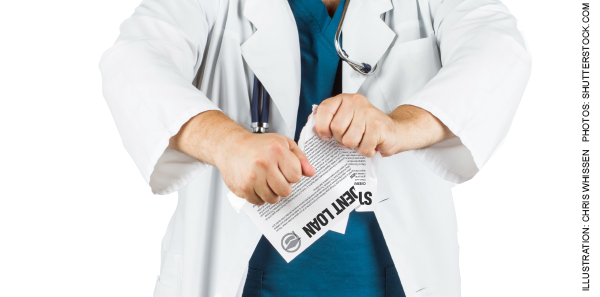
How to Receive Student Loan Forgiveness

By James M. Dahle, MD, FACEP | on April 13, 2018 | 0 Comment
End of the Rainbow
  • Tweet
  • Click to email a link to a friend (Opens in new window) Email
Print-Friendly Version

This leads doctors to use a few strategies to try to maximize the amount forgiven. First, some types of loans (eg, Federal Family Education Loans and Federal Perkins Loans) don’t qualify for forgiveness unless they are consolidated into a Federal Direct Loan. Second, you can enroll in an IDR program and start making payments late in your fourth year of medical school, essentially increasing the percentage of payments you make while your income, and thus your payments, remain low. Third, contributing to tax-deferred retirement accounts during residency further lowers your income and your required payments. Finally, some physicians married to high earners find it advantageous to file their taxes as “married filing single” while enrolled in an IDR program. Even though this often increases their combined tax burden, it can also reduce the borrower’s income (at least in the IBR and PAYE programs) and thus their spouse’s required payments.

You Might Also Like
  • Overwhelmed by Student Loans? Here Are Some Tools to Help
  • Tips for Managing Medical School Student Loans
  • Should I Purchase My Residence During Residency?
Explore This Issue
ACEP Now: Vol 37 – No 04 – April 2018

A longer training period can also help maximize forgiveness. A physician who spends seven years in residency and fellowship may need to make full payments for only three years as an attending before receiving forgiveness.

Private student loans are never eligible for PSLF, and the best strategy for managing those usually involves refinancing to a lower rate as soon as possible (usually shortly after medical school graduation) and paying them off early in your career. Several lenders allow very low payments during training, just like the federal IDR programs.

Caution: Refinancing your federal direct loans can be a big mistake if you later end up working for a 501(c)3 after residency graduation. Another common error is putting your loans into forbearance or deferment during training, which prevents the accumulation of lower IDR payments that would later allow for significant forgiveness under PSLF. If you make IDR payments throughout residency and work full-time for a 501(c)3 after residency, going for PSLF instead of refinancing the loans generally works out better mathematically than refinancing, even if the interest rate is higher.

Many students, residents, and attendings worry Congress will change the rules and take PSLF away. That is a significant risk—both the Obama Budget of 2013 and the Trump Budget of 2018 proposed doing away with the program as we know it. The Prosper Act, currently in House committee, would also cause significant changes to the federal loan programs if it becomes law in its current form.

However, in the past, when federal student loan programs were changed, those currently in the program were usually grandfathered into the old program. A good way to hedge this legislative risk is to make large student loan payments as an attending that would allow you to pay off your loans within two to five years after residency completion, but make those payments to your own investing account. Then, if something happens to PSLF, you can simply take those funds and pay off the loans. If you do receive forgiveness, you can use that money to bolster your retirement nest egg or other savings goals.

Pages: 1 2 3 | Single Page

Topics: AssetscareerEmergency PhysiciansLegalPersonal Financestudent loan forgivenessstudent loansTaxes

Related

  • Reader Responds: Don’t Borrow, Serve

    November 4, 2025 - 0 Comment
  • The Business of Emergency Medicine: Insurance Essentials

    October 9, 2025 - 0 Comment
  • Event Medicine: Where Fun and Safety Sing in Perfect Harmony

    October 9, 2025 - 1 Comment

Current Issue

ACEP Now: November 2025

Download PDF

Read More

About the Author

James M. Dahle, MD, FACEP

James M. Dahle, MD, FACEP, is the author of The White Coat Investor: A Doctor’s Guide to Personal Finance and Investing and blogs at http://whitecoatinvestor.com. He is not a licensed financial adviser, accountant, or attorney and recommends you consult with your own advisers prior to acting on any information you read here.

View this author's posts »

No Responses to “How to Receive Student Loan Forgiveness”

Leave a Reply Cancel Reply

Your email address will not be published. Required fields are marked *


*
*


Careers Center
  • Lee Health - Golisano Children’s Hospital of SWFL Seeks a Pediatric Emergency Medicine Physician!

    Position Information: Lee Health / Golisano Children’s Hospital – Pediatric Emergency Medicine is seeking a full-time physician BC/BE in Pediatric ...

    Fort Myers, Florida

    Competitive compensation package- sign on bonus and relocation!

    Lee Health physician group

    Read More
  • Director, Undergraduate Medical Education

    Penn State Health Milton S. Hershey Medical Center seeks a BC/BE Emergency Medicine Physician to serve as Director, Undergraduate Medical Education.

    Hershey, Pennsylvania

    Competitive salary & benefits at prestigious Pennsylvania health system

    Penn State Health

    Read More
  • Pediatric Emergency Medicine

    Akron Children's Hospital is seeking a Physician to join the Emergency Department out of the Boardman, Ohio location.

    Boardman, Ohio

    N/A

    Akron Children's Hospital

    Read More
More Jobs
Wiley
  • Home
  • About Us
  • Contact Us
  • Privacy
  • Terms of Use
  • Advertise
  • Cookie Preferences
Copyright © 2025 by John Wiley & Sons, Inc. All rights reserved, including rights for text and data mining and training of artificial technologies or similar technologies. ISSN 2333-2603

