Logo

Log In Sign Up |  An official publication of: American College of Emergency Physicians
Navigation
  • Home
  • Multimedia
    • Podcasts
    • Videos
  • Clinical
    • Airway Managment
    • Case Reports
    • Critical Care
    • Guidelines
    • Imaging & Ultrasound
    • Pain & Palliative Care
    • Pediatrics
    • Resuscitation
    • Trauma & Injury
  • Resource Centers
    • mTBI Resource Center
  • Career
    • Practice Management
      • Benchmarking
      • Reimbursement & Coding
      • Care Team
      • Legal
      • Operations
      • Quality & Safety
    • Awards
    • Certification
    • Compensation
    • Early Career
    • Education
    • Leadership
    • Profiles
    • Retirement
    • Work-Life Balance
  • Columns
    • ACEP4U
    • Airway
    • Benchmarking
    • Brief19
    • By the Numbers
    • Coding Wizard
    • EM Cases
    • End of the Rainbow
    • Equity Equation
    • FACEPs in the Crowd
    • Forensic Facts
    • From the College
    • Images in EM
    • Kids Korner
    • Medicolegal Mind
    • Opinion
      • Break Room
      • New Spin
      • Pro-Con
    • Pearls From EM Literature
    • Policy Rx
    • Practice Changers
    • Problem Solvers
    • Residency Spotlight
    • Resident Voice
    • Skeptics’ Guide to Emergency Medicine
    • Sound Advice
    • Special OPs
    • Toxicology Q&A
    • WorldTravelERs
  • Resources
    • ACEP.org
    • ACEP Knowledge Quiz
    • Issue Archives
    • CME Now
    • Annual Scientific Assembly
      • ACEP14
      • ACEP15
      • ACEP16
      • ACEP17
      • ACEP18
      • ACEP19
    • Annals of Emergency Medicine
    • JACEP Open
    • Emergency Medicine Foundation
  • About
    • Our Mission
    • Medical Editor in Chief
    • Editorial Advisory Board
    • Awards
    • Authors
    • Article Submission
    • Contact Us
    • Advertise
    • Subscribe
    • Privacy Policy
    • Copyright Information

How to Best Inspect, Protect, and Dress Wounds in the Emergency Dept.

By Howard Levitin, MD, FACEP; Zach Werner, MD; Lakhvir Atwal, MD; and Courtney Cox, MD | on November 7, 2024 | 0 Comment
Features
  • Tweet
  • Click to email a link to a friend (Opens in new window) Email
Print-Friendly Version

The ED is not a substitute for outpatient wound management but rather the gateway for where many patients enter the health care system. Emergency physicians will need to weigh the severity of the wound and infection status to determine if inpatient versus outpatient management is most appropriate. Social determinants, such as a history of poor medication compliance, housing insecurity, lack of a support system and transportation resources, comorbidities, or need for vascular intervention, may necessitate inpatient admission. Photographic documentation of the wound is helpful to enhance continuity of care. Implementing a thoughtful, cost-effective approach to ED wound care centered on optimizing wound healing and referral may improve patient outcomes, reduce admissions, and optimize resources.

You Might Also Like
  • What Emergency Physicians Can Learn from Stab Wounds
  • ACEP Reviews Guidelines on Chest Wounds, Hypoglycemia, Positioning, Oxygen Use
  • From Seppuku to Shanks: How To Manage Abdominal Stab Wounds
Explore This Issue
ACEP Now: Vol 43 – No 11 – November 2024

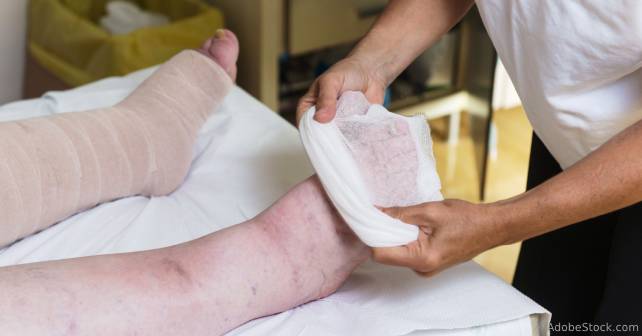
Back to the patient. On closer exam, the patient’s blanching erythema of his lower legs was secondary to chronic venous insufficiency with concern for early-stage development of a skin ulcer. A foam dressing was placed over the ulcer on his left ankle, and compression dressings were applied to his lower legs to reduce swelling, transitioning to compression stockings in the coming days. The ED case manager arranged follow up in the wound care clinic in two days.

References                  

  1. Nussbaum SR, Carter MJ, Fife CE, et al. An economic evaluation of the impact, cost, and Medicare policy implications of chronic nonhealing wounds. Value in Health. 2018;21(1):27-32.
  2. Bluestein D, Javaheri A. Pressure ulcers: prevention, evaluation, and management. Am Fam Physician. 2008;78(10):1186-1194.
  3. Glauser J. Wound management: Do we know anything for sure? Emergency Medicine News 2004;26(13):19.
  4. Hoversten K, Kiemele L, Stolp A, et.al. Prevention, diagnosis, and management of chronic wounds in older adults. Mayo Clin Proc. 2020;95(9):2021-2034.

Pages: 1 2 3 | Single Page

Topics: ClinicalTrauma & InjuryWound Care

Related

  • Non-Invasive Positive Pressure Ventilation in the Emergency Department

    October 1, 2025 - 0 Comment
  • Emergency Department Management of Prehospital Tourniquets

    October 1, 2025 - 0 Comment
  • ACEP’s October 2025 Poll: How Often Do You Read Your Own X-Rays?

    September 30, 2025 - 0 Comment

Current Issue

ACEP Now: November 2025

Download PDF

Read More

No Responses to “How to Best Inspect, Protect, and Dress Wounds in the Emergency Dept.”

Leave a Reply Cancel Reply

Your email address will not be published. Required fields are marked *


*
*


Wiley
  • Home
  • About Us
  • Contact Us
  • Privacy
  • Terms of Use
  • Advertise
  • Cookie Preferences
Copyright © 2025 by John Wiley & Sons, Inc. All rights reserved, including rights for text and data mining and training of artificial technologies or similar technologies. ISSN 2333-2603
