
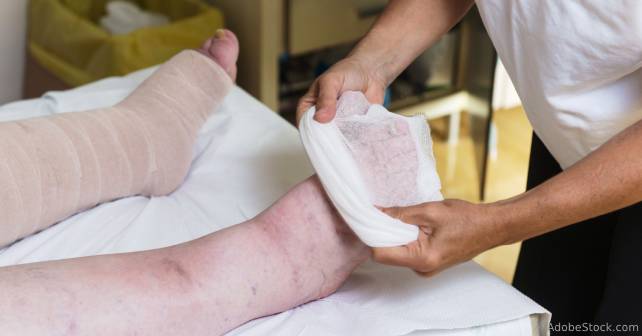
Wound management in the ED is only a starting point, and appropriate referral and follow-up are key to an improved outcome. In the interim, dressing chronic and high-risk wounds in the ED contributes towards establishing a nontraumatic, moist environment that promotes healing, absorbs excessive exudate, minimizes infection, and reduces pain. Thousands of dressing options and combinations are available, each with unique characteristics that suit specific wounds, budgets, and home care capabilities. Such nuance relies on wound care specialists, but initial dressing selection can be simplified in the short term. Generally, a dry wound requires a dressing that retains moisture, while exudative ones should be covered with a dressing that enhances moisture absorption to maintain an ideal healing environment. Dressing options to consider in the ED include the following:
Explore This Issue
ACEP Now: Vol 43 – No 11 – November 2024- Non-woven gauze dressings impregnated with petroleum, saline, or zinc salts are the most versatile for nearly all wound types. They require an overlying (secondary) dressing to secure them to the surrounding skin and should be changed daily. Avoid using dry dressings or wet-to-dry bandages, which can damage open wounds. Examples include Adaptic, Xeroform, Telfa, and Dermagen.
- Foam dressings are ideal for multiple types of chronic wounds that are mild to moderately exudative, such as diabetic ulcers, venous ulcers, and pressure injuries. They are available in various sizes and configurations, and can stay in place in uninfected wounds for up to five days. They should be avoided in dry wounds (arterial ulcers) or necrotic wounds with an eschar. Examples include Mepilex, Tegaderm, and Optifoam.
- Hydrogel dressings are preferred for minor burns, partial- and full-thickness wounds, wounds with necrosis, and deep wounds with tunneling or sinus tracts. Compared with other dressing types, hydrogels lack inherent antimicrobial properties, are expensive, and require frequent changes, particularly in heavily exuding wounds. Examples include Kerralite Cool, Medihoney, and DynaGel.
- Film dressings are thin sheets of a transparent polymer coated with an adhesive that promotes a moist, healing environment while protecting the wound from mechanical trauma and bacterial invasion. They are ideal for superficial wounds, minor burns, lacerations, stage I and II pressure injuries, superficial skin ulcers (blisters), minimally infected wounds, and for securing other dressing types. They can remain in place for up to seven days. Examples include Tegaderm and Opsite.
Conclusion
Poorly healing wounds pose a significant burden on health care systems and personal well-being, and their presence as a harbinger of severe morbidity and mortality must be appreciated. Emergency physicians are experienced health care detectives well versed in the importance of early recognition, initial assessment, stabilization, and referral of patients with new-onset or progressive disease. Effective wound management emphasizes maintaining skin integrity, integrating infection control, and providing an appropriate wound environment through tailored dressing selection.
Pages: 1 2 3 | Single Page



No Responses to “How to Best Inspect, Protect, and Dress Wounds in the Emergency Dept.”