Logo

Log In Sign Up |  An official publication of: American College of Emergency Physicians
Navigation
  • Home
  • Multimedia
    • Podcasts
    • Videos
  • Clinical
    • Airway Managment
    • Case Reports
    • Critical Care
    • Guidelines
    • Imaging & Ultrasound
    • Pain & Palliative Care
    • Pediatrics
    • Resuscitation
    • Trauma & Injury
  • Resource Centers
    • mTBI Resource Center
  • Career
    • Practice Management
      • Benchmarking
      • Reimbursement & Coding
      • Care Team
      • Legal
      • Operations
      • Quality & Safety
    • Awards
    • Certification
    • Compensation
    • Early Career
    • Education
    • Leadership
    • Profiles
    • Retirement
    • Work-Life Balance
  • Columns
    • ACEP4U
    • Airway
    • Benchmarking
    • Brief19
    • By the Numbers
    • Coding Wizard
    • EM Cases
    • End of the Rainbow
    • Equity Equation
    • FACEPs in the Crowd
    • Forensic Facts
    • From the College
    • Images in EM
    • Kids Korner
    • Medicolegal Mind
    • Opinion
      • Break Room
      • New Spin
      • Pro-Con
    • Pearls From EM Literature
    • Policy Rx
    • Practice Changers
    • Problem Solvers
    • Residency Spotlight
    • Resident Voice
    • Skeptics’ Guide to Emergency Medicine
    • Sound Advice
    • Special OPs
    • Toxicology Q&A
    • WorldTravelERs
  • Resources
    • ACEP.org
    • ACEP Knowledge Quiz
    • Issue Archives
    • CME Now
    • Annual Scientific Assembly
      • ACEP14
      • ACEP15
      • ACEP16
      • ACEP17
      • ACEP18
      • ACEP19
    • Annals of Emergency Medicine
    • JACEP Open
    • Emergency Medicine Foundation
  • About
    • Our Mission
    • Medical Editor in Chief
    • Editorial Advisory Board
    • Awards
    • Authors
    • Article Submission
    • Contact Us
    • Advertise
    • Subscribe
    • Privacy Policy
    • Copyright Information

Freestanding Emergency Departments as a Workforce Solution

By Leon C. Adelman, MD, MBA | on September 13, 2022 | 0 Comment
Features
  • Tweet
  • Click to email a link to a friend (Opens in new window) Email
Print-Friendly Version

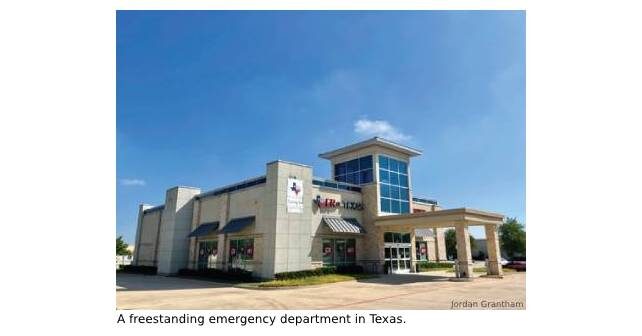
The main objections to freestanding EDs are their cost equivalence and siphoning of well-insured patients away from hospital-based EDs.9,10 The perceived low value of care resulted largely from non-health system affiliated freestanding EDs that were out of network with most insurers and did not accept Medicare or Medicaid. Some facilities looked like urgent cares, leading patients to receive large bills for what they thought was urgent-care level treatment.

You Might Also Like
  • Opinion: Why Freestanding, Physician- or Investor-Owned Emergency Departments May Be Bad for Emergency Medicine
  • Opinion: Freestanding Emergency Centers Increase Access to Care, Decrease Physician Burnout
  • Ten Ways Obamacare Could Impact Patients, Emergency Departments, and the Physician Workforce
Explore This Issue
ACEP Now: Vol 41 – No 09 – September 2022

Health system affiliated freestanding EDs, like Cleveland Clinic’s, do not suffer from the low-value stigma of independent freestanding EDs. Cleveland Clinic’s freestanding EDs are regulated in the same manner as their hospital based EDs and are in accordance with ACEP’s “Freestanding Emergency Departments” policy.11 Those freestanding EDs participate in Medicare and Medicaid. The clinicians are consistent across sites, as are quality initiatives. Each ED has systems for rapidly managing and transferring critically ill patients to higher levels of care.12,13 Cleveland Clinic’s freestanding EDs are not siphoning insured patients away from the health system, only changing the setting of care.

A remaining concern about Cleveland Clinic’s hub and spoke model is that it has preferentially placed its freestanding emergency departments in wealthier communities. This is a common practice for health systems.14 However, the economic incentives for where to locate freestanding EDs are changing. A COVID-era federal bill has created the Rural Emergency Hospital (REH) model, which will go live on January 1, 2023. The REH legislation increases Medicare reimbursement for health systems opening rural freestanding EDs if they follow the law’s guidelines.

Under the REH model, critical access hospitals and rural Prospective Payment Systems can convert to REH status. The REH requirements are similar to the Cleveland Clinic freestanding ED model, including:

  • No provision of acute care inpatient services
  • An average per patient length of stay not to exceed 24 hours
  • Have a transfer agreement in place with a Level I or II trauma center
  • Maintain a staffed emergency department, including staffing 24 hours a day, seven days a week by a physician, nurse practitioner, clinical nurse specialist, or physician assistant.15

According to a North Carolina Rural Health Research and Policy Analysis Center analysis, “The Rural Emergency Hospital could be an important step for preserving access to emergency and outpatient services in rural areas, particularly in communities that face the risk of rural hospital closures.” The authors predict 68 critical access hospitals will convert to REH freestanding EDs. County-level predictors of conversion to REH status include higher unemployment rates and lower population density.16

Pages: 1 2 3 4 | Single Page

Topics: Freestanding Emergency DepartmentsPractice ManagementWorkforce

Related

  • Florida Emergency Department Adds Medication-Dispensing Kiosk

    November 7, 2025 - 1 Comment
  • Q&A with ACEP President L. Anthony Cirillo

    November 5, 2025 - 0 Comment
  • How Does Emergency Medicine Navigate Consolidation Trends in Health Care?

    October 29, 2025 - 0 Comment

Current Issue

ACEP Now: November 2025

Download PDF

Read More

No Responses to “Freestanding Emergency Departments as a Workforce Solution”

Leave a Reply Cancel Reply

Your email address will not be published. Required fields are marked *


*
*


Wiley
  • Home
  • About Us
  • Contact Us
  • Privacy
  • Terms of Use
  • Advertise
  • Cookie Preferences
Copyright © 2025 by John Wiley & Sons, Inc. All rights reserved, including rights for text and data mining and training of artificial technologies or similar technologies. ISSN 2333-2603