Logo

Log In Sign Up |  An official publication of: American College of Emergency Physicians
Navigation
  • Home
  • Multimedia
    • Podcasts
    • Videos
  • Clinical
    • Airway Managment
    • Case Reports
    • Critical Care
    • Guidelines
    • Imaging & Ultrasound
    • Pain & Palliative Care
    • Pediatrics
    • Resuscitation
    • Trauma & Injury
  • Resource Centers
    • mTBI Resource Center
  • Career
    • Practice Management
      • Benchmarking
      • Reimbursement & Coding
      • Care Team
      • Legal
      • Operations
      • Quality & Safety
    • Awards
    • Certification
    • Compensation
    • Early Career
    • Education
    • Leadership
    • Profiles
    • Retirement
    • Work-Life Balance
  • Columns
    • ACEP4U
    • Airway
    • Benchmarking
    • Brief19
    • By the Numbers
    • Coding Wizard
    • EM Cases
    • End of the Rainbow
    • Equity Equation
    • FACEPs in the Crowd
    • Forensic Facts
    • From the College
    • Images in EM
    • Kids Korner
    • Medicolegal Mind
    • Opinion
      • Break Room
      • New Spin
      • Pro-Con
    • Pearls From EM Literature
    • Policy Rx
    • Practice Changers
    • Problem Solvers
    • Residency Spotlight
    • Resident Voice
    • Skeptics’ Guide to Emergency Medicine
    • Sound Advice
    • Special OPs
    • Toxicology Q&A
    • WorldTravelERs
  • Resources
    • ACEP.org
    • ACEP Knowledge Quiz
    • Issue Archives
    • CME Now
    • Annual Scientific Assembly
      • ACEP14
      • ACEP15
      • ACEP16
      • ACEP17
      • ACEP18
      • ACEP19
    • Annals of Emergency Medicine
    • JACEP Open
    • Emergency Medicine Foundation
  • About
    • Our Mission
    • Medical Editor in Chief
    • Editorial Advisory Board
    • Awards
    • Authors
    • Article Submission
    • Contact Us
    • Advertise
    • Subscribe
    • Privacy Policy
    • Copyright Information

Free Open Access Medical Education Twitter Authors Appear in Top Peer-Reviewed Journals

By Jeremy Samuel Faust, MD, MS, MA, FACEP | on November 17, 2015 | 1 Comment
The Feed
  • Tweet
  • Click to email a link to a friend (Opens in new window) Email
Print-Friendly Version

In case you are wondering whether receiving social media attention increases a paper’s influence, consider that in just the first few hours, the HEAT trial received some of the most Twitter attention in the history of the NEJM’s account. Is this isolated? Apparently not. At least two studies have shown that articles that receive online attention are more likely to be influential than those that do not (another study found otherwise). This is a possible early indication of the death knell for the dominance of Journal Impact Factor as the primary arbiter of prestige in research. Back in 2005, Brody et al published data in the Journal of the American Society for Information Science and Technology showing that a higher number of downloads of a paper correlated to future citations of that article. Later, in 2011, Gunther Eysenbach, MD, MPH (@eysenbach), published findings in the Journal of Medical Internet Research suggesting that mere Twitter attention in the first few days after publication predicated which articles would go on to become highly cited in future literature. More recently, proprietary products such as Altmetric have moved to monetize the idea that a combination of page views, downloads, tweets, and other forms of social media and online attention may more accurately reflect the impact of a particular peer-reviewed publication than previous metrics such as impact factor.

You Might Also Like
  • Free Open Access Medical Education Is Essential, FOAM Experts Say
  • Rise of the Free Open Access Medical Education Online Journal Club
  • Free Open Access Medical Resources Beyond Twitter
Explore This Issue
ACEP Now: Vol 34 – No 11 – November 2015

This comes as no surprise to me. At #ACEP13, Dr. Weingart informally polled his audience. How many people, he asked, routinely performed apneic oxygenation as part of their preintubation procedure because of his and Dr. Levitan’s NODESAT paper? The vast majority of hands immediately went up. While this was clearly a select audience, the point was made. How often could papers published even by the top peer-reviewed journal of our field, Annals of Emergency Medicine, expect to enjoy such wide and brisk translation from print to practice in the first two years after publication? The answer is very few. The fact that Dr. Weingart’s EMCrit podcast is downloaded approximately 300,000 times per month and that he and Dr. Levitan combine for more than 26,000 Twitter followers may have something to do with that.

The ethos of FOAM continues to develop. While I hope it never sheds its freedom-fighter posture, it is a welcome development that FOAMites are becoming true thought leaders in emergency medicine and critical care.

Pages: 1 2 | Single Page

Topics: Emergency MedicineEmergency PhysicianFOAMMedical EducationSocial MediaTechnologyTwitter

Related

  • Florida Emergency Department Adds Medication-Dispensing Kiosk

    November 7, 2025 - 1 Comment
  • ACEP4U: the ACEP/CORD Teaching Fellowship

    November 4, 2025 - 0 Comment
  • Search with GRACE: Artificial Intelligence Prompts for Clinically Related Queries

    October 9, 2025 - 3 Comments

Current Issue

ACEP Now: November 2025

Download PDF

Read More

About the Author

Jeremy Samuel Faust, MD, MS, MA, FACEP

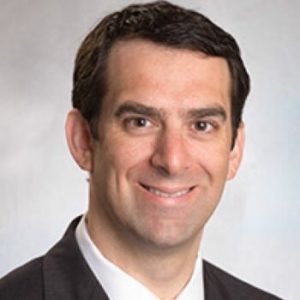
Jeremy Samuel Faust, MD, MS, MA, FACEP, is Medical Editor in Chief of ACEP Now, an instructor at Harvard Medical School and an attending physician in department of emergency medicine at Brigham & Women’s Hospital in Boston. Follow him on twitter @JeremyFaust.

View this author's posts »

One Response to “Free Open Access Medical Education Twitter Authors Appear in Top Peer-Reviewed Journals”

  1. December 6, 2015

    Tim Leeuwenburg Reply

    …not just EM/CC mate…spreading into rural, primary care, surgery, paeds – even the general physicians (although that can be a tough nut)

    FOAMed makes the difference – rapid KNOWLEDGE TRANSLATION is key

    http://www.rrh.org.au/publishedarticles/article_print_3185.pdf

Leave a Reply Cancel Reply

Your email address will not be published. Required fields are marked *


*
*


Wiley
  • Home
  • About Us
  • Contact Us
  • Privacy
  • Terms of Use
  • Advertise
  • Cookie Preferences
Copyright © 2025 by John Wiley & Sons, Inc. All rights reserved, including rights for text and data mining and training of artificial technologies or similar technologies. ISSN 2333-2603