Logo

Log In Sign Up |  An official publication of: American College of Emergency Physicians
Navigation
  • Home
  • Multimedia
    • Podcasts
    • Videos
  • Clinical
    • Airway Managment
    • Case Reports
    • Critical Care
    • Guidelines
    • Imaging & Ultrasound
    • Pain & Palliative Care
    • Pediatrics
    • Resuscitation
    • Trauma & Injury
  • Resource Centers
    • mTBI Resource Center
  • Career
    • Practice Management
      • Benchmarking
      • Reimbursement & Coding
      • Care Team
      • Legal
      • Operations
      • Quality & Safety
    • Awards
    • Certification
    • Compensation
    • Early Career
    • Education
    • Leadership
    • Profiles
    • Retirement
    • Work-Life Balance
  • Columns
    • ACEP4U
    • Airway
    • Benchmarking
    • Brief19
    • By the Numbers
    • Coding Wizard
    • EM Cases
    • End of the Rainbow
    • Equity Equation
    • FACEPs in the Crowd
    • Forensic Facts
    • From the College
    • Images in EM
    • Kids Korner
    • Medicolegal Mind
    • Opinion
      • Break Room
      • New Spin
      • Pro-Con
    • Pearls From EM Literature
    • Policy Rx
    • Practice Changers
    • Problem Solvers
    • Residency Spotlight
    • Resident Voice
    • Skeptics’ Guide to Emergency Medicine
    • Sound Advice
    • Special OPs
    • Toxicology Q&A
    • WorldTravelERs
  • Resources
    • ACEP.org
    • ACEP Knowledge Quiz
    • Issue Archives
    • CME Now
    • Annual Scientific Assembly
      • ACEP14
      • ACEP15
      • ACEP16
      • ACEP17
      • ACEP18
      • ACEP19
    • Annals of Emergency Medicine
    • JACEP Open
    • Emergency Medicine Foundation
  • About
    • Our Mission
    • Medical Editor in Chief
    • Editorial Advisory Board
    • Awards
    • Authors
    • Article Submission
    • Contact Us
    • Advertise
    • Subscribe
    • Privacy Policy
    • Copyright Information

Forensic Mysteries of Physicians’ Roles in Boston’s History

By Juan F. Fitz, MD, FACEP | on October 13, 2015 | 0 Comment
Forensic Facts
  • Tweet
  • Click to email a link to a friend (Opens in new window) Email
Print-Friendly Version
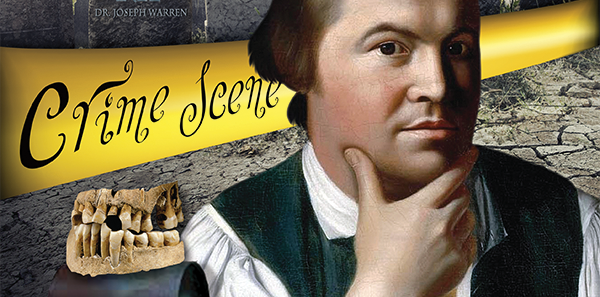
Forensic Mysteries of Physicians' Roles in Boston's History
Image Credit: ILLUSTRATION/PAUL JUESTRICH; PHOTOs shutterstock.com

ACEP welcomes its emergency physicians to Boston, the cradle of America’s freedom! As physicians descend upon Boston, it is surprising to know that many physicians were instrumental in America’s fight for freedom.

You Might Also Like
  • African-American Physicians Land Emergency Medicine Leadership Roles
  • Tips for Taking Forensic Photographic Evidence in the Emergency Department
  • EPs Should Continue to Improve Forensic Skills
Explore This Issue
ACEP Now: Vol 34 – No 10 – October 2015

Boston is so full of history that you should make a special effort to spend more time in this city and explore its history. You may be thinking, “History? Boring! I learned it in high school.”

Well, for your information, the history we were taught in high school is wrong. Explore the truth in Boston, and you will be surprised what you find.

Here is a little sample of what you may not have known.

Joseph Warren, a prominent physician in Boston, was actually the one who convinced Paul Revere to do his famous midnight ride, but did you know Revere never finished his ride to Concord? He was captured trying to get there. Samuel Prescott, another physician, rode along with Revere; he finished the ride, not Revere. There was a third rider, but I will leave that for you to investigate. Dr. Prescott just happened to run into the two riders. He was out on a date that night.

Did you know the only reason we know about Revere and his ride is due to a poet by the name of Henry Wadsworth Longfellow who wrote a poem about it on the eve of the Civil War in order to help keep the country together?

Dr. Warren continued to contribute to medicine after his death. For those interested in forensics, Dr. Warren was killed during the Battle of Bunker Hill, but exactly how he died has been controversial.

Also, did you know Revere’s father was originally from France and that his real name was Apollos Rivoire, which was later changed to Paul Revere? Thus, the famous rider was a junior. His father was also a silversmith, just like his son. However, it’s a little known fact that Paul Jr. also practiced dentistry. He made teeth and dental bridges. As a matter of fact, and an important one, Dr. Warren was one of Revere’s patients.

Dr. Warren continued to contribute to medicine after his death. For those interested in forensics, Dr. Warren was killed during the Battle of Bunker Hill, but exactly how he died has been controversial.

The British buried Dr. Warren, along with other patriots, in a mass grave. Dr. Warren wanted to be buried in the family cemetery, but how do you identify a body two years after death? In addition, it has been reported that Dr. Warren’s body was mutilated by the British by order of a particular officer, a piece of history beyond the scope of this article.

Pages: 1 2 | Single Page

Topics: ACEPACEP15American College of Emergency PhysiciansBostonEmergency MedicineEmergency PhysiciansHistory

Related

  • Event Medicine: Where Fun and Safety Sing in Perfect Harmony

    October 9, 2025 - 1 Comment
  • August 2025 News from the College

    August 4, 2025 - 1 Comment
  • Reflecting on Four Decades at ACEP’s Council

    June 28, 2025 - 0 Comment

Current Issue

ACEP Now: November 2025

Download PDF

Read More

No Responses to “Forensic Mysteries of Physicians’ Roles in Boston’s History”

Leave a Reply Cancel Reply

Your email address will not be published. Required fields are marked *


*
*


Wiley
  • Home
  • About Us
  • Contact Us
  • Privacy
  • Terms of Use
  • Advertise
  • Cookie Preferences
Copyright © 2025 by John Wiley & Sons, Inc. All rights reserved, including rights for text and data mining and training of artificial technologies or similar technologies. ISSN 2333-2603
