Logo

Log In Sign Up |  An official publication of: American College of Emergency Physicians
Navigation
  • Home
  • Multimedia
    • Podcasts
    • Videos
  • Clinical
    • Airway Managment
    • Case Reports
    • Critical Care
    • Guidelines
    • Imaging & Ultrasound
    • Pain & Palliative Care
    • Pediatrics
    • Resuscitation
    • Trauma & Injury
  • Resource Centers
    • mTBI Resource Center
  • Career
    • Practice Management
      • Benchmarking
      • Reimbursement & Coding
      • Care Team
      • Legal
      • Operations
      • Quality & Safety
    • Awards
    • Certification
    • Compensation
    • Early Career
    • Education
    • Leadership
    • Profiles
    • Retirement
    • Work-Life Balance
  • Columns
    • ACEP4U
    • Airway
    • Benchmarking
    • Brief19
    • By the Numbers
    • Coding Wizard
    • EM Cases
    • End of the Rainbow
    • Equity Equation
    • FACEPs in the Crowd
    • Forensic Facts
    • From the College
    • Images in EM
    • Kids Korner
    • Medicolegal Mind
    • Opinion
      • Break Room
      • New Spin
      • Pro-Con
    • Pearls From EM Literature
    • Policy Rx
    • Practice Changers
    • Problem Solvers
    • Residency Spotlight
    • Resident Voice
    • Skeptics’ Guide to Emergency Medicine
    • Sound Advice
    • Special OPs
    • Toxicology Q&A
    • WorldTravelERs
  • Resources
    • ACEP.org
    • ACEP Knowledge Quiz
    • Issue Archives
    • CME Now
    • Annual Scientific Assembly
      • ACEP14
      • ACEP15
      • ACEP16
      • ACEP17
      • ACEP18
      • ACEP19
    • Annals of Emergency Medicine
    • JACEP Open
    • Emergency Medicine Foundation
  • About
    • Our Mission
    • Medical Editor in Chief
    • Editorial Advisory Board
    • Awards
    • Authors
    • Article Submission
    • Contact Us
    • Advertise
    • Subscribe
    • Privacy Policy
    • Copyright Information

Facts About the Opium Poppy

By Jason Hack, MD | on November 13, 2017 | 1 Comment
Toxicology Q&A
  • Tweet
  • Click to email a link to a friend (Opens in new window) Email
Print-Friendly Version

Click here for question.

You Might Also Like
  • Foxglove Flower Is Pretty, but Deadly
  • The Facts About Abstral (Sublingual Fentanyl) Tablets
  • What Is This Dreamy Flower’s Dangerous Secret?

Answer

As an opioid, Papaver somniferum and its derivatives cause miosis.

Opium Poppy

Papaver somniferum
Common names: Papaver somniferum has several common names, including opium poppy and breadseed poppy.

Background

The class of drugs derived from opium poppy plants and their structurally related chemical compounds are called opioids. For hundreds of years, derivatives of opioids have been used medicinally for their analgesic, somnolent, and antitussive effects, and they have been abused for their sedative and euphoric effects.

Opium Poppy Growing and Harvesting
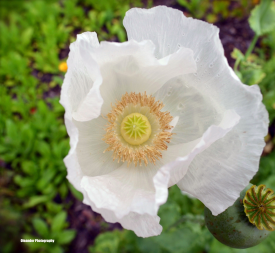
PHOTO: Jason Hack (Oleander Photography)

PHOTO: Jason Hack (Oleander Photography)

According to Martin Booth’s 1999 book, Opium: A History, opium production from the plant varies depending on growing conditions, taking more than 2.5 acres of poppies to produce about 20 pounds of raw opium. Afghanistan is the world capital of opium.

When scratched, the pod of the plant (see photo) produces a milky latex called opium. This latex contains a variety of opioids, including codeine, morphine, thebaine, and papaverine.

Types

These active drugs are either derived unchanged from the plant (ie, morphine, codeine, and papaverine) or are altered natural derivatives; are “semisynthetic” opioids (ie, heroin, oxycodone, hydromorphone, and oxymorphone); or are fully synthetic compounds (ie, methadone, meperidine, fentanyl, and diphenoxylate). All work by interacting with receptors in the central nervous system, spinal cord, and peripheral nervous system. These effects are primarily a result of mu receptor agonism, but also from delta and kappa subtypes.

Overdose

In overdose, these medications cause unconsciousness and respiratory arrest leading to death. Cardiac symptoms can include palpitations, shortness of breath, syncope, bradycardia, hypotension, dysrhythmias, and cardiac arrest.

Antidote

There is an antidote, naloxone, that can be given for overdose. It binds to the opioid receptors, blocking their effects and reversing the central nervous system and respiratory depression. It can also precipitate opioid withdrawal, so naloxone should be administered carefully.


Dr. HackDr. Hack (Oleander Photography) is an emergency physician and medical toxicologist who enjoys taking photographs of beautiful toxic, medicinal, and benign flowers that he stumbles upon or grows in his garden. Contact him at ToxInRI@gmail.com.

Topics: AddictionDrug AbuseEmergency DepartmentEmergency MedicineEmergency PhysiciansFlowerOpioidPatient CarePoppyToxicology

Related

  • Let Core Values Help Guide Patient Care

    November 5, 2025 - 0 Comment
  • Case Report: Massive Amitriptyline and Bupropion Ingestion

    October 29, 2025 - 0 Comment
  • Event Medicine: Where Fun and Safety Sing in Perfect Harmony

    October 9, 2025 - 1 Comment

Current Issue

ACEP Now: November 2025

Download PDF

Read More

About the Author

Jason Hack, MD

Dr. Hack (Oleander Photography) is chief of the division of medical toxicology and vice chair for research at East Carolina University in Greenville, North Carolina. He enjoys taking photographs of beautiful toxic, medicinal, and benign flowers that he stumbles upon or grows in his garden. Contact him at ToxInRI@gmail.com, www.toxinRI.com, or on Instagram @oleanderphotography.

View this author's posts »

One Response to “Facts About the Opium Poppy”

  1. August 5, 2018

    Rawel Singh Reply

    If a man is addicted due to use of poppy product from a longer time . Can he leave it without any pain or difficulty. Pease guide me.

Leave a Reply Cancel Reply

Your email address will not be published. Required fields are marked *


*
*


Wiley
  • Home
  • About Us
  • Contact Us
  • Privacy
  • Terms of Use
  • Advertise
  • Cookie Preferences
Copyright © 2025 by John Wiley & Sons, Inc. All rights reserved, including rights for text and data mining and training of artificial technologies or similar technologies. ISSN 2333-2603
