Logo

Log In Sign Up |  An official publication of: American College of Emergency Physicians
Navigation
  • Home
  • Multimedia
    • Podcasts
    • Videos
  • Clinical
    • Airway Managment
    • Case Reports
    • Critical Care
    • Guidelines
    • Imaging & Ultrasound
    • Pain & Palliative Care
    • Pediatrics
    • Resuscitation
    • Trauma & Injury
  • Resource Centers
    • mTBI Resource Center
  • Career
    • Practice Management
      • Benchmarking
      • Reimbursement & Coding
      • Care Team
      • Legal
      • Operations
      • Quality & Safety
    • Awards
    • Certification
    • Compensation
    • Early Career
    • Education
    • Leadership
    • Profiles
    • Retirement
    • Work-Life Balance
  • Columns
    • ACEP4U
    • Airway
    • Benchmarking
    • Brief19
    • By the Numbers
    • Coding Wizard
    • EM Cases
    • End of the Rainbow
    • Equity Equation
    • FACEPs in the Crowd
    • Forensic Facts
    • From the College
    • Images in EM
    • Kids Korner
    • Medicolegal Mind
    • Opinion
      • Break Room
      • New Spin
      • Pro-Con
    • Pearls From EM Literature
    • Policy Rx
    • Practice Changers
    • Problem Solvers
    • Residency Spotlight
    • Resident Voice
    • Skeptics’ Guide to Emergency Medicine
    • Sound Advice
    • Special OPs
    • Toxicology Q&A
    • WorldTravelERs
  • Resources
    • ACEP.org
    • ACEP Knowledge Quiz
    • Issue Archives
    • CME Now
    • Annual Scientific Assembly
      • ACEP14
      • ACEP15
      • ACEP16
      • ACEP17
      • ACEP18
      • ACEP19
    • Annals of Emergency Medicine
    • JACEP Open
    • Emergency Medicine Foundation
  • About
    • Our Mission
    • Medical Editor in Chief
    • Editorial Advisory Board
    • Awards
    • Authors
    • Article Submission
    • Contact Us
    • Advertise
    • Subscribe
    • Privacy Policy
    • Copyright Information

Emergency Physicians Volunteer to Deliver Care

By Darrin Scheid, CAE | on December 4, 2024 | 0 Comment
Annals of Emergency Medicine Features Pain & Palliative Care Policy Rx
  • Tweet
  • Click to email a link to a friend (Opens in new window) Email
Print-Friendly Version

Volunteers said street medicine demands adaptability and a deep understanding of patients’ lives. To develop this understanding, Dr. Nguyen created a “street medicine inpatient consult service” at her hospital.

You Might Also Like
  • The Balance of Protecting and Training Learners During the COVID-19 Pandemic
  • Staffing Cumberland Gap Fire Department with Medical Students
  • 2023 ACEP Elections Preview: Meet the Board Candidates
Explore This Issue
ACEP Now: Vol 43 – No 12 – December 2024

This initiative supports homeless patients admitted to the hospital, ensuring continuity of care and safe discharge plans. The program is designed to offer a holistic care experience, building long-term relationships with patients that stretch from the streets into the hospital.

Chicago Street Medicine works with medical schools throughout the city, creating a network of chapters led by students from the University of Illinois Chicago, Northwestern University, the University of Chicago, and Loyola. This organizational structure allows street medicine to be flexible and responsive to the unique needs of each neighborhood.

A Rewarding Learning Experience
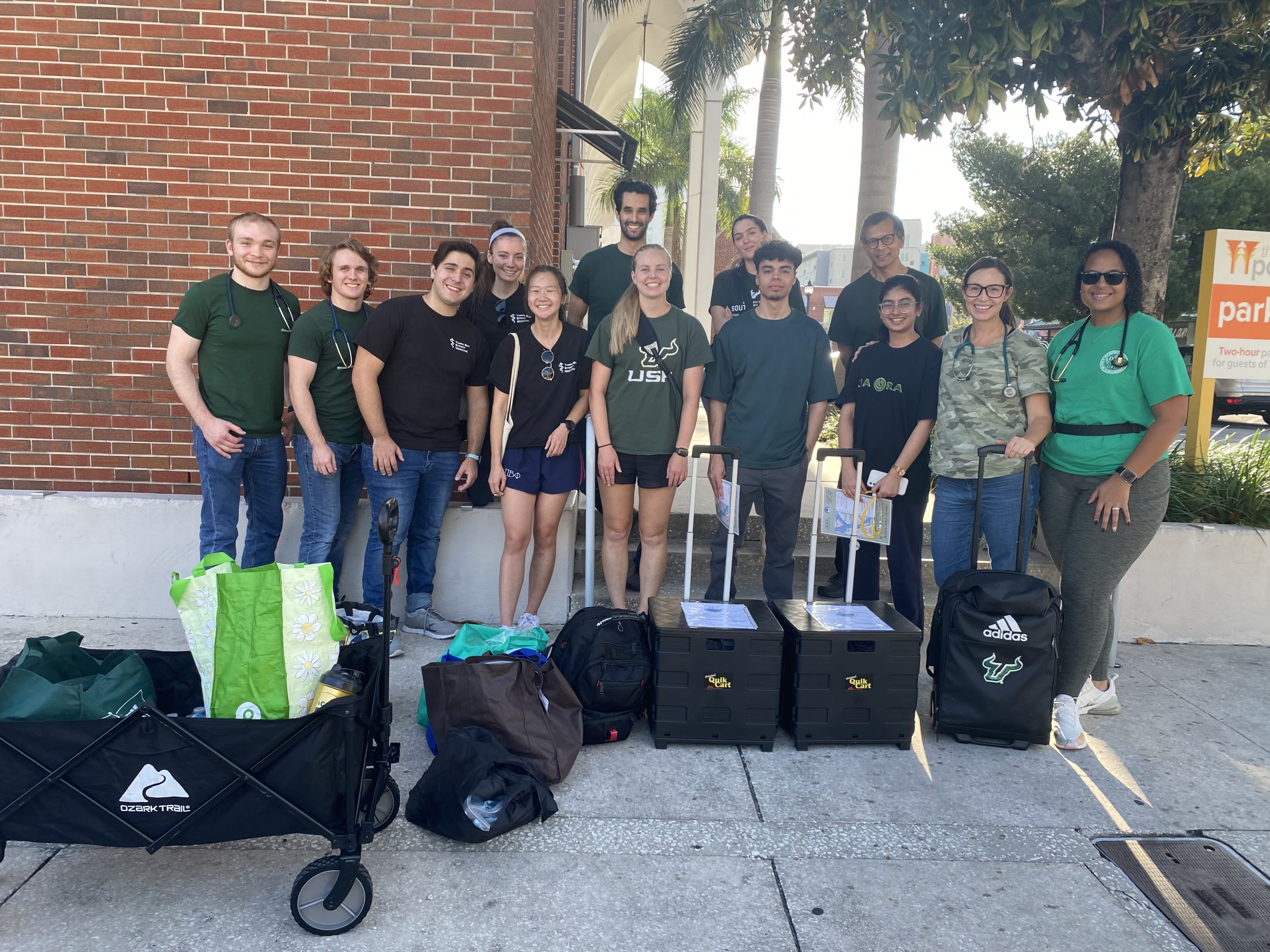
Volunteers with the University of South Florida Tampa Bay Street Medicine team head out to deliver care to underserved residents in Tampa, Fla. (Click to enlarge.)

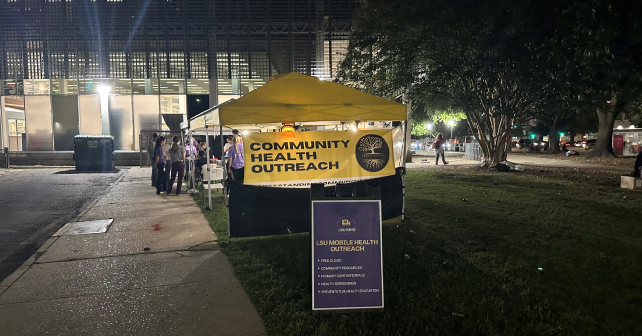
For Qi Charles Zhang, MD, MPH, attending physician at Humboldt Park Health, Chicago, delivering health care is about reaching people the system can miss. Until recently, Dr. Zhang was the medical director of the Chicago Street Medicine program. He learned about street medicine working with Dr. Withers in Pittsburgh as a visiting student for a program called Operation Safety Net, and then helped grow street medicine while in medical school at Tulane University and as resident at Louisiana State University (LSU), before moving to Chicago.

Dr. Zhang said many underserved patients face barriers to accessing clinics or simply don’t feel welcome in conventional health care settings. Street medicine, in contrast, brings a clinic to them—backpacks filled with wound care supplies, antibiotics, and over-the-counter medications, along with essentials like snacks, socks, and water.

For the medical students and residents participating in these street runs, the work is eyeopening and rewarding.

“It’s an important opportunity for these students to really see what it is that these patients go through,” Dr. Zhang said, adding that it fosters a deeper understanding of the barriers faced by underserved populations. Dr. Zhang said this experience is essential, regardless of the specialty students choose later.

“A lot of the things we used to blame patients for—being noncompliant, signing out against medical advice—are so much more complicated,” he said.

Delivering More Than Medicine
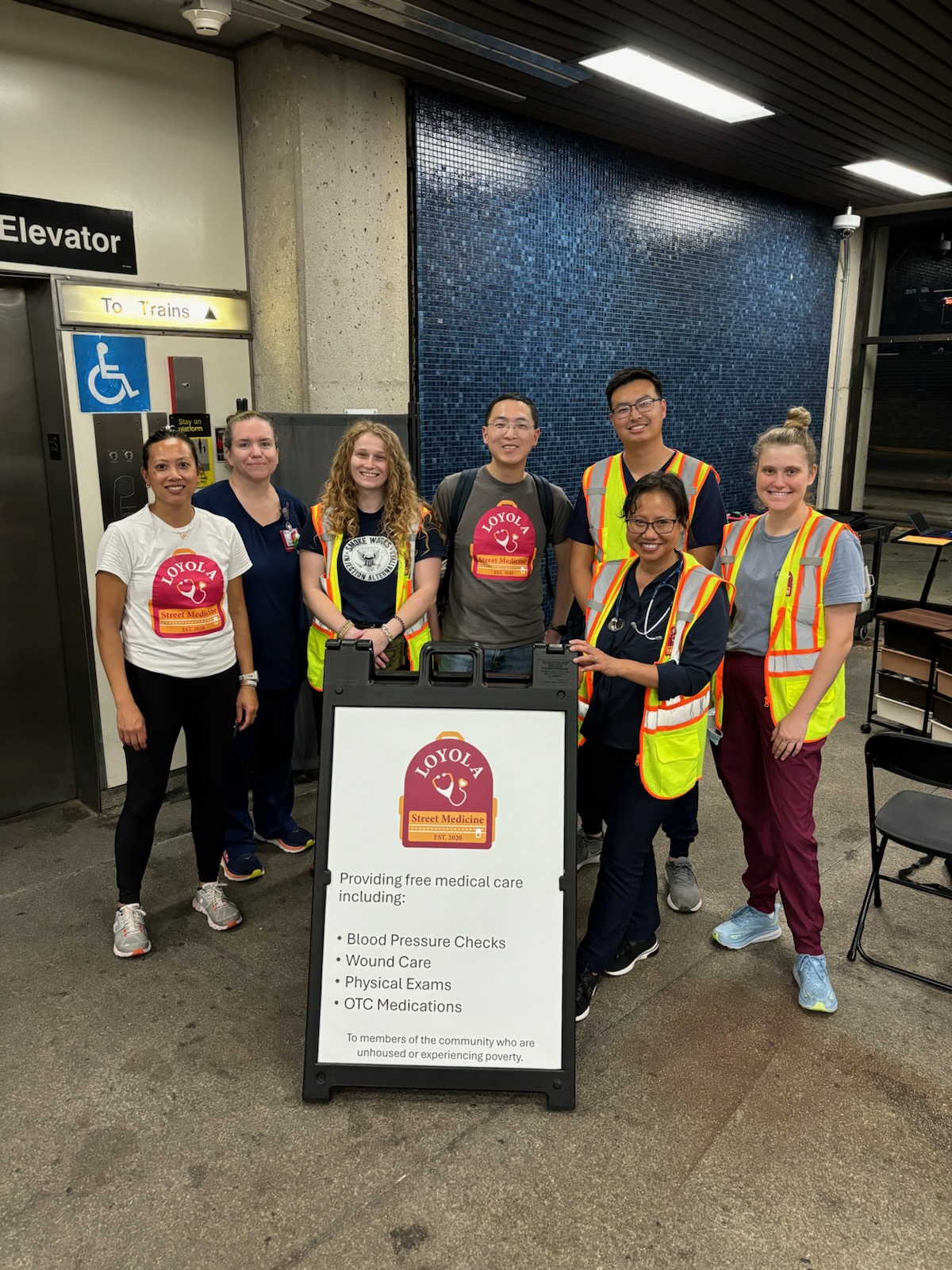
The Loyola Street Medicine team at Loyola University Medical Center, Chicago, includes ACEP members Theresa Nguyen, MD, FACEP, (first from left) and Qi Charles Zhang, MD, MPH, (middle). (Click to enlarge.)

Pages: 1 2 3 4 5 6 7 8 | Single Page

Topics: Access to Health Caremobile clinicsstreet medicineunderservedVolunteer

Related

  • Emergency Physicians Step Up for Women

    October 15, 2025 - 4 Comments
  • Navigating the Health Care System in Vietnam with CKD/ESRD

    September 23, 2025 - 0 Comment
  • Research Returns Spotlight to Physician ED Coverage

    April 30, 2025 - 0 Comment

Current Issue

ACEP Now: November 2025

Download PDF

Read More

No Responses to “Emergency Physicians Volunteer to Deliver Care”

Leave a Reply Cancel Reply

Your email address will not be published. Required fields are marked *


*
*


Wiley
  • Home
  • About Us
  • Contact Us
  • Privacy
  • Terms of Use
  • Advertise
  • Cookie Preferences
Copyright © 2025 by John Wiley & Sons, Inc. All rights reserved, including rights for text and data mining and training of artificial technologies or similar technologies. ISSN 2333-2603