Logo

Log In Sign Up |  An official publication of: American College of Emergency Physicians
Navigation
  • Home
  • Multimedia
    • Podcasts
    • Videos
  • Clinical
    • Airway Managment
    • Case Reports
    • Critical Care
    • Guidelines
    • Imaging & Ultrasound
    • Pain & Palliative Care
    • Pediatrics
    • Resuscitation
    • Trauma & Injury
  • Resource Centers
    • mTBI Resource Center
  • Career
    • Practice Management
      • Benchmarking
      • Reimbursement & Coding
      • Care Team
      • Legal
      • Operations
      • Quality & Safety
    • Awards
    • Certification
    • Compensation
    • Early Career
    • Education
    • Leadership
    • Profiles
    • Retirement
    • Work-Life Balance
  • Columns
    • ACEP4U
    • Airway
    • Benchmarking
    • Brief19
    • By the Numbers
    • Coding Wizard
    • EM Cases
    • End of the Rainbow
    • Equity Equation
    • FACEPs in the Crowd
    • Forensic Facts
    • From the College
    • Images in EM
    • Kids Korner
    • Medicolegal Mind
    • Opinion
      • Break Room
      • New Spin
      • Pro-Con
    • Pearls From EM Literature
    • Policy Rx
    • Practice Changers
    • Problem Solvers
    • Residency Spotlight
    • Resident Voice
    • Skeptics’ Guide to Emergency Medicine
    • Sound Advice
    • Special OPs
    • Toxicology Q&A
    • WorldTravelERs
  • Resources
    • ACEP.org
    • ACEP Knowledge Quiz
    • Issue Archives
    • CME Now
    • Annual Scientific Assembly
      • ACEP14
      • ACEP15
      • ACEP16
      • ACEP17
      • ACEP18
      • ACEP19
    • Annals of Emergency Medicine
    • JACEP Open
    • Emergency Medicine Foundation
  • About
    • Our Mission
    • Medical Editor in Chief
    • Editorial Advisory Board
    • Awards
    • Authors
    • Article Submission
    • Contact Us
    • Advertise
    • Subscribe
    • Privacy Policy
    • Copyright Information

Emergency Physician’s Neck Pain and Headache Lead to Dissection Diagnosis

By Jaron Christianson, MD, MBA, FACEP | on February 13, 2017 | 3 Comments
Features
  • Tweet
  • Click to email a link to a friend (Opens in new window) Email
Print-Friendly Version

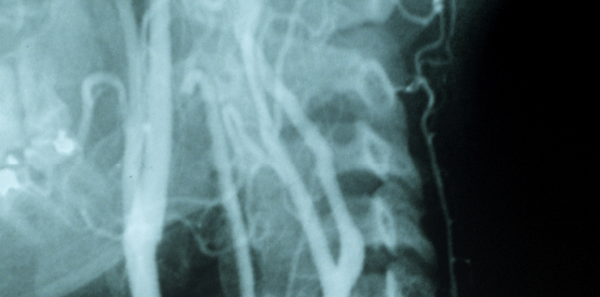
I was back at work and feeling great at my six-month follow-up for angiogram number three. To my dismay, this showed that the extravasated blood had managed to work itself into a dural arteriovenous fistula (AVF). The recommendation was to do a fourth angiogram and squirt a little surgical glue (Onyx) in there and just be done with it. The downside of a persistent dural AVF is myelopathy, which is obviously best avoided. This sounded like a fantastic plan until the physician told me that the risk of the procedure was the glue going where it shouldn’t, causing an immediate spinal artery stroke and quadriplegia. I spoke to my neurosurgeon and then a colleague neurosurgeon, who both thought an open approach, if even needed, was better, so I got an MRI (normal) and saw a specialist outside of the system who did these for a living. He wanted to wait another six months, repeat the MRI, and then do his own angiogram. The repeat MRI was normal. His angiogram showed decreased blood flow through the AVF. Apparently, a few of these just slow down and shut off on their own. It was decided to wait a year and repeat the angiogram. If the flow remains low, then there won’t be much more to do. If there is still a problem, then the next step would be a multilevel spinal fusion—which definitely beats a spinal artery stroke!

You Might Also Like
  • Headache and Neck Pain – When to Suspect Cervical Artery Dissection
  • What Emergency Physicians Need to Know About Complex Regional Pain Syndrome
  • Ovarian Vein Thrombosis Diagnosis, Management Tips for Emergency Physicians
Explore This Issue
ACEP Now: Vol 36 – No 02 – February 2017

In the meantime, I feel great and have no symptoms. I’ve diagnosed a good number of VADs in the meantime, and my group’s CT utilization rate has skyrocketed. I have come to the conclusion that VADs are not that uncommon.


Dr. ChristiansonDr. Christianson is program director of emergency services at Group Health Permanente in Seattle.

Pages: 1 2 3 | Single Page

Topics: DiagnosisED Critical CareEmergency DepartmentEmergency MedicineEmergency PhysicianHeadacheImaging & UltrasoundNeck PainNeurologyOutcomePatient CareSpineVetebral Artery Dissection

Related

  • Is There Any Way Out for Spinal Epidural Abscess?

    November 7, 2025 - 1 Comment
  • Let Core Values Help Guide Patient Care

    November 5, 2025 - 0 Comment
  • ACEP’s October 2025 Poll: How Often Do You Read Your Own X-Rays?

    September 30, 2025 - 0 Comment

Current Issue

ACEP Now: November 2025

Download PDF

Read More

3 Responses to “Emergency Physician’s Neck Pain and Headache Lead to Dissection Diagnosis”

  1. February 24, 2017

    Tracey Struthers Reply

    Very interesting to read. I have a missed vertebral artery dissection still causing problems after 4yrs. Doctors refuse to diagnose. I agree they are not rare and believe more awareness is needed to help diagnose individuals with a varied set of symptoms.

  2. February 26, 2017

    Sarah S Reply

    Interesting case. Sorry you had to go through the ordeal. I’m trying to read your case/symptom pattern/symptom onset and see how I could apply your symptoms to my patient population without doing CT angio on every neck pain looking for dissection. Of course, we as Physicians are fortunate to be able to curbside our colleagues and guide (or mis-guide as it were) our own therapy. Our patients hate to hear ‘come back if worse’ only as the copay is so onerous. MD’s are also being metric-ed to death with the number of CT’s we order (with public ‘shaming’ at department meetings).
    Still looking for the balance. It would be so wonderful if there was a serum detection marker for dissection, not unlike a D-Dimer, that could at least select out potential candidates for angio.
    Again, thanks for the story. Stop sneezing so hard.

  3. March 25, 2017

    Rachel Reply

    Thanks for sharing this article. I learned a lot. I have been suffering with headache lately. I don’t know what is the main cause of it. I was advised to do some exercise and drink plenty of water. I am planning to see my doctor soon.

Leave a Reply Cancel Reply

Your email address will not be published. Required fields are marked *


*
*


Wiley
  • Home
  • About Us
  • Contact Us
  • Privacy
  • Terms of Use
  • Advertise
  • Cookie Preferences
Copyright © 2025 by John Wiley & Sons, Inc. All rights reserved, including rights for text and data mining and training of artificial technologies or similar technologies. ISSN 2333-2603
