
Engage other medical specialties and admitting physicians to achieve consensus on tests that are not necessary for hospital admission or preoperative clearance.
Explore This Issue
ACEP Now: Vol 33 – No 05 – May 2014
How many patients have you seen for chest pain in the last year? How many times have you placed a chest pain order set—complete blood count, basic metabolic panel, troponin, other cardiac markers, coags, and aspirin 325 mg? Now consider how many times the results of coagulation testing (particularly in that context) have altered your clinical management. If you answered none, we wouldn’t be surprised.
Prothrombin time (PT) was discovered in 1935 and used to better understand the reasons for prolonged bleeding in liver failure. The activated partial thromboplastin time (PTT) was discovered in 1953 and used to evaluate for congenital hemophilia in high pretest probability patients with symptoms of unexplained bleeding.1 PT contributed to the discovery of warfarin and subsequently has been used to evaluate its therapeutic effect.2 By the 1960s, these tests were widely available in modern laboratories. In the 1980s, the International Normalized Ratio (INR) was developed to provide a consistent way of expressing the PT ratio, which varied between labs based on the type and batch of prothrombotic reagent used. Together, “coags” have become one of the most frequently performed laboratory tests in the world and in the ED.
But when do they add value? PT/INR and PTT testing occurs frequently in the ED setting despite studies showing that routine testing does not affect clinical management.3 In 2010, 8.4 percent of ED patients got a PT or INR.4 While statistics for PTT are not available, in our experience they usually are ordered together with PT/INR.
Estimating the cost of medical tests and treatments is difficult because charges, costs, and payments all differ between institutions, as well as by regions and payers. Medicare reimburses around $5.56 for a PT/INR and $8.50 for a PTT.5 Commercial insurance companies pay from $10 to $60 per test.6 Assuming that 8.4 percent of ED patients get a PT and 7 percent get a PTT, at a cost of $25 per test, we could save $250 million by ordering half as many coags in the ED as we do now. This is real money and seems possible to achieve.

Table 1. Indications to Order Coagulation Studies
What Are Some Common Clinical Scenarios in Which Coagulation Testing Is Unnecessary?
- Chest pain: At many EDs, PT/INR and PTT are a routine part of chest pain orders. However, among these patients, the rate of abnormal coagulation studies is very low, and the results do not alter clinical management.7 One retrospective study of 741 patients presenting to the ED with chest pain found that 81 percent underwent inappropriate coagulation testing (no coagulopathy, liver disease, warfarin use, active bleeding, or STEMI). Of these patients, only 0.3 percent had a clinically significant coagulopathy, and no patients experienced changes in their clinical management.8 Low-risk patients who are unlikely to undergo emergent cardiac cath and have no indication for coagulation testing (see Table 1) should not routinely get coags.
- Prior to starting anticoagulation: PTT is used for monitoring heparin, not for initial dosing, which should be weight-based. Patients receiving low molecular-weight heparin and novel anticoagulants do not require routine PT/INR or PTT monitoring.
- In combination: Ordering PTT and PT/INR together is a longstanding tradition that is entrenched by our order sets, blood-drawing habits, and even the language of ordering “coags.” It belies the fact that the tests evaluate different processes and can be ordered separately for most indications. See Table 1 for specific indications for each test.
- Preoperative or pre-procedure: Coagulation studies are routinely ordered for patients who require surgery or other invasive procedures, but there is no evidence to suggest that abnormal coagulation studies are a predictor of bleeding complications during invasive procedures.9 In fact, the best predictor is patients’ own reported history of bleeding with prior procedures. As of 2003, Medicare does not reimburse providers for PT and PTT testing performed for routine preoperative screening purposes. Changing this is difficult for individual emergency physicians because surgeons may insist. Encourage your medical director to discuss this with the surgery services.
What Can You Do To Reduce Unnecessary Coagulation Testing?
- Remove coagulation tests from electronic order panels, such as those for the evaluation of suspected acute coronary syndrome, admission, or preoperative evaluation. Engage other medical specialties and admitting physicians to achieve consensus on tests that are not necessary for hospital admission or preoperative clearance.
- Require separate orders for PT/INR and PTT.
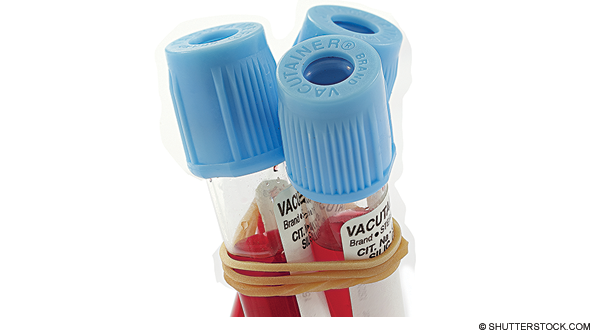
- Separate or remove the sodium citrate–containing (often light blue–topped) tube from IV-starting kits.
The next time you evaluate a patient who is not bleeding, not on warfarin, and does not have a history of liver disease, think twice before clicking PT/INR and PTT on the order set. Skip the coags if they won’t alter the patient’s clinical plan. Let’s reduce unnecessary testing one light blue–topped tube at a time.
Pages: 1 2 | Single Page





One Response to “What Emergency Physicians Can Do to Reduce Unnecessary Coagulation Testing in Patients with Chest Pain”
May 23, 2016
Kevin Mickelson MD FACEPWow, thought that practice was gone 15 years ago…nice to see Harvard catching up…