Logo

Log In Sign Up |  An official publication of: American College of Emergency Physicians
Navigation
  • Home
  • Multimedia
    • Podcasts
    • Videos
  • Clinical
    • Airway Managment
    • Case Reports
    • Critical Care
    • Guidelines
    • Imaging & Ultrasound
    • Pain & Palliative Care
    • Pediatrics
    • Resuscitation
    • Trauma & Injury
  • Resource Centers
    • mTBI Resource Center
  • Career
    • Practice Management
      • Benchmarking
      • Reimbursement & Coding
      • Care Team
      • Legal
      • Operations
      • Quality & Safety
    • Awards
    • Certification
    • Compensation
    • Early Career
    • Education
    • Leadership
    • Profiles
    • Retirement
    • Work-Life Balance
  • Columns
    • ACEP4U
    • Airway
    • Benchmarking
    • Brief19
    • By the Numbers
    • Coding Wizard
    • EM Cases
    • End of the Rainbow
    • Equity Equation
    • FACEPs in the Crowd
    • Forensic Facts
    • From the College
    • Images in EM
    • Kids Korner
    • Medicolegal Mind
    • Opinion
      • Break Room
      • New Spin
      • Pro-Con
    • Pearls From EM Literature
    • Policy Rx
    • Practice Changers
    • Problem Solvers
    • Residency Spotlight
    • Resident Voice
    • Skeptics’ Guide to Emergency Medicine
    • Sound Advice
    • Special OPs
    • Toxicology Q&A
    • WorldTravelERs
  • Resources
    • ACEP.org
    • ACEP Knowledge Quiz
    • Issue Archives
    • CME Now
    • Annual Scientific Assembly
      • ACEP14
      • ACEP15
      • ACEP16
      • ACEP17
      • ACEP18
      • ACEP19
    • Annals of Emergency Medicine
    • JACEP Open
    • Emergency Medicine Foundation
  • About
    • Our Mission
    • Medical Editor in Chief
    • Editorial Advisory Board
    • Awards
    • Authors
    • Article Submission
    • Contact Us
    • Advertise
    • Subscribe
    • Privacy Policy
    • Copyright Information

Emergency Medicine Leaders Discuss Role of Democratic Groups in Future of EM

By ACEP Now | on January 15, 2016 | 0 Comment
Features Opinion
  • Tweet
  • Click to email a link to a friend (Opens in new window) Email
Print-Friendly Version
Emergency Medicine Leaders Discuss Pros, Cons of Democratic Group Practices

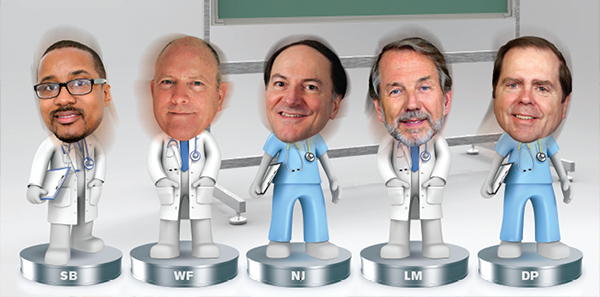
SB: I would tend to agree. Having scale and having a sound financial base does allow you the flexibility to invest and experiment and even make mistakes. I think that, again, having those types of resources allows you to evolve, and democratic groups cannot be afraid to experiment to make investments in themselves and to change to meet those expectations of our hospital partners. It is more challenging when you have to service a certain amount of debt, or you have to make your shareholders at a smaller individual site happy.

You Might Also Like
  • Emergency Medicine Leaders Discuss How Democratic Groups Manage Scale, Consolidation
  • Emergency Medicine Leaders Discuss Pros, Cons of Democratic Group Practices
  • Opinion: How Democracy in Emergency Medicine Groups Should Be Defined, Measured
Explore This Issue
ACEP Now: Vol 35 – No 01 – January 2016

LM: There are such pressures to move toward models that lower costs and, perhaps for the first time ever, really pay us for quality and outcomes. I do believe, regardless of size or structure, any of us can succeed if we’re meeting the needs of our hospital clients/hospital customers. If the hospital is well-served, they will never call Dighton or us. On the other hand, if we serve their needs well, then I think they will call us. Ultimately, if you’re meeting the needs of the hospital, your contract is probably not going to go out for bid.

NJ: I agree with Lynn and might take it a step further. The groups that are taking care of the patients are also helping the hospital system. That’s what’s been good about our group; we’ve been able to take care of the patients and keep the hospital happy. As long as you take care of your hospital and your patients, the group, no matter what size, is going to survive no matter what the structure.

RM: What would be the one or two things people should start thinking about now in order to ensure success?

WF: I think the thing that won’t work is the concept that you train, you get board certified, and that you can spend the rest of your career practicing at Fort Apache. I think the folks that are going to be adding value, improving patient care, and improving population health are going to see themselves as being part of teams providing systems of care and improving processes of care, and are more likely to succeed.

NJ: What Wes said was brilliant. We’ve seen a change in how we define medical excellence. Back in the day, it used to be, “Did you order one of everything?” Now, it is not only, “Is your clinical care focus on the evidence and research to support your care?” but, “Is it also as efficient as possible?”

Pages: 1 2 3 | Single Page

Topics: ACEPAmerican College of Emergency PhysiciansDemocracyDemocratic GroupsEmergency MedicineEmergency PhysicianOperationsPractice ManagementPractice Trends

Related

  • Florida Emergency Department Adds Medication-Dispensing Kiosk

    November 7, 2025 - 1 Comment
  • Q&A with ACEP President L. Anthony Cirillo

    November 5, 2025 - 0 Comment
  • How Does Emergency Medicine Navigate Consolidation Trends in Health Care?

    October 29, 2025 - 0 Comment

Current Issue

ACEP Now: November 2025

Download PDF

Read More

About the Author

ACEP Now

View this author's posts »

No Responses to “Emergency Medicine Leaders Discuss Role of Democratic Groups in Future of EM”

Leave a Reply Cancel Reply

Your email address will not be published. Required fields are marked *


*
*


Wiley
  • Home
  • About Us
  • Contact Us
  • Privacy
  • Terms of Use
  • Advertise
  • Cookie Preferences
Copyright © 2025 by John Wiley & Sons, Inc. All rights reserved, including rights for text and data mining and training of artificial technologies or similar technologies. ISSN 2333-2603
