
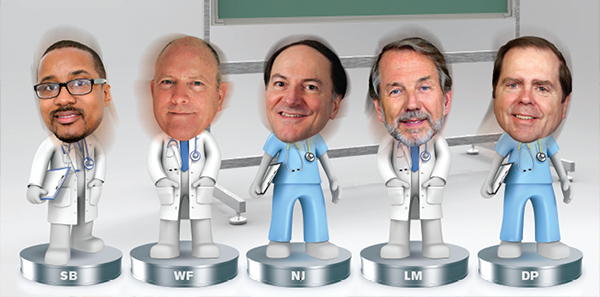
RM: From my perspective, I often look nationally at different payers, providers, and others, and there are really four major transformations occurring: clinical transformations, redesign; organizational transformation occurring not only to accept risk but also to work in different ways than before; we’re seeing digital transformation, I think has been alluded to; and then financial transformation. So the big question is, what is the best structure to survive? Is there a difference? Next month we’ll look at the obligations and responsibilities you have with a democratic group in order to succeed, and what opportunities you get from that structure.



4 Responses to “Emergency Medicine Leaders Discuss Pros, Cons of Democratic Group Practices”
October 25, 2015
ED PhysicianTo Dr. Packards point.. I don’t think it is fair, logical, or even reasonable to conclude that what EMCARE is doing is “democratic”. I certainly think there are countless examples of completely unfair actions that EMCARE has taken against ED Physicians. I specifically have several, which I think if Dr. Packard new he would rectify. There in lies the problem.. EMCARE is so big that terrible atrocities are being done against ED Physicians and the people at the top don’t even know. In a democratic group, because it is smaller and the power is distributed these terrible actions are avoided. The profession of emergency medicine is being destroyed by this type of unaccountable behavior.
I hope Dr. Packard is interested in what is happening at a local level within EMCARE!!
October 25, 2015
John ShermanI think it unfortunate that the panel is mainly folk who are in the upper positions of apparently non-democratic groups. I get from the above discussions a paternalistic view: some people at the top know how to run the business better and that is the best way for it. It is then rationalized into the social darwinism framework of that is what is needed for groups/companies to survive. Rather Ayn Rand-ish. I also get the sense that a couple of the responses were being obviously obtuse with the sentiment that ‘some people want to do more of the administrative work and so it does not come out evenly’ – most ER doctors are smarter than that and know that administrative work is necessary and will proportion payment to those who are doing the “back office” work of the group. A good part of the chagrin from the “pit doctors” in a non-democratic group is over-valuing the administrative tasks compared to clinical work, to the point of the administrative level people in the organization getting considerable-fold higher incomes. That is the common “business-model” for corporations, but should it be that way for a group of professionals? I am a contractor for TeamHealth, and I would say that I have no particular say in anything the group does and know that a considerable portion of my revenue that I generate goes to a lot of administrative overhead that does not have transparent value.
I think the virtues of a democratic practice are good and could be strived for and incorporated into even “corporate model” groups of doctors.
October 26, 2015
Bill BassMany of us think that democracy is the fairest form of governance of any organization. Watch the video regarding democracy vs a republic ( https://www.youtube.com/watch?v=JdS6fyUIklIto ) to really understand democracy.
The complexities of medical practice with it’s insurance, government, and regulatory burdens make solo practice almost impossible. A group that manages billing, insurance, malpractice insurance, pension plan, health insurance, CME, and scheduling well, certainly deserves a fair profit. That profit should be openly available to all group members a to see and invest in if they so chose. If you can find a group this open, you should join it.
Bill Bass, M.D.
November 5, 2015
Dominic Bagnoli, MD - CEO, USACSAs the co-founder and current CEO of one of the largest democratic EM groups in the country, I am acutely interested in this discussion and the comments that have followed. Being a democratic practice has been the gold standard in our specialty for decades and that hasn’t changed but as the discussion clearly highlights, there isn’t a consensus opinion as to what constitutes a democratic practice and for many, democracy is in the eye of the beholder. Realizing that there are many different perspectives of democracy, it occurs to me that we are using the wrong standard to judge an ideal EM practice. From my perspective, the real issue is equity and ownership. Do the practicing physicians own the practice? Do they have a path to ownership? What exactly do they own? I believe being an owner is the real difference maker. Everyone takes better care of something they own. Have you ever washed your rental car? Additionally, democratic and physician-owned groups will need more support and resources than ever to succeed in the progressively complex healthcare environment. All groups will need capital for investments in processes, infrastructure and technology in order to deliver better, more efficient care. Hospitals will also require support and partnership with world-class business leadership. It will be increasingly difficult, if not impossible, for smaller EM groups to access either of those. We are building a large EM group committed to physician equity and shared ownership for all of our members. Having a democratic vote is important, but it is not a substitute for being an actual owner of the practice.