Logo

Log In Sign Up |  An official publication of: American College of Emergency Physicians
Navigation
  • Home
  • Multimedia
    • Podcasts
    • Videos
  • Clinical
    • Airway Managment
    • Case Reports
    • Critical Care
    • Guidelines
    • Imaging & Ultrasound
    • Pain & Palliative Care
    • Pediatrics
    • Resuscitation
    • Trauma & Injury
  • Resource Centers
    • mTBI Resource Center
  • Career
    • Practice Management
      • Benchmarking
      • Reimbursement & Coding
      • Care Team
      • Legal
      • Operations
      • Quality & Safety
    • Awards
    • Certification
    • Compensation
    • Early Career
    • Education
    • Leadership
    • Profiles
    • Retirement
    • Work-Life Balance
  • Columns
    • ACEP4U
    • Airway
    • Benchmarking
    • Brief19
    • By the Numbers
    • Coding Wizard
    • EM Cases
    • End of the Rainbow
    • Equity Equation
    • FACEPs in the Crowd
    • Forensic Facts
    • From the College
    • Images in EM
    • Kids Korner
    • Medicolegal Mind
    • Opinion
      • Break Room
      • New Spin
      • Pro-Con
    • Pearls From EM Literature
    • Policy Rx
    • Practice Changers
    • Problem Solvers
    • Residency Spotlight
    • Resident Voice
    • Skeptics’ Guide to Emergency Medicine
    • Sound Advice
    • Special OPs
    • Toxicology Q&A
    • WorldTravelERs
  • Resources
    • ACEP.org
    • ACEP Knowledge Quiz
    • Issue Archives
    • CME Now
    • Annual Scientific Assembly
      • ACEP14
      • ACEP15
      • ACEP16
      • ACEP17
      • ACEP18
      • ACEP19
    • Annals of Emergency Medicine
    • JACEP Open
    • Emergency Medicine Foundation
  • About
    • Our Mission
    • Medical Editor in Chief
    • Editorial Advisory Board
    • Awards
    • Authors
    • Article Submission
    • Contact Us
    • Advertise
    • Subscribe
    • Privacy Policy
    • Copyright Information

Emergency Medicine and EMS Have Grown in Parallel Tracks for 50 Years

By Stephanie Stanesic | on May 9, 2024 | 1 Comment
Features
  • Tweet
  • Click to email a link to a friend (Opens in new window) Email
Print-Friendly Version

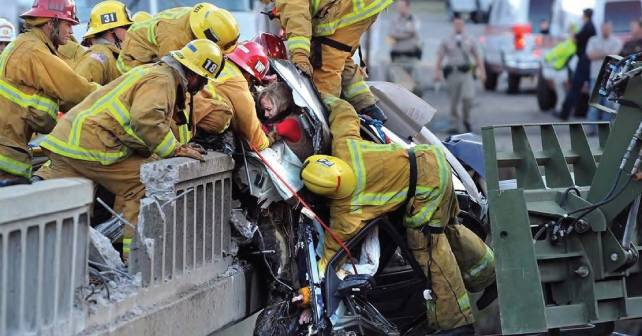
Jon Krohmer, MD, FACEP, who says he has “the EMS blood type,” practically had a front row seat to the growth of EMS care starting as a volunteer EMT more than 50 years ago. “The evolution of EMS really mirrors the evolution of emergency physicians.” Dr. Krohmer said.

You Might Also Like
  • ACEP, National Association of Emergency Medical Technicians Celebrate EMS Week May 17–23
  • EMS the Newest Subspecialty of Emergency Medicine
  • ACEP, NAEMT Partner to Celebrate EMS Week
Explore This Issue
ACEP Now: Vol 43 – No 05 – May 2024

“When EMS really blossomed, physician involvement waned a little bit because there was a very large demand as EMS programs were developing. But there weren’t the physician resources to support that need,” he said.

“But since the mid 80s, we have realized that EMS is the clinical practice of emergency medicine outside of the emergency department. So physicians need to be involved. That was the time that ACEP stepped up.”

In 1974–50 years ago this month—President Gerald Ford saw the life-saving work of EMS teams and declared a national “EMS Week” to honor these men and women and the incredible difference they make on the field and in the trenches.

This year is the 50th anniversary of the first National EMS Week, designed to honor EMS professionals.

At that time, there was physician involvement in EMS, however they weren’t necessarily emergency physicians simply because there weren’t many of them at the time. Emergency medicine wasn’t recognized as a clinical specialty of medicine until 1979. But over the last 20 to 30 years, ACEP and National Association of EMS Physicians (NAEMSP) together have been very intentional about increasing EMS educational activities for emergency physicians, as well as increasing their advocacy for EMS initiatives.

As a result, there has been a significant uptick in emergency physicians who have focused their clinical practice on EMS. There is now an EMS subspecialty within the American Board of Emergency Medicine that to date, has produced about 1,200 board certified EMS physicians throughout the country. There are also hundreds of other emergency physicians involved in EMS as part of their practice but aren’t board certified as EMS subspecialists.

Since 1974, EMS Week has been an annual tribute to the dedication of Emergency Medical Services professionals and is celebrated during the third week of May.

According to Dr. Krohmer, this is encouraging since “it’s important that all emergency physicians have a good understanding of EMS, because they are either serving as a medical director for an EMS agency, or their clinical practice in the emergency department is significantly influenced by EMS.”

Pages: 1 2 3 | Single Page

Topics: Emergency Medical ServicesEmergency Medical TechniciansEMSEMTNational EMS Week

Related

  • Event Medicine: Where Fun and Safety Sing in Perfect Harmony

    October 9, 2025 - 1 Comment
  • Trauma First Aid at the 2025 Boston Marathon

    September 22, 2025 - 0 Comment
  • Prehospital Buprenorphine Is a Powerful Tool in the Opioid-Crisis Fight

    June 4, 2025 - 0 Comment

Current Issue

ACEP Now: November 2025

Download PDF

Read More

One Response to “Emergency Medicine and EMS Have Grown in Parallel Tracks for 50 Years”

  1. June 9, 2024

    Marvin Wayne, MD Reply

    Thanks Jon, and Dustin, I started as an EMS Medical Director 50 years ago. I’ve seen changes I would have never imagined, and maybe, in some small way, contributed to those changes. As we move forward I’m sure that, with the needed support, changes to provide care and more important, caring, will continue to occur.

Leave a Reply Cancel Reply

Your email address will not be published. Required fields are marked *


*
*


Wiley
  • Home
  • About Us
  • Contact Us
  • Privacy
  • Terms of Use
  • Advertise
  • Cookie Preferences
Copyright © 2025 by John Wiley & Sons, Inc. All rights reserved, including rights for text and data mining and training of artificial technologies or similar technologies. ISSN 2333-2603
