Logo

Log In Sign Up |  An official publication of: American College of Emergency Physicians
Navigation
  • Home
  • Multimedia
    • Podcasts
    • Videos
  • Clinical
    • Airway Managment
    • Case Reports
    • Critical Care
    • Guidelines
    • Imaging & Ultrasound
    • Pain & Palliative Care
    • Pediatrics
    • Resuscitation
    • Trauma & Injury
  • Resource Centers
    • mTBI Resource Center
  • Career
    • Practice Management
      • Benchmarking
      • Reimbursement & Coding
      • Care Team
      • Legal
      • Operations
      • Quality & Safety
    • Awards
    • Certification
    • Compensation
    • Early Career
    • Education
    • Leadership
    • Profiles
    • Retirement
    • Work-Life Balance
  • Columns
    • ACEP4U
    • Airway
    • Benchmarking
    • Brief19
    • By the Numbers
    • Coding Wizard
    • EM Cases
    • End of the Rainbow
    • Equity Equation
    • FACEPs in the Crowd
    • Forensic Facts
    • From the College
    • Images in EM
    • Kids Korner
    • Medicolegal Mind
    • Opinion
      • Break Room
      • New Spin
      • Pro-Con
    • Pearls From EM Literature
    • Policy Rx
    • Practice Changers
    • Problem Solvers
    • Residency Spotlight
    • Resident Voice
    • Skeptics’ Guide to Emergency Medicine
    • Sound Advice
    • Special OPs
    • Toxicology Q&A
    • WorldTravelERs
  • Resources
    • ACEP.org
    • ACEP Knowledge Quiz
    • Issue Archives
    • CME Now
    • Annual Scientific Assembly
      • ACEP14
      • ACEP15
      • ACEP16
      • ACEP17
      • ACEP18
      • ACEP19
    • Annals of Emergency Medicine
    • JACEP Open
    • Emergency Medicine Foundation
  • About
    • Our Mission
    • Medical Editor in Chief
    • Editorial Advisory Board
    • Awards
    • Authors
    • Article Submission
    • Contact Us
    • Advertise
    • Subscribe
    • Privacy Policy
    • Copyright Information

Emergency Department Benchmarking Alliance Releases 2014 Data on Staffing, Physician Productivity

By James J. Augustine, MD, FACEP | on January 15, 2016 | 3 Comments
Benchmarking
  • Tweet
  • Click to email a link to a friend (Opens in new window) Email
Print-Friendly Version

Through the last 20 years, APPs have assumed more independence in patient management in the ED, and in some EDs, it is now possible to measure patient care separately for the two types of practitioners. However, to maintain consistency, the EDBA productivity formula has not changed.

You Might Also Like
  • Emergency Department Benchmarking Alliance Reports on Data Survey for Next-Generation ED Design
  • More Advanced Practice Providers Working in Emergency Departments
  • Emergency Department Benchmarking Trend Data Help Physicians Anticipate Operational Management Needs
Explore This Issue
ACEP Now: Vol 35 – No 01 – January 2016

The results of the 2014 EDBA data survey are presented in Table 1.
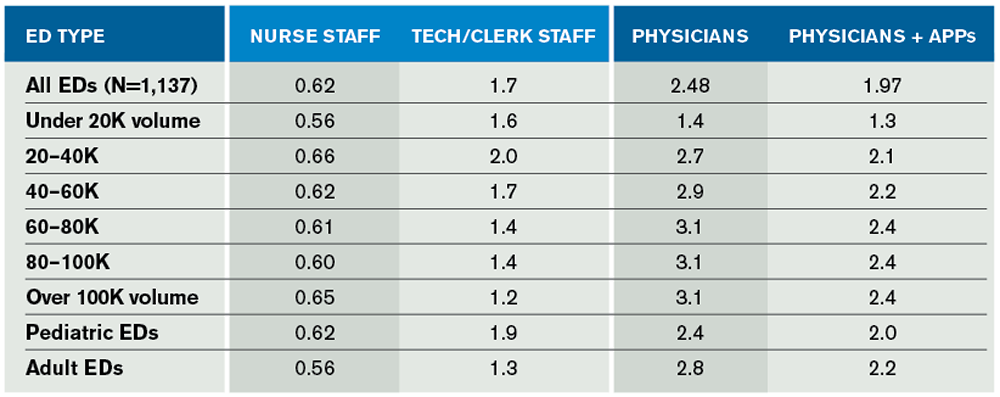
Table 1. Patients Seen Per Hour in the EDBA Data Survey for Calendar Year 2014

(click for larger image) Table 1. Patients Seen Per Hour in the EDBA Data Survey for Calendar Year 2014

Staffing Ratios

Nurse staffing ratios indicate there are about 0.62 patients managed per nurse-staffed hour per day. That ratio has been very consistent over five years and also across the different volume and types of EDs. Table 2 presents the staffing ratios of all groups of ED staff since 2010.
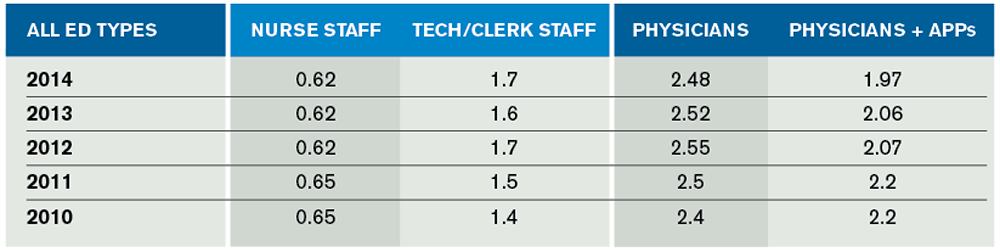
Table 2. Patient-Per-Hour Staffing Ratios Over the Last 5 Years of EDBA Surveys

(click for larger image) Table 2. Patient-Per-Hour Staffing Ratios Over the Last 5 Years of EDBA Surveys

The second columns of Table 1 and Table 2 reflect the use of support staff in the ED. Combining tech and clerk hours, the service ratio averaged about 1.7 patients per scheduled hour. There has been an increase in this ratio over the last five years. This may reflect the decreased number of hours staffed by clerks as the use of physician computerized order entry and other technologies has expanded.

Emergency physician staffing produced an average of 2.48 patients seen per hour. When attending physician coverage was supplemented by APPs and the APP hours were given a factor of 0.5 (as above), the staffing ratio averaged 1.97 patients per hour.

Table 3 focuses on the productivity of physicians and APPs in all the cohorts of EDs over the last four years. There has been an increasing number of EDs utilizing APP staffing. Those that use APPs appear to be increasing the number of hours relative to physician staffing. This staffing change may facilitate the continued increase in ED volume across all cohorts. But APP staffing has the greatest impact on the relative productivity of emergency physicians in EDs with over 20,000 volume per year.
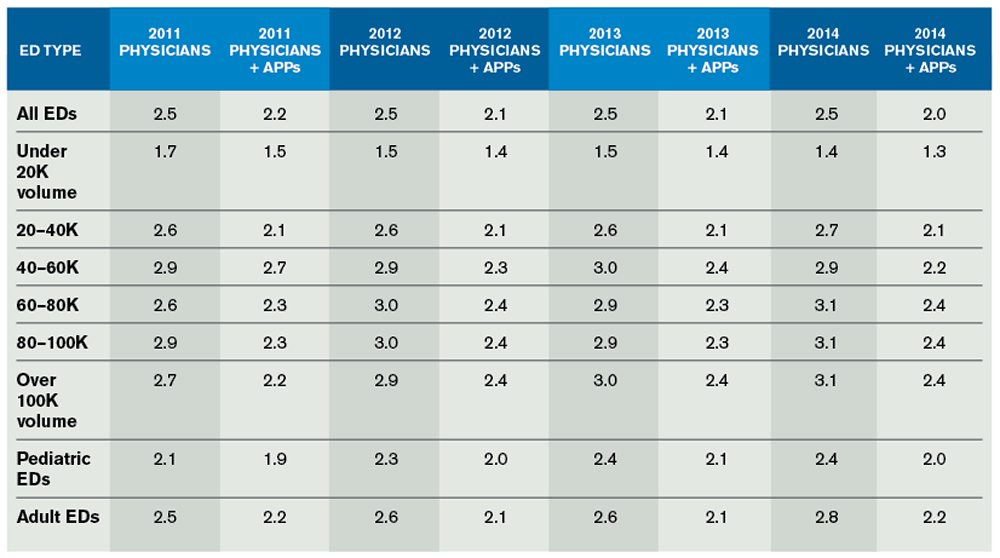
Table 3. Licensed Independent Practitioner Patient-Per-Hour Staffing Changes Through the Years

(click for larger image) Table 3. Licensed Independent Practitioner Patient-Per-Hour Staffing Changes Through the Years

From the data, it appears that emergency physician productivity is slowly increasing. This could be attributed to increasing ED presence of APPs, who assist in overall patient flow. But many EDs appear to be better able to accommodate the loss of physician productivity from the implementation of electronic tools in the ED. Many emergency physicians have documented the loss of productivity and difficulties in patient flow when information systems do not support the role of physicians and APPs. There are perhaps now some signs that providers have adapted to the use of those systems.

Pages: 1 2 3 | Single Page

Topics: Care TeamEmergency Department Benchmarking AllianceEmergency MedicineEmergency PhysicianNurseOperationsPractice TrendsProductivityStaffingWorkforce

Related

  • The Emergency Physician Job Market 2025-26

    October 15, 2025 - 2 Comments
  • Are Physician-Led Unions the Wave of the Future?

    September 30, 2025 - 0 Comment
  • A Follow-Up Conversation with ACEP President Dr. Alison Haddock

    August 30, 2025 - 0 Comment

Current Issue

ACEP Now: November 2025

Download PDF

Read More

About the Author

James J. Augustine, MD, FACEP

James J. Augustine, MD, FACEP, is national director of prehospital strategy for US Acute Care Solutions in Canton, Ohio; clinical professor of emergency medicine at Wright State University in Dayton, Ohio; and vice president of the Emergency Department Benchmarking Alliance.

View this author's posts »

3 Responses to “Emergency Department Benchmarking Alliance Releases 2014 Data on Staffing, Physician Productivity”

  1. February 14, 2016

    Eric S. Weinstein Reply

    Is this what the market bears? Is this the tail wagging the dog?

    • January 7, 2019

      Coach Lee Reply

      I think its the egg laying the chicken

  2. December 6, 2016

    jon elle Reply

    Fantastic article . I was fascinated by the details – Does someone know if my company could grab a template AZ Practitioner Data Form example to edit ?

Leave a Reply Cancel Reply

Your email address will not be published. Required fields are marked *


*
*


Wiley
  • Home
  • About Us
  • Contact Us
  • Privacy
  • Terms of Use
  • Advertise
  • Cookie Preferences
Copyright © 2025 by John Wiley & Sons, Inc. All rights reserved, including rights for text and data mining and training of artificial technologies or similar technologies. ISSN 2333-2603
