Logo

Log In Sign Up |  An official publication of: American College of Emergency Physicians
Navigation
  • Home
  • Multimedia
    • Podcasts
    • Videos
  • Clinical
    • Airway Managment
    • Case Reports
    • Critical Care
    • Guidelines
    • Imaging & Ultrasound
    • Pain & Palliative Care
    • Pediatrics
    • Resuscitation
    • Trauma & Injury
  • Resource Centers
    • mTBI Resource Center
  • Career
    • Practice Management
      • Benchmarking
      • Reimbursement & Coding
      • Care Team
      • Legal
      • Operations
      • Quality & Safety
    • Awards
    • Certification
    • Compensation
    • Early Career
    • Education
    • Leadership
    • Profiles
    • Retirement
    • Work-Life Balance
  • Columns
    • ACEP4U
    • Airway
    • Benchmarking
    • Brief19
    • By the Numbers
    • Coding Wizard
    • EM Cases
    • End of the Rainbow
    • Equity Equation
    • FACEPs in the Crowd
    • Forensic Facts
    • From the College
    • Images in EM
    • Kids Korner
    • Medicolegal Mind
    • Opinion
      • Break Room
      • New Spin
      • Pro-Con
    • Pearls From EM Literature
    • Policy Rx
    • Practice Changers
    • Problem Solvers
    • Residency Spotlight
    • Resident Voice
    • Skeptics’ Guide to Emergency Medicine
    • Sound Advice
    • Special OPs
    • Toxicology Q&A
    • WorldTravelERs
  • Resources
    • ACEP.org
    • ACEP Knowledge Quiz
    • Issue Archives
    • CME Now
    • Annual Scientific Assembly
      • ACEP14
      • ACEP15
      • ACEP16
      • ACEP17
      • ACEP18
      • ACEP19
    • Annals of Emergency Medicine
    • JACEP Open
    • Emergency Medicine Foundation
  • About
    • Our Mission
    • Medical Editor in Chief
    • Editorial Advisory Board
    • Awards
    • Authors
    • Article Submission
    • Contact Us
    • Advertise
    • Subscribe
    • Privacy Policy
    • Copyright Information

EM Residents Use ACEP Grant to Teach Citizen First-Responder Courses

By Landon Wood, DO; and Tim Bikman, DO | on November 24, 2019 | 0 Comment
Resident Voice
  • Tweet
  • Click to email a link to a friend (Opens in new window) Email
Print-Friendly Version
Brittany Wood

The Course

The Until Help Arrives training is a condensed version of the Federal Emergency Management Agency’s “You Are the Help Until Help Arrives” course. It’s concise and focuses on simple life-saving techniques including how to activate the emergency response system, hemorrhage control, and compression-only CPR. It’s a one-hour course split with a 30-minute lecture presentation and 30 minutes of hands-on skills training.

You Might Also Like
  • ACEP Introduces Citizen First Responder Training Program
  • Texans Teach Two Step CPR and Save Lives
  • ACEP Supports Two New International Emergency Medicine Courses at ACEP19
Explore This Issue
ACEP Now: Vol 38 – No 11 – November 2019

Most of the development of this course—business logistics, training kit design, and course content—was done by the hard-working staff at ACEP (big shout-out to Rick Murray for his time and contributions). We are grateful for the small role we played providing feedback on course content and equipment development.

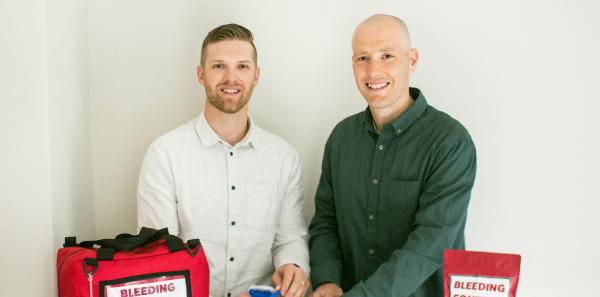
We received the first demo training kit in early August 2019, and we immediately went to work teaching the first community classes. We hosted our first course at our own church, motivated by a desire to teach those who handle childcare for the children at the church (including our own). We both have young children who are regularly left in the care of others, so we wanted to provide bleeding control training to those who might care for our families in a disaster. We walked the participants through wound packing, bandaging, tourniquet application, and compression-only CPR. Almost immediately, we had community leaders reaching out to us, requesting we lead more Until Help Arrives courses.

We also presented the course to our fellow EM residents and got an amazing response. Not only did they find the training to be personally beneficial, but there was an overwhelming desire to volunteer their time as course instructors to bring this course to more communities. We all felt like this simple one-hour class could transform our communities by giving individuals the confidence to act during the aftermath of an emergency and potentially save a life.

We want to flood Rhode Island—and eventually our nation—with these Until Help Arrives courses so that more and more people can learn these important, life-saving skills. There is an urgent need and desire for this training, and we have numerous physicians ready and willing to donate their time to lead the courses. Currently we are focusing on not only teaching the course, but also on obtaining more training kits and CPR mannequins to increase the number of community members we can train. To maintain the fidelity and quality of the course, we keep a student-to-instructor ratio at 10:1 or less. The most consistent initial feedback we’ve received from participants is about the confidence they built during the hands-on training portion.

Pages: 1 2 3 | Single Page

Topics: ACEP Section GrantEducation & TrainingFirst ResponderGrants

Related

  • August 2025 News from the College

    August 4, 2025 - 1 Comment
  • Pros and Cons: A Mandated Four-Year Residency

    June 11, 2025 - 1 Comment
  • Grant Program Funds Venous Thromboembolism Management Projects

    March 9, 2025 - 1 Comment

Current Issue

ACEP Now: November 2025

Download PDF

Read More

No Responses to “EM Residents Use ACEP Grant to Teach Citizen First-Responder Courses”

Leave a Reply Cancel Reply

Your email address will not be published. Required fields are marked *


*
*


Wiley
  • Home
  • About Us
  • Contact Us
  • Privacy
  • Terms of Use
  • Advertise
  • Cookie Preferences
Copyright © 2025 by John Wiley & Sons, Inc. All rights reserved, including rights for text and data mining and training of artificial technologies or similar technologies. ISSN 2333-2603