
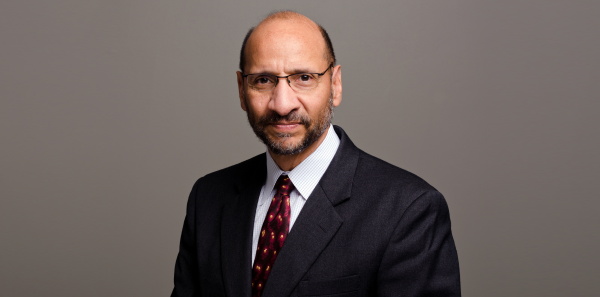
I think it‘s really critical for emergency physicians to avoid seeing themselves as someone just showing up for a shift, but to recognize they’re part of a broader system. —John R. Lumpkin, MD, MPH, FACEP, FACME, FAAN
Explore This Issue
ACEP Now: Vol 38 – No 01 – January 2019
AG: Tell us a little bit about how you decided to pursue positions of leadership within ACEP.
JL: I started my career in ACEP with the Illinois College of Emergency Physicians. I joined the board of directors of the Illinois College, and I became the President-Elect and then the President of the Illinois College. I was very active in academic emergency medicine. I served as Chair of the Society of Teachers of Emergency Medicine while I was at the University of Chicago. That organization was one of the precursors for the Society for Academic Emergency Medicine. They merged with the University Association for Emergency Medicine to form the Society for Academic Emergency Medicine. I was active in a number of committees of the College. I chaired a committee that was established to determine the length and content for residencies in emergency medicine. In 1983, I was elected as Vice Speaker of the ACEP Council, and then, two years later, I was elected Speaker of the Council. I went on to the Board of Directors, where I served for two terms.
AG: Is there anything that you would tell someone who is preparing themselves for becoming a leader?
JL: The first thing I would say, and I believe this is a quote from Woody Allen, is “80 percent of success in life is showing up.” The role of ACEP is to do two things: protect the best interest of the patients that we serve and protect the specialty. There’s a third: to be concerned about those who commit themselves to providing emergency services as emergency physicians. Not only is it showing up, but I think my success has been related to benefiting from my commitment and service to the Colleges of Emergency Physicians.
AG: What role do you see for emergency medicine or emergency physicians in helping to address health disparities in our day-to-day encounters with patients and our operations?
JL: I think it’s really critical for emergency physicians to avoid seeing themselves as someone just showing up for a shift but to recognize they’re part of a broader system.
The emergency department and emergency physicians are in an ideal position to go beyond their shifts and be engaged with hospital administration, and also with the community, to think about that visit and that person in the emergency department as someone who is disconnected, and understanding that the emergency department can play a critical role in connecting them. The emergency physician becomes the connector, the pivot point, that can make the difference between someone chronically using the emergency department day after day and someone who actually is living a better life. I think our responsibility as emergency physicians is to think about the whole patient.
AG: What do you see as factors that could help move the needle successfully in solving some of the issues that we face?
JL: I think the factors that need to be addressed are both internal and external to the emergency department. First, there’s clear evidence that physicians and everyone in our society have biases and stereotypes. There’s clear evidence that the longer you work on a shift, the more likely you are to use those biases in decision making. I think it’s important for emergency physicians to understand how this occurs and to develop systems, including the use of electronic health records, to improve medical decision making.
The second is recognizing the issues that impact patients’ lives. For us in emergency medicine, we need to recognize that we can have an impact on those issues by being an advocate for those patients, and being an advocate not just to make sure that they get the best care but being advocates for the goal to create the environment where everyone has a fair and just opportunity to be as healthy as possible.
AG: Tell me a little bit about your role in the Robert Wood Johnson Foundation.
JL: I’m one of two program senior vice presidents. We’re responsible for the various programs that are supported and funded by the Robert Wood Johnson Foundation. My specific role is to oversee our work related to developing leadership, engaging business, and transforming health and health care systems.
We are seeking to change the environment but also to have health care coordinate with public health and social services so that the needs—not only in the clinical setting but where people live, learn, work, and play—are addressed.
AG: Can you highlight some of your accomplishments?
JL: When I look back on my career, I hope I’ve contributed to the specialty through leadership, and one of my high points was being both Speaker and on the Board of Directors of the College and being the first African American to do that.
AG: I thank you so much for not only taking the time today but also for the inspiration that you’ve been and the example you’ve set for so many, particularly minorities in the field of emergency medicine.
Pages: 1 2 3 | Single Page



2 Responses to “Dr. John Lumpkin, a Pioneer of EM”
February 20, 2022
John PatrickI was lucky enough to have had John as one of my EM faculty members when I was an EM resident at UChicago back in 1980-1982. Congratulations, John, on your many years of service to the profession and the community.
February 27, 2024
Louis LingQuite a guy, he was always the cool and calm attending and you would never guess that inside the calmness and humbleness was this streak of greatness. He could convince people with his good nature and infectious laugh and impeccable logic. He was a little geeky and liked computers before we knew their promise and brought the concept of Clinical Informatics to ABMS long before anyone else. But the thing I loved about him was his ability to think big. His work at RWJF could make an impact across the country. And he was always an emergency physician and a great role model for a young admirer.