Logo

Log In Sign Up |  An official publication of: American College of Emergency Physicians
Navigation
  • Home
  • Multimedia
    • Podcasts
    • Videos
  • Clinical
    • Airway Managment
    • Case Reports
    • Critical Care
    • Guidelines
    • Imaging & Ultrasound
    • Pain & Palliative Care
    • Pediatrics
    • Resuscitation
    • Trauma & Injury
  • Resource Centers
    • mTBI Resource Center
  • Career
    • Practice Management
      • Benchmarking
      • Reimbursement & Coding
      • Care Team
      • Legal
      • Operations
      • Quality & Safety
    • Awards
    • Certification
    • Compensation
    • Early Career
    • Education
    • Leadership
    • Profiles
    • Retirement
    • Work-Life Balance
  • Columns
    • ACEP4U
    • Airway
    • Benchmarking
    • Brief19
    • By the Numbers
    • Coding Wizard
    • EM Cases
    • End of the Rainbow
    • Equity Equation
    • FACEPs in the Crowd
    • Forensic Facts
    • From the College
    • Images in EM
    • Kids Korner
    • Medicolegal Mind
    • Opinion
      • Break Room
      • New Spin
      • Pro-Con
    • Pearls From EM Literature
    • Policy Rx
    • Practice Changers
    • Problem Solvers
    • Residency Spotlight
    • Resident Voice
    • Skeptics’ Guide to Emergency Medicine
    • Sound Advice
    • Special OPs
    • Toxicology Q&A
    • WorldTravelERs
  • Resources
    • ACEP.org
    • ACEP Knowledge Quiz
    • Issue Archives
    • CME Now
    • Annual Scientific Assembly
      • ACEP14
      • ACEP15
      • ACEP16
      • ACEP17
      • ACEP18
      • ACEP19
    • Annals of Emergency Medicine
    • JACEP Open
    • Emergency Medicine Foundation
  • About
    • Our Mission
    • Medical Editor in Chief
    • Editorial Advisory Board
    • Awards
    • Authors
    • Article Submission
    • Contact Us
    • Advertise
    • Subscribe
    • Privacy Policy
    • Copyright Information

Disaster Response Journal of Emergency Response to Hurricane Harvey

By Gerad Troutman, MD, MBA, FACEP | on December 12, 2017 | 1 Comment
Features
  • Tweet
  • Click to email a link to a friend (Opens in new window) Email
Print-Friendly Version
Photos: Dr. Gerad Troutman
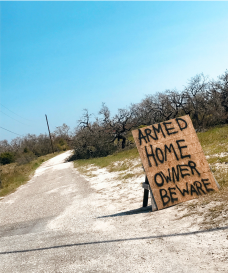
Figure 7: Handmade sign from one of the hardest hit areas.
You Might Also Like
  • ACEP Supports Hurricane Harvey Response in Texas
  • An Emergency Medicine Resident’s Journey Through the Devastation of Hurricane Maria
  • Laying the Groundwork for Effective Disaster Response: An Interview with Dr. Robert Kadlec
Explore This Issue
ACEP Now: Vol 36 – No 12 – December 2017

Figure 7: Handmade sign from one of the hardest hit areas.

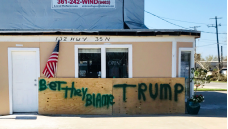
Figure 8: Handmade sign from one of the hardest hit areas.

Figure 8: Handmade sign from one of the hardest hit areas.

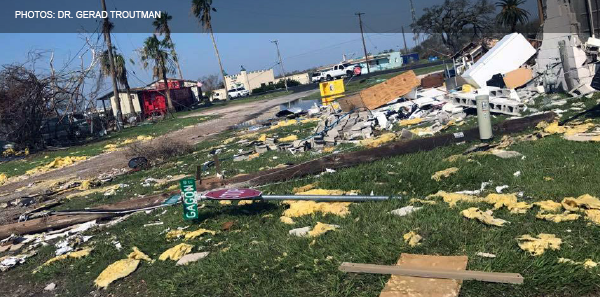
Figure 9: Broken telephone pole.

Figure 9: Broken telephone pole.

The number of broken telephone poles was astounding (see Figures 9 and 10), but even more amazing were the hundreds of lineworker crews with buckets, drills, and rigs working on restoring power to this area. They came from all over the country. I have a new appreciation for the way their trade pulls together in a disaster.

Some have asked about our living conditions. It wasn’t the Marriott, but it’s closer than you would think. We were in large tents with thousands of square footage and air-conditioning to the point of being too cold. We had MREs, but as the community around us stabilized and more people lent a hand, our unit became a popular place for food donation and for responders to come and eat (see Figure 11). We had no fewer than three to five dinner offerings each night and plenty of lunch and breakfast. I felt bad, having so much food at our disposal, and hoped nobody within 100 miles of us was hungry. I started feeding most of my patients, and they appreciated it. Most of them hadn’t had much of a hot meal for days. The sleeping cots, with a foam topper, were surprisingly comfortable. We received access to a community center not far away with hot showers and clean bathrooms. We lived better than most within 20 miles of us.
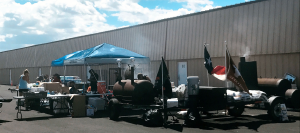
Figure 11: A food station fed physicians and patients.

Figure 11: A food station fed physicians and patients.

We sent most of the patients we treated home (or what was left of it). Some were sent to the nearest open hospital, which was more than 45 miles away. The industry that really came together during the storm was the area’s independent freestanding emergency centers (FECs). One such facility was just five miles from us, and it had CT, X-ray, and lab up and running with its backup power. We sent them patients needing resources but not admission. Back in Rockport, another FEC was up and running and taking care of dozens of patients in the middle of the disaster zone.

As I reflect, we had it too good. We had one another and our families, with life as usual back at home. For the people of the coastal bend of Texas, their stuff was gone, their homes destroyed, and their lives turned upside down. But Texas is strong, and the Astros just won the World Series. The future is bright for Texas!

Pages: 1 2 3 4 | Single Page

Topics: Disaster MedicineEmergency DepartmentEmergency MedicineEmergency PhysiciansHurricanePatient CarePublic HealthTexas

Related

  • Opinion: Physicians Must Reduce Plastic Waste

    December 4, 2025 - 0 Comment
  • The First National Congress on Emergency Medical Care in Ukraine

    December 4, 2025 - 0 Comment
  • Let Core Values Help Guide Patient Care

    November 5, 2025 - 0 Comment

Current Issue

ACEP Now: November 2025

Download PDF

Read More

One Response to “Disaster Response Journal of Emergency Response to Hurricane Harvey”

  1. December 30, 2017

    Heidi Knowles Reply

    Nice work, Dr. Troutman!

Leave a Reply Cancel Reply

Your email address will not be published. Required fields are marked *


*
*


Wiley
  • Home
  • About Us
  • Contact Us
  • Privacy
  • Terms of Use
  • Advertise
  • Cookie Preferences
Copyright © 2025 by John Wiley & Sons, Inc. All rights reserved, including rights for text and data mining and training of artificial technologies or similar technologies. ISSN 2333-2603
