Logo

Log In Sign Up |  An official publication of: American College of Emergency Physicians
Navigation
  • Home
  • Multimedia
    • Podcasts
    • Videos
  • Clinical
    • Airway Managment
    • Case Reports
    • Critical Care
    • Guidelines
    • Imaging & Ultrasound
    • Pain & Palliative Care
    • Pediatrics
    • Resuscitation
    • Trauma & Injury
  • Resource Centers
    • mTBI Resource Center
  • Career
    • Practice Management
      • Benchmarking
      • Reimbursement & Coding
      • Care Team
      • Legal
      • Operations
      • Quality & Safety
    • Awards
    • Certification
    • Compensation
    • Early Career
    • Education
    • Leadership
    • Profiles
    • Retirement
    • Work-Life Balance
  • Columns
    • ACEP4U
    • Airway
    • Benchmarking
    • Brief19
    • By the Numbers
    • Coding Wizard
    • EM Cases
    • End of the Rainbow
    • Equity Equation
    • FACEPs in the Crowd
    • Forensic Facts
    • From the College
    • Images in EM
    • Kids Korner
    • Medicolegal Mind
    • Opinion
      • Break Room
      • New Spin
      • Pro-Con
    • Pearls From EM Literature
    • Policy Rx
    • Practice Changers
    • Problem Solvers
    • Residency Spotlight
    • Resident Voice
    • Skeptics’ Guide to Emergency Medicine
    • Sound Advice
    • Special OPs
    • Toxicology Q&A
    • WorldTravelERs
  • Resources
    • ACEP.org
    • ACEP Knowledge Quiz
    • Issue Archives
    • CME Now
    • Annual Scientific Assembly
      • ACEP14
      • ACEP15
      • ACEP16
      • ACEP17
      • ACEP18
      • ACEP19
    • Annals of Emergency Medicine
    • JACEP Open
    • Emergency Medicine Foundation
  • About
    • Our Mission
    • Medical Editor in Chief
    • Editorial Advisory Board
    • Awards
    • Authors
    • Article Submission
    • Contact Us
    • Advertise
    • Subscribe
    • Privacy Policy
    • Copyright Information

Disaster Response Journal of Emergency Response to Hurricane Harvey

By Gerad Troutman, MD, MBA, FACEP | on December 12, 2017 | 1 Comment
Features
  • Tweet
  • Click to email a link to a friend (Opens in new window) Email
Print-Friendly Version
Photos: Dr. Gerad Troutman

The next few days become a blur. Patients—upwards of 80 to 90 a day—visited our MMU (see Figure 3). We had three physicians, dozens of nurses, paramedics, and other support staff who did everything from making sure we had supplies to see patients, to making sure generators were full of fuel. The complaints were typical for any emergency department: heavy on wounds, medication refills, and chest pain in those who were not used to working so hard. The difference was the story. I have always enjoyed hearing patients’ stories, and those in the path of Harvey had stories to tell.

You Might Also Like
  • ACEP Supports Hurricane Harvey Response in Texas
  • An Emergency Medicine Resident’s Journey Through the Devastation of Hurricane Maria
  • Laying the Groundwork for Effective Disaster Response: An Interview with Dr. Robert Kadlec
Explore This Issue
ACEP Now: Vol 36 – No 12 – December 2017
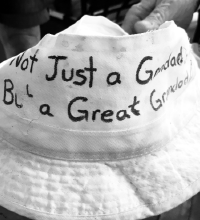
Figure 4: One proud grandfather who visited the mobile medical unit kept this hat with him during evacuation.

Figure 4: One proud grandfather who visited the mobile medical unit kept this hat with him during evacuation.

Figure 5: Another patient weathered the storm with his dog, Shirley.

Figure 5: Another patient weathered the storm with his dog, Shirley.

Figure 6: A third patient evacuated with his family, but lost everything but the shirt on his back.

Figure 6: A third patient evacuated with his family, but lost everything but the shirt on his back.

One grandfather in a hat (see Figure 4): “I wear it everywhere. My daughter gave it to me 11 years ago when she had her daughter. We got lucky: We left, came back, nothing out of place. The neighbor’s house is gone. Strange how that happens. I really just need a tetanus shot. I have cuts everywhere.”

Meet Shirley (see Figure 5) and her owner: “I’ve had her four months, and she was two months old when I got her. She is full of piss and vinegar. She took the storm better than I did. We didn’t have much, but we still have each other. I ran out of my medications. Can you do a refill? I have the empty bottles….”

And a man who evacuated and returned to destruction (see Figure 6): “They said it was going to be a cat 1, so we just left. I wanted to get my girls to safety, and my mom … she’s dying. She wanted to die at home. When they said it was going to be a cat 3, I wanted to go back and board the windows, but my wife wouldn’t let me. Her room is destroyed, the rest of the house is a wreck. She’s stuck in Austin now. This shirt is about all I have. My friends called me Stewie.”

I took a brief break and ventured into some of the areas hit hardest by the eyewall. Like most, I’ve seen thousands of pictures of natural destruction, but nothing equates to seeing this in real life. I love to see the humor people can express when they have lost so much (see Figures 7 and 8).

Pages: 1 2 3 4 | Single Page

Topics: Disaster MedicineEmergency DepartmentEmergency MedicineEmergency PhysiciansHurricanePatient CarePublic HealthTexas

Related

  • Opinion: Physicians Must Reduce Plastic Waste

    December 4, 2025 - 0 Comment
  • The First National Congress on Emergency Medical Care in Ukraine

    December 4, 2025 - 0 Comment
  • Let Core Values Help Guide Patient Care

    November 5, 2025 - 0 Comment

Current Issue

ACEP Now: November 2025

Download PDF

Read More

One Response to “Disaster Response Journal of Emergency Response to Hurricane Harvey”

  1. December 30, 2017

    Heidi Knowles Reply

    Nice work, Dr. Troutman!

Leave a Reply Cancel Reply

Your email address will not be published. Required fields are marked *


*
*


Wiley
  • Home
  • About Us
  • Contact Us
  • Privacy
  • Terms of Use
  • Advertise
  • Cookie Preferences
Copyright © 2025 by John Wiley & Sons, Inc. All rights reserved, including rights for text and data mining and training of artificial technologies or similar technologies. ISSN 2333-2603
