Logo

Log In Sign Up |  An official publication of: American College of Emergency Physicians
Navigation
  • Home
  • Multimedia
    • Podcasts
    • Videos
  • Clinical
    • Airway Managment
    • Case Reports
    • Critical Care
    • Guidelines
    • Imaging & Ultrasound
    • Pain & Palliative Care
    • Pediatrics
    • Resuscitation
    • Trauma & Injury
  • Resource Centers
    • mTBI Resource Center
  • Career
    • Practice Management
      • Benchmarking
      • Reimbursement & Coding
      • Care Team
      • Legal
      • Operations
      • Quality & Safety
    • Awards
    • Certification
    • Compensation
    • Early Career
    • Education
    • Leadership
    • Profiles
    • Retirement
    • Work-Life Balance
  • Columns
    • ACEP4U
    • Airway
    • Benchmarking
    • Brief19
    • By the Numbers
    • Coding Wizard
    • EM Cases
    • End of the Rainbow
    • Equity Equation
    • FACEPs in the Crowd
    • Forensic Facts
    • From the College
    • Images in EM
    • Kids Korner
    • Medicolegal Mind
    • Opinion
      • Break Room
      • New Spin
      • Pro-Con
    • Pearls From EM Literature
    • Policy Rx
    • Practice Changers
    • Problem Solvers
    • Residency Spotlight
    • Resident Voice
    • Skeptics’ Guide to Emergency Medicine
    • Sound Advice
    • Special OPs
    • Toxicology Q&A
    • WorldTravelERs
  • Resources
    • ACEP.org
    • ACEP Knowledge Quiz
    • Issue Archives
    • CME Now
    • Annual Scientific Assembly
      • ACEP14
      • ACEP15
      • ACEP16
      • ACEP17
      • ACEP18
      • ACEP19
    • Annals of Emergency Medicine
    • JACEP Open
    • Emergency Medicine Foundation
  • About
    • Our Mission
    • Medical Editor in Chief
    • Editorial Advisory Board
    • Awards
    • Authors
    • Article Submission
    • Contact Us
    • Advertise
    • Subscribe
    • Privacy Policy
    • Copyright Information

Coping with COVID-19: The Puget Sound Experience

By Liam Yore, MD, FACEP | on April 1, 2020 | 0 Comment
Uncategorized
  • Tweet
  • Click to email a link to a friend (Opens in new window) Email
Print-Friendly Version

Now that we’ve seen more community transition of the virus, some places have developed drive-through station testing, like the ones used extensively in South Korea. People can drive up, get their temperature and oxygen level tested, and get swabbed to receive the results by phone at home. I think we will see more of those as the epidemic continues.

You Might Also Like
  • Diabetes, Lung, and Heart Disease Common in U.S. COVID-19 Patient
  • Loss of Taste and Smell Key COVID-19 Symptoms, App Study Finds
  • Health Workers Rush to Contain Fresh Ebola Outbreak in Guinea
Explore This Issue
ACEP Now: Vol 39 – No 04 – April 2020

Stellar Staff Response

As the crisis has developed, the staffing needs have changed. Fortunately, the public has received the message to stay away from the emergency department unless they are seriously ill. Recently, patient volumes in the emergency departments have been down in some cases. Because of this, we’ve been able to shift some providers from a fast-track shift to the respiratory unit so we can have extra focus on the really sick people. We’ve been very flexible in changing provider staffing based on the needs of the moment.

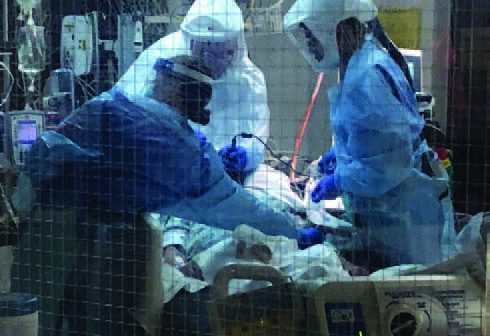
We all got fitted for N95 masks for seeing high-risk patients or doing high-risk procedures using full airborne precautions. Our health care workers quickly got in the habit of being very diligent with their personal protective equipment. As has been covered in the media, some clinicians have been anxious about potential shortages in personal protective equipment. At centers in our region, I don’t feel that such worries have impacted care yet. However, we all share concerns about whether the supply chain will hold up on a long-term basis.

Situations like this one bring out many fears for health care providers, just like they do in the rest of the population. However, we’ve seen that events like this also tend to bring out the best in people. People approach it as a war zone; they buckle up and get the work done. If a provider gets sick or has to self-quarantine, someone else steps up to fill the shifts.

What Comes Next

We need guidance from the federal government about how the regulatory framework of medicine is going to adapt to this widespread epidemic. According to EMTALA, any patient who comes to the emergency room must receive a screening exam and stabilizing treatment. We embrace EMTALA as emergency physicians, but it’s not clear exactly how it should be implemented in these innovative modalities of emergency screening and health care delivery. We are pleased to see clear guidance from the Centers for Medicare & Medicaid Services about how EMTALA shall be applied in these settings so that we are confident what we are doing is compliant. Some clinicians also worry about the potential for malpractice suits when delivering medical care under these difficult circumstances. Congressional action could put such concerns to rest.

Pages: 1 2 3 4 | Single Page

Topics: coronavirusCOVID-19Puget Sound

Related

  • ACEP Member Uses ED, Military Training To Set Standards at FEMA

    August 11, 2025 - 0 Comment
  • Dr. Joe Sachs and “The Pitt” Redefine Public Health Education Through Storytelling

    July 3, 2025 - 0 Comment
  • Dr. Joe Sachs and “The Pitt” Are Redefining Public Health Education Through Storytelling

    June 11, 2025 - 0 Comment

Current Issue

ACEP Now: November 2025

Download PDF

Read More

No Responses to “Coping with COVID-19: The Puget Sound Experience”

Leave a Reply Cancel Reply

Your email address will not be published. Required fields are marked *


*
*


Wiley
  • Home
  • About Us
  • Contact Us
  • Privacy
  • Terms of Use
  • Advertise
  • Cookie Preferences
Copyright © 2025 by John Wiley & Sons, Inc. All rights reserved, including rights for text and data mining and training of artificial technologies or similar technologies. ISSN 2333-2603
