Logo

Log In Sign Up |  An official publication of: American College of Emergency Physicians
Navigation
  • Home
  • Multimedia
    • Podcasts
    • Videos
  • Clinical
    • Airway Managment
    • Case Reports
    • Critical Care
    • Guidelines
    • Imaging & Ultrasound
    • Pain & Palliative Care
    • Pediatrics
    • Resuscitation
    • Trauma & Injury
  • Resource Centers
    • mTBI Resource Center
  • Career
    • Practice Management
      • Benchmarking
      • Reimbursement & Coding
      • Care Team
      • Legal
      • Operations
      • Quality & Safety
    • Awards
    • Certification
    • Compensation
    • Early Career
    • Education
    • Leadership
    • Profiles
    • Retirement
    • Work-Life Balance
  • Columns
    • ACEP4U
    • Airway
    • Benchmarking
    • Brief19
    • By the Numbers
    • Coding Wizard
    • EM Cases
    • End of the Rainbow
    • Equity Equation
    • FACEPs in the Crowd
    • Forensic Facts
    • From the College
    • Images in EM
    • Kids Korner
    • Medicolegal Mind
    • Opinion
      • Break Room
      • New Spin
      • Pro-Con
    • Pearls From EM Literature
    • Policy Rx
    • Practice Changers
    • Problem Solvers
    • Residency Spotlight
    • Resident Voice
    • Skeptics’ Guide to Emergency Medicine
    • Sound Advice
    • Special OPs
    • Toxicology Q&A
    • WorldTravelERs
  • Resources
    • ACEP.org
    • ACEP Knowledge Quiz
    • Issue Archives
    • CME Now
    • Annual Scientific Assembly
      • ACEP14
      • ACEP15
      • ACEP16
      • ACEP17
      • ACEP18
      • ACEP19
    • Annals of Emergency Medicine
    • JACEP Open
    • Emergency Medicine Foundation
  • About
    • Our Mission
    • Medical Editor in Chief
    • Editorial Advisory Board
    • Awards
    • Authors
    • Article Submission
    • Contact Us
    • Advertise
    • Subscribe
    • Privacy Policy
    • Copyright Information

“Code Black” Documentary about Los Angeles County General Hospital Captures the Challenge, Energy of Emergency Medicine

By ACEP Now | on June 10, 2014 | 0 Comment
Features
  • Tweet
  • Click to email a link to a friend (Opens in new window) Email
Print-Friendly Version
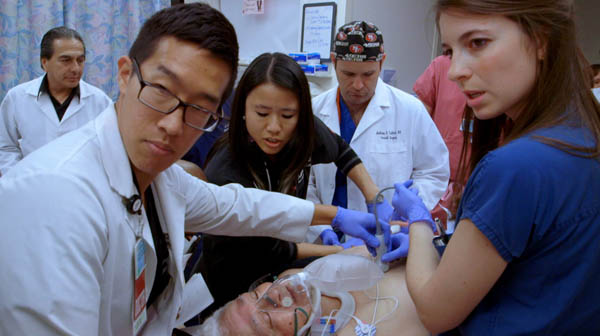
Danny Cheng, MD, and Jaime Eng, MD, with patient

KK: How did it affect your personal life?

You Might Also Like
  • Code Black Documentary Shown Today at ACEP14
  • Emergency Department Documentary, Code Black, May Inspire New TV Series
  • Emergency Medicine Code Black Documentary Basis for CBS TV Primetime Series
Explore This Issue
ACEP Now: Vol 33 – No 06 – June 2014

RM: It was significant. I didn’t expect to make a film as a resident. It was three years of no vacation, and any day off I had went toward this effort. The goal of residency is to learn how to be a proficient physician, and I had to be careful in order to assure that the film could never be more important than that. I have to thank every one of my classmates and my program director for a lot of support along the way, whether for last-minute trades or just the ability to take a 20-minute nap on a shift. Even still…residency by default should consume you, and filmmaking by default should consume you. You put them together at the same time, and there’s going to be some fallout.

KK: Do you regret the decisions you’ve made?

RM: I regret allowing the pressure to dictate how I acted and how I thought. I certainly don’t regret making Code Black at the time that I did. One thing that I feel very lucky to have experienced is nonmedical people sitting through some pretty tough stuff in cases we show, and at the end of the film people give us a standing ovation. I wish I could share that with every physician, nurse, and X-ray tech who leaves a really tough shift.

KK: Is this just a venture of altruism, or is there the potential for you to have some well-deserved financial benefit?

RM: It takes in the low seven figures to produce a film of this scope. Nobody makes a buck off of documentaries. Your best-case scenario is that you break even and that you change how people think.

KK: Roughly, what does it take to produce a documentary like this?

RM: The film is supported by SonoSite Fuji­Film. We made an agreement with them that said in exchange for private support for the production, we would make a true story about the challenges of the front lines—and the sponsor did this without any control with regards to creative oversight or required brand placement. We went through 16 cuts on Code Black. For a documentary, you’re building an essay from a vast vocabulary of footage that exists as a library in volume. So you have an editor, an assistant editor, an archivist, a sound designer, a sound mixer, a color corrector, and, of course, all of the producers it takes to make a documentary.

Pages: 1 2 3 4 | Single Page

Topics: Code BlackCritical CareDocumentaryEmergency DepartmentEmergency MedicineEmergency PhysicianLos Angeles County General HospitalPractice ManagementPractice Trends

Related

  • Why the Nonrebreather Should be Abandoned

    December 3, 2025 - 0 Comment
  • Florida Emergency Department Adds Medication-Dispensing Kiosk

    November 7, 2025 - 1 Comment
  • Q&A with ACEP President L. Anthony Cirillo

    November 5, 2025 - 0 Comment

Current Issue

ACEP Now: November 2025

Download PDF

Read More

About the Author

ACEP Now

View this author's posts »

No Responses to ““Code Black” Documentary about Los Angeles County General Hospital Captures the Challenge, Energy of Emergency Medicine”

Leave a Reply Cancel Reply

Your email address will not be published. Required fields are marked *


*
*


Wiley
  • Home
  • About Us
  • Contact Us
  • Privacy
  • Terms of Use
  • Advertise
  • Cookie Preferences
Copyright © 2025 by John Wiley & Sons, Inc. All rights reserved, including rights for text and data mining and training of artificial technologies or similar technologies. ISSN 2333-2603