
In Figure 3, Dr. Raja reported that the yield of PE increased, while the utilization was reduced implying that more of the right patients were being imaged.
Explore This Issue
ACEP Now: Vol 36 – No 08 – August 2017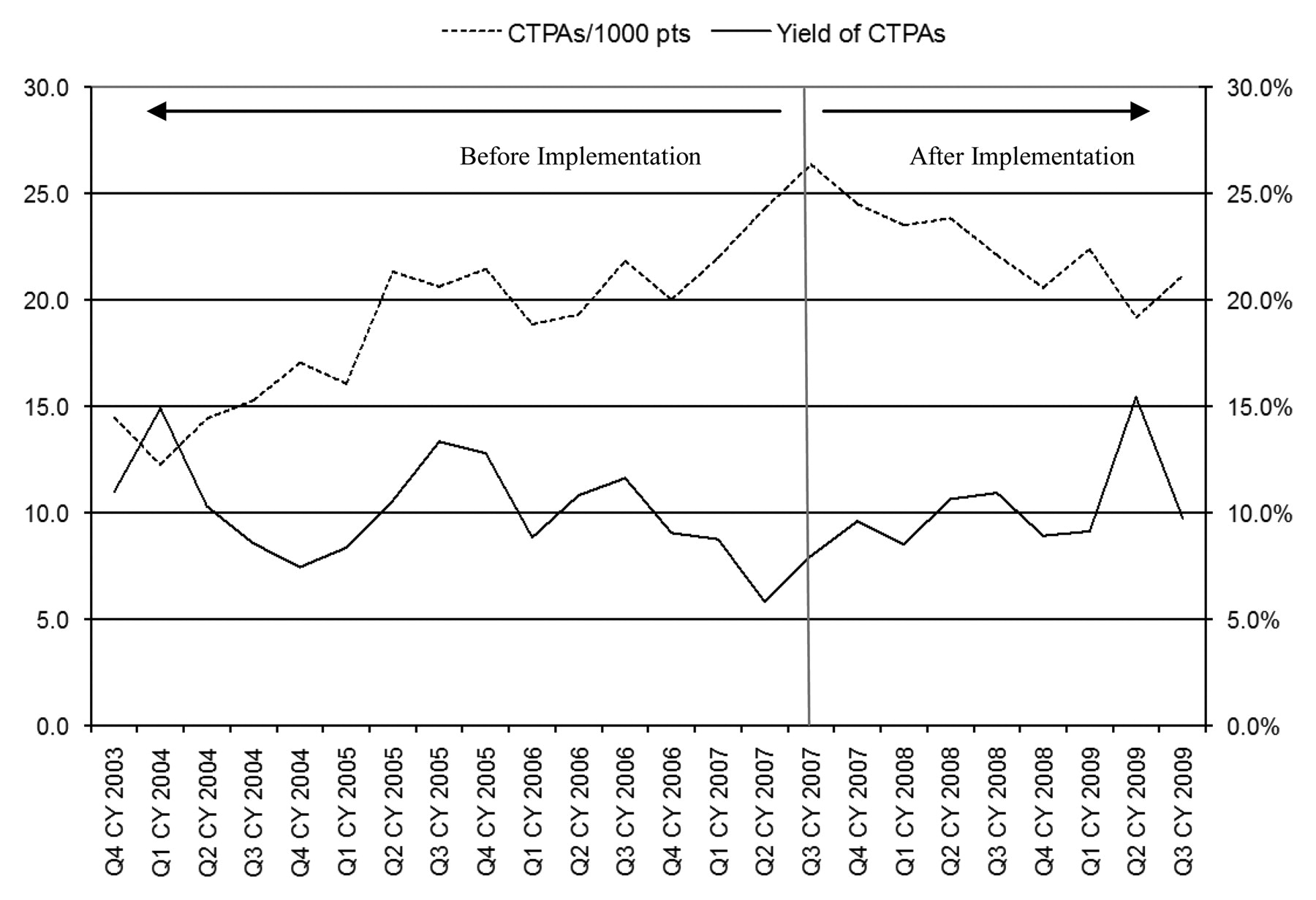
(click for larger image) Figure 3: CT pulmonary angiography (CTPA) use and yield before and after clinical decision support implementation. CY = calendar year, Q1 = first quarter, Q2 = second quarter, Q3 = third quarter, Q4 = fourth quarter. Credit: Raja AS,et al.Radiology. 2012;262(2):468-474.Copyright RSNA.
What Can You Do?
To learn more about the CDS tools used and the experience of Dr. Raja, listen to his EQUAL success story. This webinar demonstrates that the source of the evidence is less important than obtaining broad, multispecialty clinician buy-in for what everyone considers the right thing to do.
Completion of this E-QUAL webinar is also designated for 1 CME credit.
If you have questions about E-QUAL, contact project manager Nalani Tarrant at ntarrant@acep.org.
Ms. Tarrant is E-QUAL project manager at ACEP.
Pages: 1 2 | Single Page



One Response to “Clinical Decision Support Tools Can Help Emergency Physicians Put Guidelines into Practice”
October 9, 2017
InferaYes, you’re right! A Clinical decision support systems provide real-time guidance to physicians on the appropriateness of diagnostic imaging tests for a given patient during the ordering process.