

Case
Explore This Issue
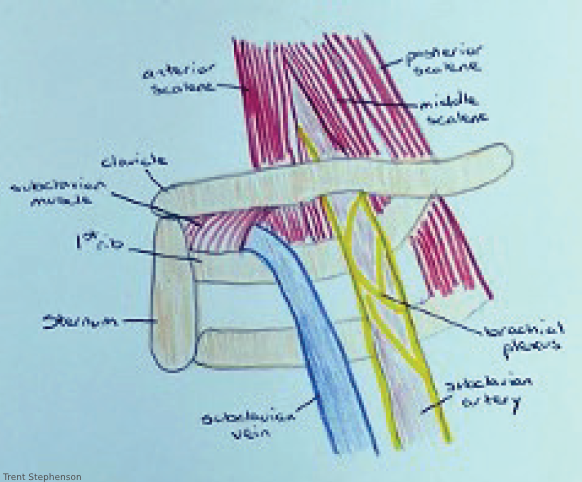
ACEP Now: Vol 41 – No 08 – August 2022FIGURE 2: An anatomic illustration of the thoracic outlet.
A 19-year-old, left hand dominant female presented to the emergency department (ED) with a chief complaint of a swollen left arm that started just before arrival. Her symptoms were first noticed when she put her left arm down after spraying hair spray in a circular motion. She had no known medical problems, was normally very physically active, and never had anything similar happen in the past. Exam showed a swollen left arm with erythema. Her compartments were soft and her radial pulse was 2+. Her Adson’s test was negative.
Differential
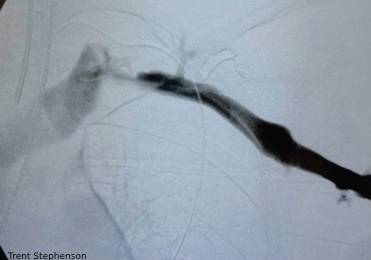
FIGURE 3: Angiography reveals thrombosis of the axillary vein.
DVT, arterial clot, thoracic outlet syndrome, rhabdomyolysis, contact dermatitis, Raynaud disease and vasculitis
Work Up
Venous and arterial dopplers of the left upper extremity were ordered, which showed no evidence of clot. Due to continued high suspicion for clot, vascular was consulted and they were also concerned for a clot from thoracic outlet syndrome (TOS). They recommend starting apixaban (Eliquis) and they would evaluate her the next morning in the clinic.
Follow Up

FIGURE 4: After thrombectomy.
The patient was seen the next day in the vascular clinic where she had a repeat venous doppler that showed an acute deep vein thrombosis in the axillary subclavian vein. She then underwent a catheter directed thrombectomy that same afternoon. She was then scheduled to have her first rib removed in 2 weeks.
As directed, she followed up in two weeks for the removal of her first rib.
One month after rib removal and physician therapy, she did not have pain or any lingering symptoms. Her only issue was her chest being numb in the area of the incision from surgery.
Thoracic Outlet Syndrome
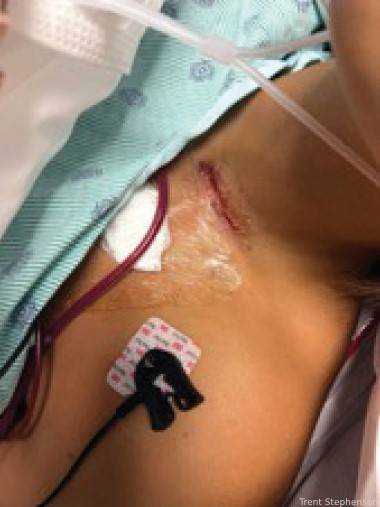
FIGURE 5: As directed, the patient followed up in two weeks for the removal of her first rib.
TOS results from compression or irritation of the brachial plexus or subclavian vasculature as those structures pass through the space between the clavicle and first rib (i.e., the thoracic outlet). Symptoms can be either neurogenic (painless muscular atrophy, paresthesias, or weakness most common) or vascular (color change, claudication, or limb ischemia).1 Causes of TOS include trauma, repetitive motion injuries (e.g., in swimmers and baseball pitchers), pregnancy, or anatomical defects like having an extra rib. Reported figures for TOS range from 3–80 per 1,000 people and affects three times more women than men. The age of onset of symptoms usually occurs between 20 and 50 years of age. A physician exam test for TOS is the Adson’s test. It is performed by the physician being behind the patient while their arms are in full extension. The pulse on the potential affected side is palpated as the patient’s arm is abducted and externally rotated. The patient also holds their breath as they extend their neck and rotated their head towards the side being tested. The test is positive if there is a significant decrease in strength or complete disappearance of the radial pulse. Treatments range from physical therapy to anticoagulation to surgical options to relieve the compression of structures through the thoracic outlet. Neurogenic TOS is generally neither progressive nor likely to resolve spontaneously. Vascular forms of TOS generally have good outcomes with treatment of underlying cause. In 2015, Orlando et al published “A decade of excellent outcomes after surgical intervention in 538 patients with thoracic outlet syndrome.”2 In this retrospective study they evaluated outcomes of patients that underwent first rib resections for all three forms of thoracic outlet syndrome during a 10 year period. They concluded that surgery resulted in excellent outcomes.3
Pages: 1 2 | Single Page


No Responses to “Case Report: The Woman with the Swollen Left Arm”