Logo

Log In Sign Up |  An official publication of: American College of Emergency Physicians
Navigation
  • Home
  • Multimedia
    • Podcasts
    • Videos
  • Clinical
    • Airway Managment
    • Case Reports
    • Critical Care
    • Guidelines
    • Imaging & Ultrasound
    • Pain & Palliative Care
    • Pediatrics
    • Resuscitation
    • Trauma & Injury
  • Resource Centers
    • mTBI Resource Center
  • Career
    • Practice Management
      • Benchmarking
      • Reimbursement & Coding
      • Care Team
      • Legal
      • Operations
      • Quality & Safety
    • Awards
    • Certification
    • Compensation
    • Early Career
    • Education
    • Leadership
    • Profiles
    • Retirement
    • Work-Life Balance
  • Columns
    • ACEP4U
    • Airway
    • Benchmarking
    • Brief19
    • By the Numbers
    • Coding Wizard
    • EM Cases
    • End of the Rainbow
    • Equity Equation
    • FACEPs in the Crowd
    • Forensic Facts
    • From the College
    • Images in EM
    • Kids Korner
    • Medicolegal Mind
    • Opinion
      • Break Room
      • New Spin
      • Pro-Con
    • Pearls From EM Literature
    • Policy Rx
    • Practice Changers
    • Problem Solvers
    • Residency Spotlight
    • Resident Voice
    • Skeptics’ Guide to Emergency Medicine
    • Sound Advice
    • Special OPs
    • Toxicology Q&A
    • WorldTravelERs
  • Resources
    • ACEP.org
    • ACEP Knowledge Quiz
    • Issue Archives
    • CME Now
    • Annual Scientific Assembly
      • ACEP14
      • ACEP15
      • ACEP16
      • ACEP17
      • ACEP18
      • ACEP19
    • Annals of Emergency Medicine
    • JACEP Open
    • Emergency Medicine Foundation
  • About
    • Our Mission
    • Medical Editor in Chief
    • Editorial Advisory Board
    • Awards
    • Authors
    • Article Submission
    • Contact Us
    • Advertise
    • Subscribe
    • Privacy Policy
    • Copyright Information

Case Report Provides Tips for Diagnosing the Rare Tolosa-Hunt Syndrome

By Ethan Sterk, DO, FACEP | on December 17, 2018 | 0 Comment
Features
  • Tweet
  • Click to email a link to a friend (Opens in new window) Email
Print-Friendly Version
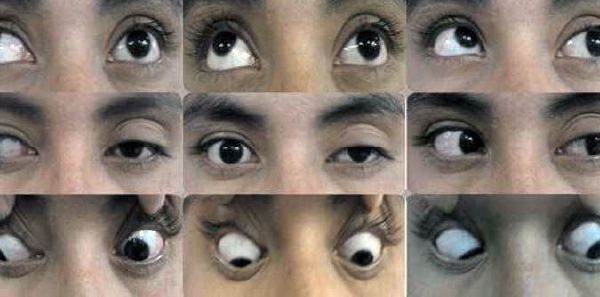
An example of a neuro-ophthalmologic examination in a patient with Tolosa-Hunt syndrome, prior to treatment. Note the left palpebral ptosis, exotropia of the primary look of the left eye, and paresis of the third, fourth, and sixth left cranial nerves.
Credit: Cases Journal. 2009;2:8271. CC BY 2.0

The Case

A 69-year-old male presents to the emergency department for evaluation of diplopia. Three days prior, he had developed left-sided periorbital and ocular aching pain. He then noticed decreased peripheral vision on the left. The patient denies worsening pain with extraocular muscle movement. He also denies photosensitivity, eye redness, discharge, flashing lights, floaters, or a curtain or veil over his vision. He hasn’t experienced headache, temple pain, jaw claudication, or fever, and there are no other neurological symptoms, such as extremity numbness, weakness, or slurred speech. He denies any recent trauma.

You Might Also Like
  • Case Report: Acute Coronary Syndrome Symptoms Require Repeat ECGs
  • Tips for Quickly Diagnosing Compartment Syndrome
  • Case Report: Persistent Runny Nose Follows Upper Respiratory Infection
Explore This Issue
ACEP Now: Vol 37 – No 12 – December 2018

On physical examination, he is afebrile, and his vital signs are within normal limits. His ocular exam is notable for the following:

  • Left eye: ptosis, weak adduction, no abduction
  • Pupils: 3 mm bilaterally and reactive to light
  • Visual acuity: right eye 20/30, left eye 20/25, no afferent pupillary defect

The remainder of his examination is normal.

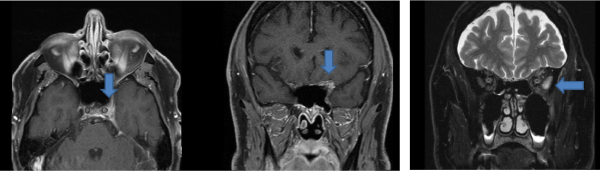
The patient undergoes an MRI of the brain and orbits, which reveals an increased T2 signal with enhancement involving the left lateral rectus muscle and intraconal fat (orbital compartment) extending into the orbital apex and left cavernous sinus.
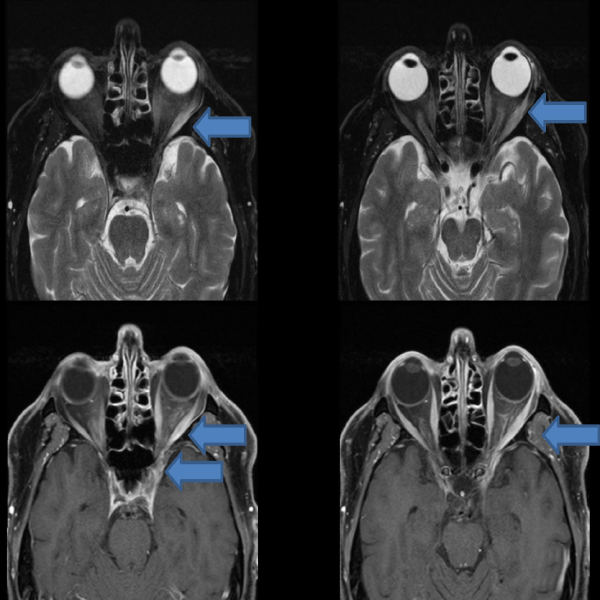
The patient’s MRI revealed an increased T2 signal with abnormal enhancement within the left lateral rectus muscle and intraconal fat extending into the orbital apex and left cavernous sinus.

The patient’s MRI revealed an increased T2 signal with abnormal enhancement within the left lateral rectus muscle and intraconal fat extending into the orbital apex and left cavernous sinus.
Ethan Sterk

He is admitted to the neurology service, and subsequent workup includes the following tests: erythrocyte sedimentation rate, C-reactive protein, antinuclear antibody, antineutrophil cytoplasmic antibody, rapid plasma reagin, double-stranded DNA antibody, Lyme polymerase chain reaction, angiotensin-converting enzyme (ACE), and anti-smooth muscle antibody. They are all negative. Also, cerebrospinal fluid (CSF) testing is remarkable for a glucose of 99, a protein of 93, and one white blood cell. CSF cultures are negative; ACE and Lyme antibodies are also negative. Ophthalmology is consulted, and the patient is diagnosed with Tolosa-Hunt syndrome.
Discussion

Tolosa-Hunt syndrome is rare, with an estimated incidence of one case per million per year. It is characterized by painful ophthalmoplegia and is caused by an idiopathic granulomatous inflammation of the cavernous sinus. The inflammation produces pressure and secondary dysfunction of the structures within the cavernous sinus, including cranial nerves III, IV, and VI, as well as the superior divisions of cranial nerve V.1–5 Diplopia results from cranial mono- or polyneuropathy. Patients may present at any age. Men and women are affected at the same frequency.4

Pages: 1 2 3 | Single Page

Topics: Case PresentationCase Reportsdiplopadouble visionEye ProblemsTolosa-Hunt Syndrome

Related

  • Case Report: Rare Pulmonary Embolism After Routine PIVC Insertion

    September 22, 2025 - 1 Comment
  • Annals ECG of the Month: Acute Coronary Occlusion

    August 4, 2025 - 0 Comment
  • Two Cases of Female Patients with Peritonitis

    April 23, 2025 - 0 Comment

Current Issue

ACEP Now: November 2025

Download PDF

Read More

No Responses to “Case Report Provides Tips for Diagnosing the Rare Tolosa-Hunt Syndrome”

Leave a Reply Cancel Reply

Your email address will not be published. Required fields are marked *


*
*


Wiley
  • Home
  • About Us
  • Contact Us
  • Privacy
  • Terms of Use
  • Advertise
  • Cookie Preferences
Copyright © 2025 by John Wiley & Sons, Inc. All rights reserved, including rights for text and data mining and training of artificial technologies or similar technologies. ISSN 2333-2603
