
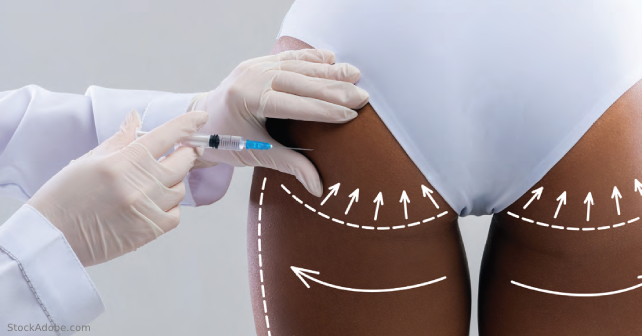
Complications of Gluteal AFT
The pale, prone patient with multiple surgical drains and a constrictive faja has become a common site in the Jackson Memorial Hospital Emergency Department. Jackson Health System (JHS), the public hospital network in Miami-Dade County, has undertaken an internal review of these cases in response to the number of gluteal AFT patients being seen in our emergency department. Our experience at one of the country’s epicenters of gluteal AFT complications can prove instructive for emergency physicians nationwide who may encounter these patients after surgeries performed in their own cities or when patients return from medical tourism trips to Miami and other cosmetic surgery hubs.
Explore This Issue
ACEP Now: Vol 43 – No 05 – May 2024Gluteal AFT complications are notoriously difficult to study as stand-alone cosmetic surgery centers have no reporting requirement. The data that are available come largely based on voluntary reporting, physician surveys, or autopsies. As a result, our current data on AFT complications likely underestimates the actual incidence. JHS’ chart review project, which identified 163 patients presenting to the ED with gluteal AFT complications in a 30-month period between 2020 and 2023, provides one of the most comprehensive and informative datasets on the breadth of AFT complications as they are currently being performed.
The most concerning complication of AFT is the pulmonary fat embolism (PFE). Classically associated with long bone fractures, a PFE may also occur when fat is injected or absorbed into a blood vessel during the reinjection phase of an AFT procedure. It even has been suggested that moving the patient into a supine position post-operatively can put enough pressure on newly deposited adipose tissue to shift it into the bloodstream.6 Theoretically, ultrasound guidance should decrease this risk, which formed the basis for the 2022 Florida Medical Board regulation. PFEs from gluteal AFT are rare (occurring in an estimated 1:1,030 procedures) but life threatening, with mortality rates as high as 50 percent.8,9 This statistic represents the highest mortality rate of any aesthetic procedure.9
PFE is only definitively diagnosed on autopsy and a high clinical suspicion must be maintained in high-risk patients. The term PFE is often used broadly to encompass two distinct clinical entities: microscopic and macroscopic fat embolism. Macroscopic fat embolism is thought to cause mortality through mechanical obstruction of large vessels. This should be suspected in patients with intraoperative cardiac arrest or shock. Microscopic fat embolism, on the other hand, causes morbidity and mortality through a systemic inflammatory response within 24 hours of the procedure, also known as “fat embolization syndrome.” While both conditions rely on supportive care as the mainstay of treatment, plastic surgery literature suggests better outcomes with microscopic fat embolism.10
Pages: 1 2 3 4 | Single Page



One Response to “Brazilian Butt Lift Procedure Can Result in Emergency Department Visits”
May 19, 2024
Michael E. Mullins, MD, FACEPAnother potential complication is local anesthetic systemic toxicity (LAST) since both the liposuction and gluteal fat injection use local anesthetics (usually lidocaine or bupivacaine). In particular, this could occur with substitution of bupivacaine for lidocaine.
LAST may explain some of the cardiac arrests within this cohort. Hallmarks of LAST include cardiovascular instability and wide QRS interval in the electrocardiogram.
In cases of LAST, the preferred treatment is intravenous lipid emulsion — widely known by the brand name “Intralipid”, but “Clinolipid” (Baxter Healthcare, Deerfield IL) has replaced the former brand in the US.
When treating LAST, the American Society of Regional Anesthesia recommends a bolus of 1.5 mL/kg of 20% lipid (~100 mL in a 70 kg patient) followed by a short infusion of 0.25 to 0.5 mL/kg/min over 20 minutes. Avoid using a bolus > 100 mL or an infusion of > 250 mL.
https://www.asra.com/news-publications/asra-updates/blog-landing/guidelines/2020/11/01/checklist-for-treatment-of-local-anesthetic-systemic-toxicity