Logo

Log In Sign Up |  An official publication of: American College of Emergency Physicians
Navigation
  • Home
  • Multimedia
    • Podcasts
    • Videos
  • Clinical
    • Airway Managment
    • Case Reports
    • Critical Care
    • Guidelines
    • Imaging & Ultrasound
    • Pain & Palliative Care
    • Pediatrics
    • Resuscitation
    • Trauma & Injury
  • Resource Centers
    • mTBI Resource Center
  • Career
    • Practice Management
      • Benchmarking
      • Reimbursement & Coding
      • Care Team
      • Legal
      • Operations
      • Quality & Safety
    • Awards
    • Certification
    • Compensation
    • Early Career
    • Education
    • Leadership
    • Profiles
    • Retirement
    • Work-Life Balance
  • Columns
    • ACEP4U
    • Airway
    • Benchmarking
    • Brief19
    • By the Numbers
    • Coding Wizard
    • EM Cases
    • End of the Rainbow
    • Equity Equation
    • FACEPs in the Crowd
    • Forensic Facts
    • From the College
    • Images in EM
    • Kids Korner
    • Medicolegal Mind
    • Opinion
      • Break Room
      • New Spin
      • Pro-Con
    • Pearls From EM Literature
    • Policy Rx
    • Practice Changers
    • Problem Solvers
    • Residency Spotlight
    • Resident Voice
    • Skeptics’ Guide to Emergency Medicine
    • Sound Advice
    • Special OPs
    • Toxicology Q&A
    • WorldTravelERs
  • Resources
    • ACEP.org
    • ACEP Knowledge Quiz
    • Issue Archives
    • CME Now
    • Annual Scientific Assembly
      • ACEP14
      • ACEP15
      • ACEP16
      • ACEP17
      • ACEP18
      • ACEP19
    • Annals of Emergency Medicine
    • JACEP Open
    • Emergency Medicine Foundation
  • About
    • Our Mission
    • Medical Editor in Chief
    • Editorial Advisory Board
    • Awards
    • Authors
    • Article Submission
    • Contact Us
    • Advertise
    • Subscribe
    • Privacy Policy
    • Copyright Information

Benefits of Using the Pericapsular Nerve Group (PENG) Block

By Nathaniel Leu, MD, MS; Josh Luftig, PA; Daniel Mantuani, MD, MPH; Maximiliano Sobrero, MD; and Arun Nagdev, MD | on February 17, 2022 | 0 Comment
Pain & Palliative Care Sound Advice
  • Tweet
  • Click to email a link to a friend (Opens in new window) Email
Print-Friendly Version
IMAGES: Arun Nagdev Illustrations: Luftig/Benbott/Highland Ultrasound

A Simple, Safe, and Valuable Tool

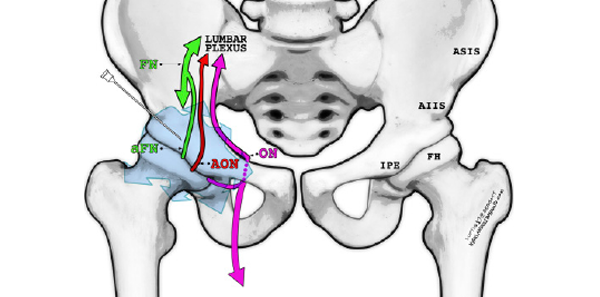
The PENG block is a simple, safe block that can be applied to a wide variety of painful pelvic injuries. It is unique in that this block provides pain control to hip and pelvic fractures and can be a valuable tool for multimodal pain control in the acute setting. This block may provide superior analgesia to hip fractures compared to the traditionally performed FNB/FIBs. Like other ultrasound-guided nerve blocks, the clinician should be knowledgeable about the surrounding anatomy and comfortable with needle visualization. 

You Might Also Like
  • Avoid These Two Common Femoral Nerve-Block Errors
  • How to Perform an Adductor Canal Nerve Block
  • Ultrasound-Guided Posterior Tibial Nerve Block
Explore This Issue
ACEP Now: Vol 41 – No 02 – February 2022

Dr. Leu and Dr. Sobrero are both ultrasound fellows at Highland Hospital; Josh Luftig, PA, is a clinical instructor at Highland Hospital; Dr. Mantuani is the ultrasound fellowship director at Highland Hospital; and Dr. Nagdev is director of the ultrasound division at Highland Hospital.

References

  1. Healthcare cost and utilization project (HCUP). Agency for Healthcare Research and Quality website. Accessed Dec. 1, 2021.
  2. Bentler SE, Liu L, Obrizan M, et al. The aftermath of hip fracture: discharge placement, functional status change, and mortality. Am J Epidemiol. 2009;170(10):1290-1299.
  3. Titler MG, Herr K, Schilling ML, et al. Acute pain treatment for older adults hospitalized with hip fracture: current nursing practices and perceived barriers. Appl Nurs Res. 2003;16(4):211-227.
  4. Beaudoin FL, Haran JP, Liebmann O. A comparison of ultrasound-guided three-in-one femoral nerve block versus parenteral opioids alone for analgesia in emergency department patients with hip fractures: a randomized controlled trial. Acad Emer Med. 2013;20(6):584-591.
  5. Ritcey B, Pageau P, Woo MY, et al. Regional nerve blocks for hip and femoral neck fractures in the emergency department: a systematic review. CJEM. 2015;18(1):37-47.
  6. Luftig J, Dreyfuss A, Mantuani D, et al. A new frontier in pelvic fracture pain control in the ED: successful use of the pericapsular nerve group (PENG) block. Amer J Emerg Med. 2020;38(12):2761.e5-2761.e9.
  7. Short AJ, Barnett JJG, Gofeld M, et al. Anatomic study of innervation of the anterior hip capsule: implication for image-guided intervention. Reg Anesth Pain Med. 2018;43(2):186-192.
  8. Acharya U, Lamsal R. Pericapsular nerve group block: an excellent option for analgesia for positional pain in hip fractures. Case Rep Anesthesiol. 2020;2020:1830136.
  9. Carr M, Hoffman T, Lin J. Pericapsular nerve group (PENG) block for patients with hip or pelvis fractures in the ED. ACEP Emergency Ultrasound Section website. Accessed Dec. 1, 2021.
  10. What med? Highland Ultrasound website. Accessed Aug. 13, 2021.
  11. Local anesthetic dosing calculator. MDCalc website. Accessed Nov. 24. 2021.
  12. Weinberg G. LipidRescue website. Accessed Nov. 24, 2021.
  13. Schultz C, Yang E, Jefferson J, et al. Tips for performing ultrasound-guided nerve blocks in the emergency department. ACEP Now. 2021;40(6).

Pages: 1 2 3 4 5 | Single Page

Topics: Nerve Blockspericapsular nerve group (PENG) block

Related

  • The Ultrasound-Guided Genicular Nerve Block

    May 10, 2024 - 0 Comment
  • How to Manage Elderly Patient Pain without Opioids

    February 13, 2024 - 0 Comment
  • How To Perform an Ultrasound-Guided Clavipectoral Block

    February 11, 2024 - 1 Comment

Current Issue

ACEP Now: November 2025

Download PDF

Read More

No Responses to “Benefits of Using the Pericapsular Nerve Group (PENG) Block”

Leave a Reply Cancel Reply

Your email address will not be published. Required fields are marked *


*
*


Wiley
  • Home
  • About Us
  • Contact Us
  • Privacy
  • Terms of Use
  • Advertise
  • Cookie Preferences
Copyright © 2025 by John Wiley & Sons, Inc. All rights reserved, including rights for text and data mining and training of artificial technologies or similar technologies. ISSN 2333-2603
